What does it mean to be an Italian American?
By:Chaney Bean
America is as diverse of a land as they come. Within its borders are people from all walks of life. Their different ideas and traditions are constantly mixing to produce the unique culture found here. So, what does it mean to say someone is an “Italian American?” Truth be told, it looks different to everyone. With changing times the very idea of culture has evolved into many different interpretations. It is no longer solely based on one’s ancestry, but rather the aspects of culture an individual chooses to incorporate into their lives. This fluid concept has allowed unique cultures to prevail in the melting pot that is the United States. Starting with the original immigrants and the customs they passed through the generations, Italian culture has been able to leave its mark on the nation through the people that embrace it.
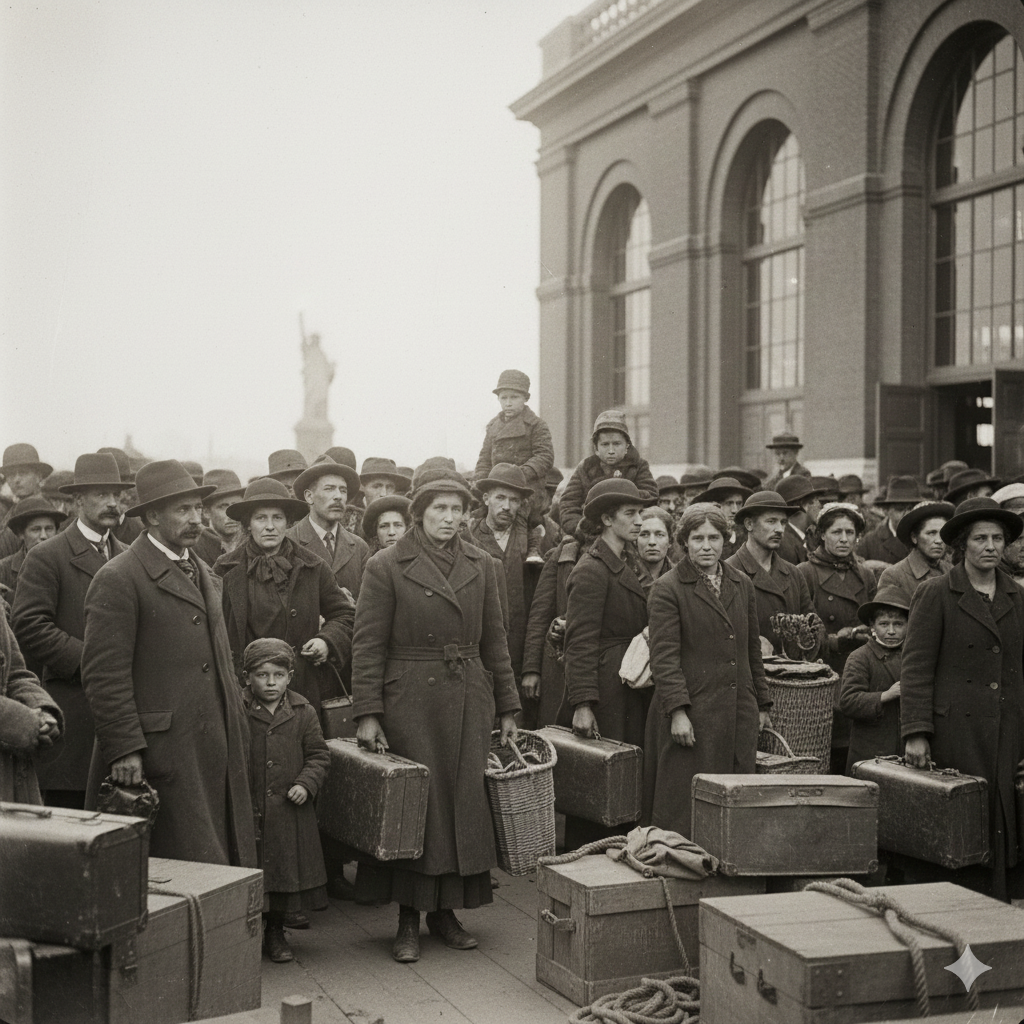
Many brave Italians made the journey through Ellis Island in the 1880s. Their heads were filled with dreams of a prosperous American life. By the 1920s, over four million Italians resided within the states. They now constituted over ten percent of the total population. The harsh conditions found in Italy at this time were largely responsible for driving the waves of immigrants. High levels of disease and poverty plagued Italian streets and many people wanted a fresh start. The Italian government, an ununified entity, was in no place to offer the aid its citizens needed. People instead turned to America for hope of a better life. Immigrants who returned to Italy shared their stories and recruiters began to entice Italians to immigrate as a way to fill the needed labor roles in America. The United States was a rapidly growing nation and desperately needed cheap laborers to help build its infrastructure. These immigrants came from all over Italy and each brought their own unique customs, traditions, and views aboard the ships as they set sail. They carried their belongings and ideas across the ocean and would prove to have a lasting impact on the culture in America.
America has long been deemed a “melting pot” with ingredients from every corner of the world. The cultures of its people mix together to create the American way of life. This was true, especially in the early days of immigration. Many people assimilated to the culture they found around them and abandoned large aspects of their own culture. With the cross contact of so many backgrounds and the increased frequency of mixed marriages, ethnic lines were largely blurred. For many of European descent, ethnicity played a secondary role within their American lives. Italians chose to adopt the culture around them and focus less on being “Italian.” This was, in part, due to the negative connotation that had come to be associated with Italians. The stereotypes and violence toward Italian Americans made many feel they needed to blend in with their American neighbors. They assimilated into American culture and, with that, parts of Italian culture were largely lost.
The 1960s saw a challenge to the idea of the traditional melting pot. The shift allowed for the reemergence of many cultures that once felt they had to blend in. There was a whole new interpretation of the very meaning of culture. The focus shifted toward the activities one chose to engage in, rather than their ancestral background alone. There was the idea of a “creative ethnicity,” where an individual is able to merge aspects from various ethnic groups to create a cultural identity that is uniquely their own. People were moving around the country during this time and many of the ethnic neighborhoods began to dissolve. No longer were the majority of Italians found within Little Italy sectors of cities. They were intermixed with other cultures and, thus, adopted some of their characteristics. This was a radical shift from the idea of rigid cultural lines seen in previous decades. As the generations stemmed further and further from the original Italian immigrant, the ideas of Italian culture changed. They had many elements of culture in which to pull from and create their own version of what it meant to be Italian.
The idea of what it means to be an Italian does not have one, uniform definition. It is up to the individual how they express their “Italianness.” People are free to pick and choose what elements they incorporate into their daily lives and pass on to their families. In a study of young Italians living in New York, the participants all defined “being Italian” differently. Some focused on one’s relatives and others defined it as “anyone who wanted to embrace and honor Italian culture.” Many Italian Americans today are second generation and beyond. It has been generations since their families stepped off the ship onto American soil. For the Italian Americans today, culture is more loosely defined and they can interpret it as they see fit. For some it looks like Sunday dinner with their family and others it has become about honoring the values of the culture they hold dear. Being Italian means something different to everyone and leaves room for each individual to explore what their culture is to them.
Despite facing many negative stereotypes, Italian culture has left a real mark on America. It is a culture that places emphasis on family and love. Italians value their close knit families and the time they devote to one another. It is something many other cultures deeply admire. When many think of Italian culture, they think of the sacred pasta recipe that is passed down through families for generations. This is not all that far from the truth. Italians have a deep respect for their cuisine and it is something that even fourth and fifth generation Italians understand and value. The special family dishes are experienced by all the senses and invoke a sense of pride in one’s heritage. The taste, the aroma allows a person to truly feel the product of their culture. Food can tell a story that everyone is able to understand. Pride in one’s ancestors is another important aspect of Italian culture. Understanding that they came seeking new opportunities despite the hardship and being proud of what they were able to accomplish in light of the many barriers to their success.
The acceptance of different cultures has come a long way from the days of Ellis Island. People no longer feel forced to assimilate into the dominant culture around them, however, that does not mean there are not still barriers present. Even to this day, Italian Americans are often met with negative stereotypes that can make them hesitant to embrace their cultural roots. The media is much to blame for spreading these false ideas about Italians. It has painted the picture of mobsters, cold workaholics, and people who just love a good party. There is also the internal struggle of feeling their identity is composed of two ethnicities and the challenge to manage them both. It is living both an Italian and an American lifestyle and finding the balance between them.
Today, Italy is a nation greatly valued for its contributions to fashion, art, and cuisine, however, this has not always been the case. Italy carried a negative connotation for much of its history. Poverty and disease plagued the streets and left many desperate for better lives. Through the decades, Italy has emerged as a prominent cultural scene. This “rags to riches” story makes Italian Americans uniquely interested in exploring their heritage. Italy is popular in the media for its impact on popular culture. Italian Americans are proud of where they come from and are exploring what it means to be Italian more than ever.
Being Italian means being part of a large, global community. It is based on shared values amongst people living on all corners of the Earth. Each Italian American has embraced their own idea of the culture and created the fluid definition of “Italian” that is felt today. Every immigrant brought with them their stories, their customs, and their views as they made the great voyage across the Atlantic sea. These ideas were passed down, with each generation adding something new. Italian culture is as dynamic as the people who choose to honor its values and has left a mark on America that can be felt by all.
Work Cited
Connell, William J., and Stanislao G. Pugliese, editors. The Routledge History of Italian Americans. 1st Edition ed., Routledge, 2017. Accessed 11 09 2025.