Home

Our most recent interviews…

[yotuwp type=”videos” id=”CgqMwiLw8ms,-wpFSpNbDW0,74UFO1sBcD8,Pnbi6gOMfDU,84uLZ2pPebI,fkJIaeWklIk” ]

Our most recent interviews…

Upcoming Events

by Nicole Tadros

The struggle immigrants have experienced has created one of the strongest threads
flowing all throughout the history of Americas culture. Specifically Italian Americans, who are
one of the nation’s largest and oldest immigrant groups play a crucial role in building that
narrative. Movies like Ask the Dust (Robert Towne, 2006) and Vendetta (Nicholas Meyer, 1999)
depict the harsh realities that Italian immigrants faced in the late 19th and early 20th centuries.
They were able to provide insight into the prejudices, financial struggles, and cultural
negotiations that shaped their early American lives. In addition to this, portraying the historical
hardships faced by Italian immigrants. These movies also shed light on more general issues
pertaining to identity, community, adapting, and belonging issues, ideas that are still very
important to present immigrant groups.
It is evident from comparing the cultural themes depicted in these movies, and with real
life experiences of my parents, Middle Eastern immigrants who came to the US in search of
opportunity and education. That despite differences in time periods and cultural backgrounds,
many of the fundamental emotional and social issues are still present. Their answers show how
immigrant lives are still shaped by the struggle to adapt, maintain tradition, and negotiate
identity. This paper discusses Italian American culture through the perspective of these two films
and uses my parents’ narrative to show the universal and culturally unique aspects of the journey
of an immigrant.
In 1891 the hanging of eleven Italian immigrants in New Orleans, considered one of the
biggest mass executions in American history, is depicted in Nicholas Meyer’s film Vendetta. The
movie shows a time when Italians were seen as racial outsiders connected to poverty, criminality,
and cultural inferiority rather than as potential citizens of “white America.” Anglo American
elites saw their social unity, accents, and rituals as indicators of danger rather than belonging.
The struggle between the recently arrived Sicilian immigrants and the New Orleans local power
structures is the center of the movie. Italians are portrayed as workers looking for stable
employment, but encountering discrimination everywhere they go. The movie shows how racism
and corruption stoked violence, leading to the false accusations and killings of Italian men
following the passing of police head David Hennessy. The hanging comes to represent how
prejudice and cultural dread, rather than proof, led to the collective punishment of Italians.
Vendetta’s emphasis on community both as an expression of strength for Italians and as a
target of suspicion from Americans is among its most remarkable features. In order to survive in
a hostile society, Italians utilized kinship networks. A common language used to support one
another. However, outsiders have perceived some Italians as clandestine or subversive. This is
due to some of the ways they interact that has led to a stereotype that eventually developed into
assumptions about the Mafia. This concept is made even more apparent by my parents’
observations on Middle Eastern culture. When asked if there was anything in American culture
that brought them back to their native country, they said: “No, it’s different. The way of being
raised back home had a different level of what a community means”.
This realization is very consistent within the reality that Vendetta depicts. Additionally,
Italian immigrants came from societies where the community sometimes represented an
extended family, sharing heritage, loyalty, and protection. These communities served as the base
of everyday existence. These skewered, individualistic ideals are more common in the United
States. This directly conflicts with the cultural cohesiveness in the movie. The ensuing cultural
collision contributes to the aggression and mistrust that Italians experienced. Therefore, the
film’s depiction of discrimination involves more than just records of past tragedy. It goes to show
how cultural differences, focused on regard to community structure have become sources of
conflict revolving around interactions with immigrants.
Robert Towne’s Ask the Dust, based on John Fante’s novel, presents a new angle around
the Italian American experience. Not only focused on communal persecution, but independent
struggle with identity, ambition, love, and belonging. The main character, Arturo Bandini, is a
young Italian American writer in Los Angeles in the 1930s who struggles to achieve success in a
country that continues to marginalize him due to his heritage. Arturo is continually reminded that
he is not “fully American” by both society and himself. Both aspiration and self loathing are
symptoms of his insecurities. He imagines that success will obliterate his Italian identity, and he
longs to overcome the constraints of his ethnic origin. His internal conflict mirrors a greater
historical reality. Second generation Italian Americans often experienced psychological pressure
to assimilate amongst each other, downplay cultural identifiers, and adhere to American values in
order to be accepted. This inner fight is strongly represented in Arturo’s relationships with
Camilla, a Mexican American waitress who experiences her own racial marginalization. As both
characters project internalized prejudice onto one another, their relationship turns into a mirror of
shared immigrant insecurities. According to Towne’s film, immigrant groups frequently
internalized social hierarchies. Which has resulted in complex dynamics of belonging and self
identity.
The experience of my parents offers a parallel once more. They responded accordingly
when asked about the difficulties they encountered when they first arrived in America, “To fit in
and be more involved, learn the way of living”. The experience of my parents offers another
parallel once more. Arturo’s battle nearly a century ago is echoed in this. One issue seen a lot
among immigrants is the idea about “fitting in,” to dive deeper into American culture while
balancing cultural differences. To what extent is one’s identity negotiable? How much needs to
be safeguarded? Arturo’s story is a reminder of the emotional cost of assimilation. This is due to
the fact that he could lose connections with his cultural heritage while attempting to be accepted.
On the other hand, by “being proud of it, talking about it, and adding to the culture here,” my
parents were able to preserve their Middle Eastern identity. Their approach contrasts with
Arturo’s nervousness, highlighting the value of pride and openness in cultural preservation.
The importance of gatherings, home cooked meals, and celebration is one of the most
everlasting ideals of Italian American culture, shown throughout history. One of the most potent
indicators of identity in immigrant communities is food. Sharing meals can be a symbol of
community in Vendetta. In Ask the Dust, references to food elicit nostalgia for lost history and
the pleasures of home.This cultural characteristic is very similar to life as an immigrant from the
Middle East. In response to a question about the customs they maintained from their native
country, my parents said, “The food, the music, keeping ties with friends from back home.” The
patterns of cultural preservation observed among early Italian immigrants are almost exactly the
same. Italian American foodways, pasta, bread making, regional dishes became a strategy to
reject assimilation, maintain family tradition, and keep linked to heritage. Food served as a sign
of kinship in addition to providing nourishment.
Cultural anchors or deeply embedded traditions are also seen during religious holidays. In
the past, Italian American communities have maintained celebrations such as the Feast of San
Gennaro, the “Seven Fishes” on Christmas Eve, and their processions on Saints’ Day. These are
just some examples that have been used to link between countries and their identity. Furthermore
related to my parents’ concern on maintaining religious festivals. These similarities are proof that
immigrant cultures, no matter the location, depend on various customs. This can include food,
celebration, faith, and community ties to maintain cultural identity. Similar to modern Middle
Eastern families, Italian Americans in both movies show how cultural customs support cultural
identity in many different cases.
A well known ideal behind Italian American culture is that it is focused around family.
Aside from stereotypes, traditional Italian societies held high value on continuity, strong family
bonds, loyalty, and respect for their elders. These ideals are shown in various ways throughout
the two movies. Community networks serve as an extended family in Vendetta. For example,
Arturo’s hardships in Ask the Dust are a reflection of the burden of immigrant ambition and
family expectations.When asked about the similarities between Italian American and Middle
Eastern beliefs, my parents pointed out right away that both cultures value large gatherings, have
close families, and rely heavily on intergenerational links. Italian American culture has stayed so
strong and identifiable in American society because of this common cultural basis. Comparing
Middle Easterners and Italians they both believe that family is essential to them. Along with
moral guidance, and emotional support. However, these ideals can be weakened, particularly
seen throughout second generation immigrants, as Arturo Bandini’s conflict illustrates. It is
possible to interpret his fear of success and acceptability as the psychological cost of juggling
American individuality and cultural standards.
My parents’ reactions demonstrate a different course: they have purposefully preserved
customs, eating habits, and cultural pride rather than allowing assimilation to weaken family
identity. Their habits are similar to those implemented by Italian American communities to
maintain their cultural identity through family ties, community involvement, and self expression.
As a result, this study highlights similarities among immigrant experiences, with a fundamental
reliance on family as a cultural anchor.
Together, the two movies provide similar depictions of the development of Italian
American culture: Ask the Dust’s individual battle and Vendetta’s collective struggle. A more
in-depth reality becomes clear when considering the experiences of migrants from the Middle
East. Immigrant identity is constantly under pressure throughout generations, rather than being
built up. Like my parents, immigrants may come in search of education, opportunity, and a
brighter future. Nevertheless, realizing those goals is a necessity to better cultural preservation,
adaptation, and resiliency. Italian Americans’ early experiences, as depicted in these movies,
reflect the sense of displacement that many immigrants still experience today. The approach
taken by my parents embracing their identity, sharing their culture, and adding to the richness of
their surroundings represents a contemporary development of the same challenges that Italians
encountered a century before. My parents show pride while Arturo Bandini struggles with
insecurity. Comparing Sicilian immigrants who were excluded in Vendetta to the modern
immigrants, immigrants today face more subtle cultural obstacles but maintain importance.
Italian American culture, said to be characterized by hardship, identity conflict, prejudice,
and resiliency, is shown in Vendetta and Ask the Dust. These movies show overwhelming
parallels in the social and emotional realities of immigrant life, compared to the experiences of
modern Middle Eastern immigrants, like those of my parents. The desire for opportunity, the
difficulty of “fitting in”, the need to uphold cultural tradition, and the silenced begs for belonging
are just some of the conflicts faced by immigrants across generations. Despite significant
contrasts in past moments and cultural backgrounds. Strong ties to the community, foodways,
religious customs, and family centered values helped Italian Americans manage these conflicts.
Similar tactics are used now by Middle Eastern immigrants to embrace new cultural
environments while conserving food, music, and holidays. In the end, these movies demonstrate
how the strength of identity and community, in addition to persecution and adversity, built Italian
American culture. My parents’ observations serve as a reminder that these same trends still exist
today: immigrants contribute their own customs, values, and histories to the changing fabric of
American life rather than giving up their past.

By Sophie Kochensparger

            How can you take your whole life and pack it into one piece of luggage? The short answer is: you can’t. From the year 1860 to 2011, a record of 29 million Italians left their homes in Italy and moved elsewhere. During the large period of migration to the United States that spanned from 1881 to 1920, 4,668,665 Italians moved to America. Additionally, approximately 10-13 million Italians have come to the United States, but there is no record on who stayed in America and who left. People left their homes, families, and everything they had for many reasons. One of the main influences of such a daring relocation was poverty, with many people wanting to gain economic status in a country where they had a better opportunity to achieve such a goal. A great number of Italians were migrant workers that did not own their individual property, instead farming off the landowners through sharecropping. They lived abruzzi style, which was a single room that housed the family and animals. Moreover, their diet mainly consisted of vegetables and fruits from their garden, cheese, and fish. A life in America was sought after due to the possibility of owning your own land, and experiencing an abundance of food, money, and an overall more prosperous life (Fioretti and Orsitto).

            Italian immigrants did not just bring what they could carry, they also brought culture, values, and a will to work hard. With a lack of material goods, many Italians held onto their past and who they were through the production of art. These art influences come in many forms, including artwork, architecture/design, music, literature, theatre, cinema, and more. Italian Americans not only contribute to the development of architectural landmarks, but they also tell their story through the art they create. Regarding architecture, many Italians worked in this trade, as they were trained in this skill before coming to America. They did not get to have much free reign in their designs, but their contributions to the development of American urban cities is one of the reasons people marvel at the architecture of many government buildings and the buildings in major cities, such as New York, Chicago, Philadelphia, and New Orleans. On the other hand, artwork and sculpting is a more popular way for people to express themselves, which is where more influence from Italian roots can be seen and felt.

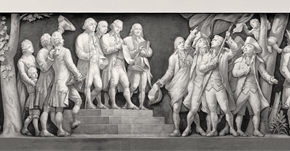
            The arrival of Italians to America brought many experts in masonry/stonework. As many immigrants were from the Sicilian region, these artisans carried with them techniques that were inspired by Roman, Byzantine, and Baroque characteristics. Though recognition was not often credited to the Italian Americans working on the architectural projects, the Italian and Sicilian cultural influence shines on many buildings in major cities across the country. In what was called the City Beautiful Movement, a push for civic pride and engagement to be present in urban development arose in the United States (Yalzadeh and Blumberg). Through this movement, cities such as Washington D.C. and Chicago wanted to convey a certain authority and sophistication, that of which they chose to be inspired through the Italian Renaissance (How has Italian culture influenced America?). Design choices such as domes, arches, and pillars, the ties to Roman and Greek architecture, are present in many current well-known American buildings and city designs.  For example, the design of the Capitol Building in Washington, D.C. was influenced directly by Rome’s classical temple form. The architect, Thomas U. Walter, was not an Italian American, though he adopted the Neoclassical and Rome style when designing the Capitol Building (Neoclassical). Regarding Italian Americans, two Italian American architects who, alongside another artist, painted the Frieze of American History in the rotunda of the Capitol Building. A rotunda, commonly within a dome, is a way to describe a round building or room, popular examples being the Pantheon in Rome, along with the rotunda in the Capitol Building. The 19 paintings by Constantino Brumidi, Filippo Costaggini, and Allyn Cox wrap around the rotunda, depicting important events that happened in American history. The Frieze has a grisaille style, which can be described as having an appearance of a sculpture through the use of monochromatic colors. Also by Constantino Brumidi in the rotunda, he painted the Apotheosis of Washington, which can be seen at the ceiling, reaching the sky. This painting depicts George Washington heading towards heaven, as scenes portraying different values such as Mechanics, Commerce, War, and others surround the first President of the United States (The Capitol Story). Though hired through commissions, these Italian American artists bring about great talent and Italian skill that decorates and helps make the Capitol Building as wondrous as it is.

Figure 1: The “Declaration of Independence” by Constantino Brumidi, Filippo Costaggini, and Allyn Cox. One of 19 scenes in the Frieze of American History, this image depicts the principal authors of the Declaration of Independence (The Capitol Story).

Figure 2: The Apotheosis of Washington. Painted in 1865 by Constantino Brumidi. Located in the eye of the rotunda in the Capitol Building, Washington, D.C. (The Capitol Story).

An example of renowned Italian American artisans include the Piccirilli brothers. The six Piccirilli brothers, who were all sculptors from Massa-Carrara, Italy, moved to New York with their parents and created a studio in the Bronx during the late 1890s.  In New York, they helped with sculptures such as, “the lions outside of the New York Public Library, the pediment of the New York Stock Exchange, and the statue of Abraham Lincoln at the Lincoln Memorial”. While the works from the Piccirilli brothers are not necessarily made in an Italian style, nor were many of their contributions signed, they are responsible for the marvelous creations that people still appreciate today (Tola). The father, Giuseppe Piccirilli, was a sculptor who was trained at the Accademia di San Luca in Rome, a prestigious art academy. He also had two of his sons trained there as well, with Giuseppe teaching his sons what he learned in addition to the two brothers’ accomplishments (The Monumental Impact of the Piccirilli Brothers with John Belardo). When they moved to America, they brought an unparalleled skill that they were able to apply and contribute to the development of modern America.

The contributions of Italian Americans in the art world has been important in showing the Italian American experience. As stated earlier, those who came to America from Italy did not have much with them, but they had knowledge of history and culture, along with talents in many fields. So, to cultivate and keep their traditions alive, Italian Americans produce art to convey their feelings about the new world they are living in and, as years go by, they have grown up and generations have passed. By expressing themselves through art, they hopefully have been able to feel as if they are still grounded in their roots of Italian culture, while also living fully as Americans.

There are many pieces and artists surrounding the Italian American experience and the preservation of culture. For example, the Italian American photographer Anthony Riccio strived to convey the compassion of a photographer, and wanted to dedicate his work in showing the Italian American experience. His published books consist of photographs and stories about the lives of Italian Americans in his hometown in Little Italy. One of his books includes The Italian American Experience in New Haven: Images and Oral Histories (2006). Riccio took the time to document and record the Italian American experience, making a point to care and show importance for the lives of others (Serra and Abisognio). His care for others and wanting to tell their stories through written record and photography adds a weight to the emotion and sincerity of his work. As an Italian American himself, he knew how different and important each person’s story is, wanting to reflect the hope, pain, love, work, and more that reflect the lifestyle of an Italian American. His work serves as an impactful record of what Italian Americans are like, what makes them unique, and why they matter.

The term “diaspora” is a reference to people who have moved from their homes to a new area, more specifically a new country. The migration of artists who have moved across the world (or their ancestors) is also referred to as a diaspora. These artists are important, as they push boundaries and challenge the normal ideas. They do this by incorporating their perceptions of the new world they are living in with their own personal experiences, creating a unique perspective that calls for reflection of the audience. One example of this is in Joseph Stella’s piece, Smoke Stack, 1935 (Gatto). This piece is a depiction of the industrial scene when the United States was attempting to create another industrial era during the Great Depression. The dark colors and large smoke stack taking up the middle of the frame have been described as cathedral-like. Stella, an Italian American, pulls together the rough nature of the industrial lifestyle and adds dramatic themes tied to cathedral design, creating an intense piece showcasing how daunting and dark the American lifestyle can be (Smoke Stack). A lot of Italian Americans were working tough labor jobs during this time, and being able to have the lifestyle brought to life through art helps to convey the sacrifice that the Italian Americans made when settling in the United States.

Figure 3: Joseph Stella, Smoke Stack, 1935. Dark shapes and colors depicting a smoke stack in an industrialized environment during the Great Depression (Smoke Stack).

In the second and third generations of Italian Americans, children of first or second generation Italians had to handle an ever-changing America, struggling to balance the ties to Italy and wanting to explore the new traditions they were surrounded by in America. An example of a second-generation Italian American is John Stango. His grandparents left from Foggia, Italy, arriving in the United States. As John grew up, he lived enriched in Italian culture, one example of this being his mom cooking traditional meals all the time, sitting at the dinner table for hours, and listening to music, which they loved the American artists with “Italian flavor” such as Frank Sinatra, Al Martino, and Connie Francis. His parents thought it was odd that he wanted to pursue a career in art, as they didn’t think he could make a living in that lifestyle (Tecce). This is a common reflection of Italian Americans feeling pressured by their parents to pursue a “successful” career, as the parents feel they moved to America for their kids to be as successful as they can, and in doing so want their children to pursue a career that would guarantee financial stability and success. Nevertheless, John worked hard in school and became successful, being featured in magazines, museums, galleries, and embassies. John’s artistic pieces contain many sports figures, but they also include many Italian Americans and patriotism, as his dad served in World War 2 (Tecce). John’s passion and dedication to working hard for his career shows the true drive for success that the Italians who immigrated to America arrived with. Through art, John is able to cultivate a collection of pride for his heritage through his creations and be proud of who he is. This helps lead to more recognition into Italian American heritage and showcase how important it is to express your pride for your culture.

Overall, Italian Americans have played a prominent role in the development of architecture, sculptures, artworks, and more in the United States. Through their sacrifices and the sacrifices of their parents, they were (and still are) able to work hard for their life in America, pursuing their talents. With many immigrants having been trained in the valuable skills of artisanship and masonry, they came to America with an abundance of skills and knowledge, propelling the artistic world in the United States. Moreover, Italian Americans are known for having a strong work ethic, wanting to work hard in everything they do. This is present in the hard work of John Stango, Piccirilli brothers, Constantino Brumidi, and Filippo Costaggini, as they had a passion for art and they were going to accomplish their dreams one way or another. The works by Joseph Stella and Anthony Riccio show a passion and emphasis on expressing Italian Americans and their culture, helping convey to the world their experiences and why they are important. All of these contributors to the art world are vital to helping make America what it is today, a place with renowned architectural buildings and an appreciation for the cultures and pasts of others, bringing new design aspects to increase the diversity of the architectural landscape and solidifying Italian American culture into America’s visual history.

By:Chaney Bean

            America is as diverse of a land as they come. Within its borders are people from all walks of life. Their different ideas and traditions are constantly mixing to produce the unique culture found here. So, what does it mean to say someone is an “Italian American?” Truth be told, it looks different to everyone. With changing times the very idea of culture has evolved into many different interpretations. It is no longer solely based on one’s ancestry, but rather the aspects of culture an individual chooses to incorporate into their lives. This fluid concept has allowed unique cultures to prevail in the melting pot that is the United States. Starting with the original immigrants and the customs they passed through the generations, Italian culture has been able to leave its mark on the nation through the people that embrace it.

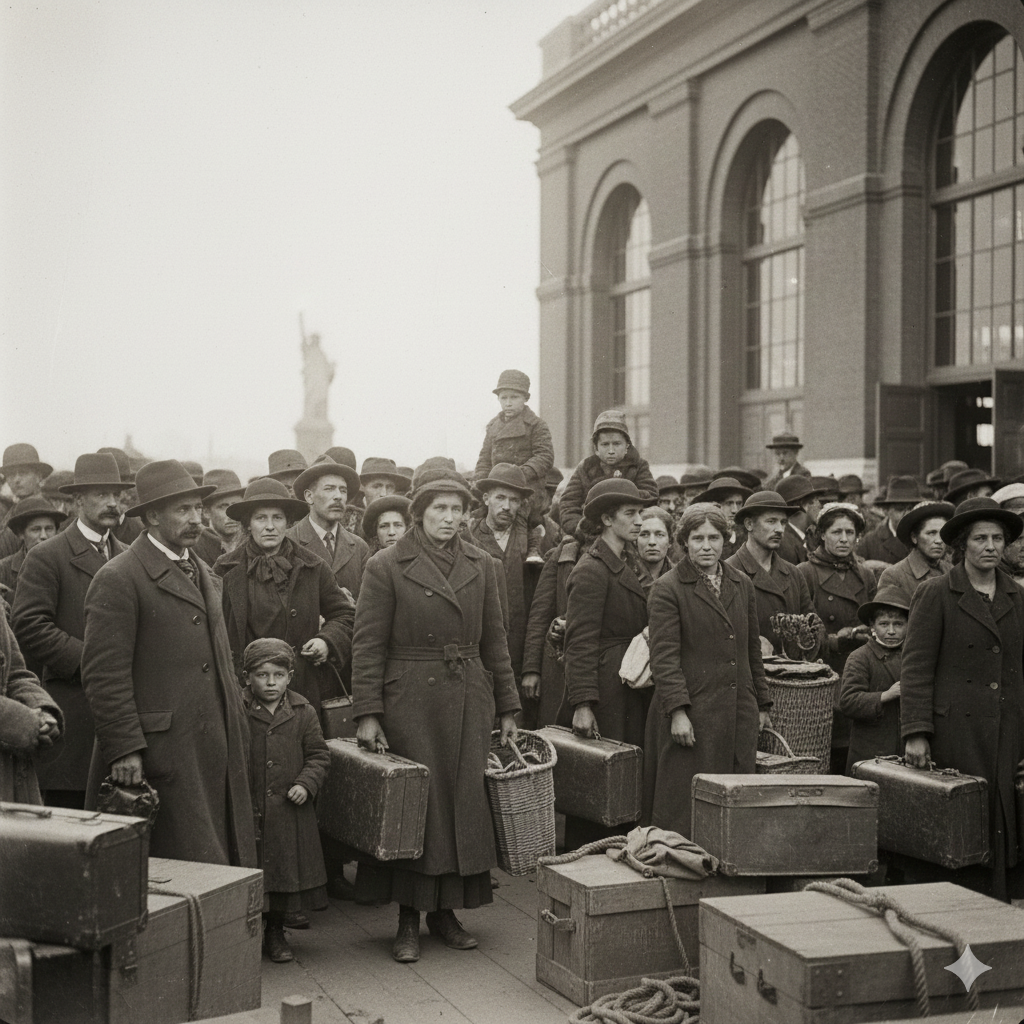
            Many brave Italians made the journey through Ellis Island in the 1880s. Their heads were filled with dreams of a prosperous American life. By the 1920s, over four million Italians resided within the states. They now constituted over ten percent of the total population. The harsh conditions found in Italy at this time were largely responsible for driving the waves of immigrants. High levels of disease and poverty plagued Italian streets and many people wanted a fresh start. The Italian government, an ununified entity, was in no place to offer the aid its citizens needed. People instead turned to America for hope of a better life.  Immigrants who returned to Italy shared their stories and recruiters began to entice Italians to immigrate as a way to fill the needed labor roles in America. The United States was a rapidly growing nation and desperately needed cheap laborers to help build its infrastructure. These immigrants came from all over Italy and each brought their own unique customs, traditions, and views aboard the ships as they set sail. They carried their belongings and ideas across the ocean and would prove to have a lasting impact on the culture in America.

            America has long been deemed a “melting pot” with ingredients from every corner of the world. The cultures of its people mix together to create the American way of life. This was true, especially in the early days of immigration. Many people assimilated to the culture they found around them and abandoned large aspects of their own culture. With the cross contact of so many backgrounds and the increased frequency of mixed marriages, ethnic lines were largely blurred. For many of European descent, ethnicity played a secondary role within their American lives. Italians chose to adopt the culture around them and focus less on being “Italian.” This was, in part, due to the negative connotation that had come to be associated with Italians. The stereotypes and violence toward Italian Americans made many feel they needed to blend in with their American neighbors. They assimilated into American culture and, with that, parts of Italian culture were largely lost.

            The 1960s saw a challenge to the idea of the traditional melting pot. The shift allowed for the reemergence of many cultures that once felt they had to blend in. There was a whole new interpretation of the very meaning of culture. The focus shifted toward the activities one chose to engage in, rather than their ancestral background alone. There was the idea of a “creative ethnicity,” where an individual is able to merge aspects from various ethnic groups to create a cultural identity that is uniquely their own. People were moving around the country during this time and many of the ethnic neighborhoods began to dissolve. No longer were the majority of Italians found within Little Italy sectors of cities. They were intermixed with other cultures and, thus, adopted some of their characteristics. This was a radical shift from the idea of rigid cultural lines seen in previous decades. As the generations stemmed further and further from the original Italian immigrant, the ideas of Italian culture changed. They had many elements of culture in which to pull from and create their own version of what it meant to be Italian.

            The idea of what it means to be an Italian does not have one, uniform definition. It is up to the individual how they express their “Italianness.” People are free to pick and choose what elements they incorporate into their daily lives and pass on to their families. In a study of young Italians living in New York, the participants all defined “being Italian” differently. Some focused on one’s relatives and others defined it as “anyone who wanted to embrace and honor Italian culture.” Many Italian Americans today are second generation and beyond. It has been generations since their families stepped off the ship onto American soil. For the Italian Americans today, culture is more loosely defined and they can interpret it as they see fit. For some it looks like Sunday dinner with their family and others it has become about honoring the values of the culture they hold dear. Being Italian means something different to everyone and leaves room for each individual to explore what their culture is to them.

            Despite facing many negative stereotypes, Italian culture has left a real mark on America. It is a culture that places emphasis on family and love. Italians value their close knit families and the time they devote to one another. It is something many other cultures deeply admire. When many think of Italian culture, they think of the sacred pasta recipe that is passed down through families for generations. This is not all that far from the truth. Italians have a deep respect for their cuisine and it is something that even fourth and fifth generation Italians understand and value. The special family dishes are experienced by all the senses and invoke a sense of pride in one’s heritage. The taste, the aroma allows a person to truly feel the product of their culture. Food can tell a story that everyone is able to understand. Pride in one’s ancestors is another important aspect of Italian culture. Understanding that they came seeking new opportunities despite the hardship and being proud of what they were able to accomplish in light of the many barriers to their success.

            The acceptance of different cultures has come a long way from the days of Ellis Island. People no longer feel forced to assimilate into the dominant culture around them, however, that does not mean there are not still barriers present. Even to this day, Italian Americans are often met with negative stereotypes that can make them hesitant to embrace their cultural roots. The media is much to blame for spreading these false ideas about Italians. It has painted the picture of mobsters, cold workaholics, and people who just love a good party. There is also the internal struggle of feeling their identity is composed of two ethnicities and the challenge to manage them both. It is living both an Italian and an American lifestyle and finding the balance between them.

            Today, Italy is a nation greatly valued for its contributions to fashion, art, and cuisine, however, this has not always been the case. Italy carried a negative connotation for much of its history. Poverty and disease plagued the streets and left many desperate for better lives. Through the decades, Italy has emerged as a prominent cultural scene. This “rags to riches” story makes Italian Americans uniquely interested in exploring their heritage. Italy is popular in the media for its impact on popular culture. Italian Americans are proud of where they come from and are exploring what it means to be Italian more than ever. 

            Being Italian means being part of a large, global community. It is based on shared values amongst people living on all corners of the Earth. Each Italian American has embraced their own idea of the culture and created the fluid definition of “Italian” that is felt today. Every immigrant brought with them their stories, their customs, and their views as they made the great voyage across the Atlantic sea. These ideas were passed down, with each generation adding something new. Italian culture is as dynamic as the people who choose to honor its values and has left a mark on America that can be felt by all.

Work Cited

Connell, William J., and Stanislao G. Pugliese, editors. The Routledge History of Italian Americans. 1st Edition ed., Routledge, 2017. Accessed 11 09 2025.

by Chaney Bean

Today, Italian food can be found almost everywhere in the United States. From fine dining restaurants to local pizza spots, it has become a staple in the American diet. This was not always true and the road to get here was a hard one. It is thanks to the brave Italian immigrants who voyaged across the Atlantic and started new lives in America. Their sacrifices gave rise to a new cuisine and laid the foundation for its popularity today.

            The movie, Big Night, has long been praised as one of the best food films created. However, the film goes beyond the subject of food. It uses comedy to portray the hardships faced by Italian immigrants as they attempted to succeed in America. The brothers, Primo and Secondo, are struggling to keep their authentic restaurant afloat. This was the unfortunate situation many Italian-owned businesses found themselves in at the time. Italians were fleeing the tough conditions of their homeland and looked to the United States as a land of opportunity. Each arrived with their unique dreams and set out to make them a reality. The harsh truth was, they were not warmly welcomed into their new land. Americans often treated with hostility and discrimination served as a barrier for their aspirations. Italians were told to assimilate into American culture. Their unique customs were not welcome here. The atmosphere of America created internal battles for immigrants as they struggled with finding the balance between staying true to their roots and fitting in.

            Nobody thinks twice about going out for pizza or enjoying a bowl of comforting pasta in America today, but it took a long time for America to embrace these dishes. Many of the Italian immigrants were fleeing poverty and came with little more than the clothes on their back. Americans perceived them as dirty and of “lesser” quality. These negative stereotypes extended to the food they served. Americans did not want the “food of poor people.” The first attempts to bring Italian dishes to the American people were met with criticisms such as, it was “too garlicky.” These unfamiliar flavors were not appealing to customers and they tended to steer clear of the Italian restaurants. This made it very difficult for Italian chefs to gain a foot-hold in the culinary scene. Big Night opens with a scene of an American couple dining at an Italian establishment. They are the only diners present and are not pleased with how their meal is being served. The couple makes multiple requests for the meal to be more “Americanized.” The proud chef, however, is very hesitant to compromise the authenticity of his dishes for the tastes of Americans.  These Italian recipes were sacred to the chef that crafted them and requests to alter them were seen as insults. This held the integration of Italian cuisine into American culture at a standstill with both sides reluctant to change their ways.

            Immigrants faced a variety of challenges upon arriving on the American shores. They had taken a gamble and left their lives in Italy to start fresh in the United States. Italians had to figure out quickly how to make it in American society. The lives of Secondo and Primo in Big Night represent just how hard it was to be an immigrant. They are struggling financially and the only way to save the restaurant is to bring in customers, yet diners are hesitant to try their food. Secondo thinks removing risotto from the menu will save them precious funds, due to its complexity and lack of popularity. Primo refuses. This serves as a demonstration of the balance immigrants had to find between their culture and American culture.  Secondo is willing to compromise on authenticity in order to succeed among Americans. Primo, however, remains strongly committed to his authentic heritage. He calls the Americanized food served at the competing restaurant a “crime” and shoots down any ideas that compromise the authenticity of his menu. To Primo, and many other Italians, food is more than physical nourishment. It connects them back to their homeland. Their recipes are akin to family heirlooms and are treated with deep respect. Many felt that changing their recipes was cutting ties with their roots.

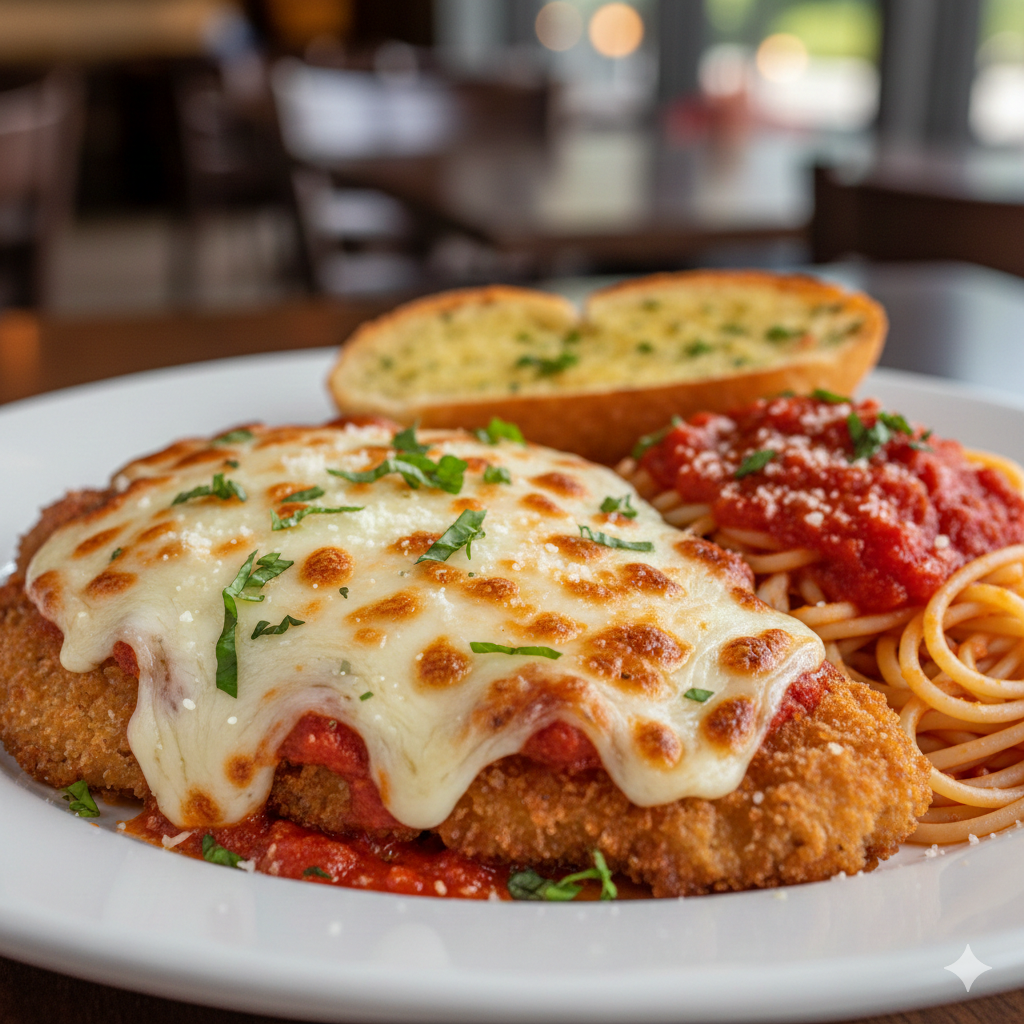
            Much of the Italian food seen in the United States is actually Italian American food. A whole new cuisine developed by generations of Italian Americans as they put their own spin on the classics from Italy. Pepperoni pizza, spaghetti and meatballs, and even garlic bread were all born in America and would not be recognized in Italy. These are dishes that took the classic, Italian flavors and turned them into a meal enjoyed in America. This was partly necessary due to the different selection of ingredients found in the United States compared to Italy. Their recipes had to be adapted with what was available. Meat products also changed the way these dishes were prepared. Meat was scarce in Italy and most of the traditional dishes were prepared without it at all. People in the United States had a much more abundant meat supply at their disposal. Immigrants took advantage of this luxury and began to incorporate meat into previously vegetarian recipes. Secondo and Primo’s rival restaurant, Pascal’s, in Big Night is a much more popular spot and is shown serving large portions of spaghetti and meatballs. This was what Americans thought of when they thought of Italian food. Rich pasta and meat with flavors they could understand, not the risotto being served by Primo and Secondo. Americans were not used to thinking about their meals, they simply wanted to enjoy something familiar and have a good time. Authentic Italian food invoked deeper thought, which made it harder to sell to the American diners.

            It took a long time even for restaurants like Pascal’s to become as mainstream as they are today. While a select few were able to flourish, most Italian owned restaurants were still struggling to bring in customers. Many were forced to close their doors and look for other lines of work. World War II marked a major turning point in many areas of innovation, including the culinary arts. Companies like Chef Boyardee sought to combine Italian flavors with convenience. Their canned pasta made them a top producer of wartime rations. Even if it came from the store shelf, this increased exposure and versatility allowed the flavors of Italian cooking to reach a wider audience than ever before. Beyond that, soldiers had their tastes expanded during their time fighting overseas. They learned how good Italian food could be. Upon return they craved things, like pizza and pasta, that had brought so much comfort while living under grueling wartime conditions. This was a chance that Italian restaurants had been waiting for and they seized their opportunity. Pizza parlors and pasta restaurants opened their doors and filled their dining rooms with hungry customers. World War II also marked a turning point in the acceptance of Italian Americans. Over one million soldiers were of Italian descent and earned respect for their community as they fought for the country. They were beginning to be seen, not as foreigners, but as Americans.

In present times, Italian food is some of the most popular in America. It is found almost everywhere and ranges from fine dining to fast, casual. It was an uphill battle, but this cuisine has come to be loved by Italians and Americans alike. Italian immigrants and their descendents gave rise to a new style of Italian American cuisine that has greatly impacted the culinary landscape in the United States. Whether it is Friday night pizza or a celebratory pasta dinner, Italian flavors are part of American culture and are here to stay.

Works Cited

Fioretti, Daniele, and Fulvio Orsitto, editors. Italian Americans in Film: Establishing and Challenging Italian American Identities. Springer International Publishing, 2022.

Scott, Campbell, and Stanley Tucci, directors. Big Night. 1996. Rysher Entertainment, 1996.

by Janice Therese Mancuso


“An Italian discovered America; another Italian gave her his name; still another Italian first planted the
English flag on American soil and gave England her claim to North America and the American people
their first claim to independence; other Italians explored, or helped to explore, her coasts, from the
Atlantic to the Gulf of Mexico and the Pacific, as well as her interior …” (Giovanni Schiavo, Four Centuries of Italian-American History, 1952).


Giovanni Schiavo was proud to be Italian American. Born in Castellammare del Golfo, Sicily – on the
northern coast between Trapani and Palermo – Schiavo immigrated to Baltimore with his family in
January 1916, shortly before he turned eighteen. Several years later, he joined the army, becoming a
naturalized American citizen.


Schiavo started his career as a cub reporter, investigating and writing for the Baltimore Sun as he attended John Hopkins University. He later attended Columbia University, but because of financial constraints during the Depression, he was unable to complete the program for a doctorial degree. He continued his career as a journalist and researcher through positions at various publications, including Encyclopedia Britannica, New York Herald Tribune, and The Atlantic (magazine), among others.


His work required traveling, and provided him with opportunities to meet Italians, from recent arrivals to
subsequent generations, in cities throughout America. Schiavo was interested in their present living
conditions and their past lives in Italy, seeking the connections between the history of both countries and
the resulting societal standards of Italian immigrants in America.


Escaping poverty in Italy – most notably in the southern regions – in search of a better life was a
dominant factor in motivating the immigrants to leave their homeland. However, the dreadful treatment
and discrimination towards Italians created substandard living conditions, and some note that the rise in
crime by a small segment of Italians was a consequence of American rejection, amplified by negative
news and misleading statistical surveys. It was in researching these reports that Schiavo found numerous
errors regarding the role of Italian immigrants in America, dating back to the origins of the country.


Schiavo was a Fellow in the Department of Sociology at New York University when his first book, The
Italians in Chicago: A Study in Americanization
, was published in 1928. In his introduction he states:
“Several studies have been made of the Italians in Chicago. [Most pertain to] a particular phase of Italian
life in the city or a particular Italian district. All of them are superficial and quite unrepresentative of the
community as a whole.”


Schiavo provided statistics of the Italian population comparing the United States Census to the figures
reported by the Immigration Commission in 1895, showing the discrepancies. He notes the figures were
skewed emphasizing, with the exception of one, “the poorest Italian districts …” did not represent an
overall accurate account of Italians in Chicago. Those conducting the report failed to “notice the forward
march of those that have moved out of the poor districts. Once an Italian makes good, he is no longer an
Italian. He remains an Italian, however, as long as he is a failure.”


The Italians in Chicago was the first book written by Schiavo to provide a positive view of Italian
Americans and to correct the misconceptions, believing “an entirely different picture of the Italians could
be presented to the American people.” In keeping with a similar format, the following year, The Italians
in Missouri
was published.

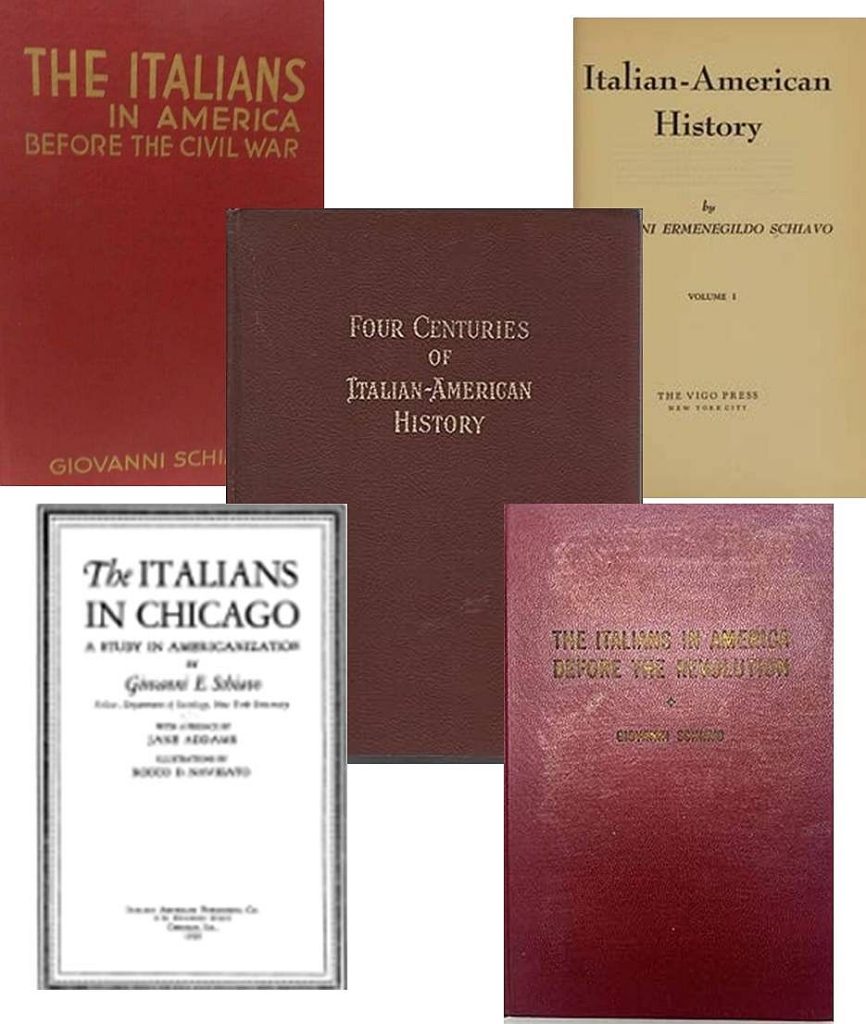
In 1934, Schiavo established Vigo Press – named after Giuseppe Maria Francesco Vigo, a supporter of America during the Revolution (1775-1783) who provided funds to General George Rogers Clark – and published The Italians in America before the Civil War. Extensively researched, the book provides a history of Italian immigration dating back to their thirteenth century migration to England, and later to Spain and France. In the book, Schiavo mentions the Italian navigators and land explorers that traveled to and through what would become a new continent, the Italian artisans and other professionals living in the States before the Civil War, and both Filippo Mazzei (1730-1816) and Vigo (1747-1836) who each have a chapter detailing their lives.


From 1935 to 1976, Schiavo wrote at least ten more books about Italian Americans, his most well-known
among them: Four Centuries of Italian-American History in 1952, republished in 1993. All his books
were meticulously researched. He scrutinized the details and made notes of the discrepancies in the
surveys and reports he studied. Schiavo was opinionated and was not averse to identifying inaccurate
reports, studies, and books – along with their authors – that overlooked or altered the facts.


In The Italians in Chicago, he states: “It would be quite a hard task to trace all the Americans of Italian
origin in the city. Many of them have Anglicized their names and many others who still retain their
original names are not desirous to be associated with anything which does not savor of 100 per cent
Americanism.” Anglicization of names is a recurring theme among Schiavo’s books. In The Italians in
America before the Revolution
(published in 1976), he writes: “At the time of the Declaration of
Independence in 1776, there were in the Thirteen Colonies, as well as in the French and Spanish
possessions that are now part of the United States, many families of Italian birth or descent. How many,
we can’t even estimate because of the change of Italian names …”


Referring to the growth of America, in Four Centuries … Schiavo wrote, “As a matter of fact, the Italians
have been coming to, and settled in, the territory that is today the United States of America, before any
other national group, with the exception of the Spanish.” Although others wrote about Italian Americans,
Schiavo’s books and articles established the foundation for the history of Italians in America, and with his
death in 1983, he left a legacy of invaluable information that should be more widely shared today with all
nationalities.

by Janice Therese Mancuso

The legacy of Italians who contributed to the growth and prosperity of America is a significant part of American history, but often overlooked. Iconic products that symbolized American life – Zamboni, Radio Flyer, Tropicana, Planters Peanuts, Subway, Jeno’s – and concepts that improved American standards – Giannini’s bank, a Montessori education, the Rogallo wing, Marconi’s wireless communication, Meucci’s telephone – have been absorbed into American society with little recognition of their Italian roots.

In 2006, Thirty-One Days of Italians was founded to educate all nationalities about the prominent role Italians and Italian Americans had in developing the products and concepts that are now ingrained in America. The website features 75 people of Italian heritage, recognizing them for their extraordinary achievements. Biographies and links to credible resources provide an easily accessible year-round reference guide for teachers, students, homeschool parents, and anyone else interested in learning about Italian American history.

For Italian American Heritage Month, a calendar provides a date and name to celebrate for each day in October. The first day honors all Italian immigrants and the last day is set aside to honor someone special. While all on the list are noteworthy, Honorary Members [HM] are on the calendar every year: (in alphabetical order): Father Pietro Bandini, Constantino Brumidi, Mother Francis Cabrini, Enrico Caruso, Christopher Columbus, Enrico Fermi, Amadeo Pietro Giannini, Guglielmo Marconi, Filippo Mazzei, Antonio Meucci, Maria Montessori, Andrea Palladio, Antonio Pasin, Arturo Toscanini, and Amerigo Vespucci.

The remaining days are assigned to others on a rotating basis. The 2025-2026 List includes (in alphabetical order) Mario Andretti, John Buscema, Frank Capra, Eusebio Francesco Chini (Father Kino), Enrico de Tonti, Daniela Gioseffi, Mario Lanza, Jeno F. Paulucci, Leonard Riggio, Francis Rogallo, Francesco Scavullo, Charles Angelo Siringo, Giuseppe Maria Francesco Vigo, and Frank Zamboni.

2025-2026 LIST OF THIRTY-ONE DAYS OF ITALIANS

The Quick Facts List of Thirty-One Days of Italians provides a date and name to celebrate for each day in October when Italian Americans honor their culture and heritage.

HM: Honorary Member (On the List every year.)

October 1: The Italian Immigrant [HM]

A day to honor every Italian who journeyed to America from Italy.

October 2: Amadeo Pietro Giannini [HM]

Established the branch banking system in America.

October 3: Guglielmo Marconi [HM]

Known as the Father of Radio for his experiments with long distance wireless transmissions.

October 4: Filippo Mazzei [HM]

Supporter of American freedom during American Revolution. Thomas Jefferson’s inclusion of “all men are created equal” into the Declaration of Independence is a paraphrase of Mazzei’s “All men are by nature equally free and independent.”

October 5: Antonio Meucci [HM]

Original holder of the patent for the forerunner of today’s telephone.

October 6: Frank Capra

Acclaimed 20th century film director, best known for It’s A Wonderful Life.

October 7: Francesco Scavullo

One of the most prominent glamour, fashion, and celebrity photographers in the world.

October 8: John Buscema

Master artist at Marvel Comics.

October 9: Father Pietro Bandini [HM]

Missionary for Native Americans. In 1898 established Tontitown, “a perfect example of colonization” in Arkansas.

October 10: Enrico Fermi [HM]

Discovered radioactive elements that heralded the nuclear age.

October 11: Antonio Pasin [HM]

Created Radio Flyer wagon.

October 12: Christopher Columbus [HM]

Navigator that changed the world, opening trade routes and immigration from Europe to the Americas.

October 13: Maria Montessori, M.D [HM]

Developed an educational method for teaching children.

October 14: Mario Andretti

Record-setting race car driver with over 100 wins, and the only driver to win the Daytona 500, Indy 500, and Formula One.

October 15: Enrico de Tonti

Exploring for the French under the name Henri de Tonti, he arrived in America with La Salle in 1678. Established the first settlement in Arkansas, earning him the title “Father of Arkansas.”

October 16: Francis Rogallo

Developed the Rogallo wing, a flexible wing that earned him the title “father of modern hang gliding.”

October 17: Mother Francis Xavier Cabrini [HM]

First American citizen to become a saint.

October 18: Enrico Caruso [HM]

World’s most acclaimed tenor in the early 1900s.

October 19: Daniela Gioseffi

Award winning poet, writer, lecturer, and educator.

October 20: Mario Lanza

Renowned tenor and film star in the mid-1950s.

October 21: Arturo Toscanini [HM]

One of the world’s greatest orchestra conductors.

October 22: Giuseppe Maria Francesco Vigo

Assisted the American colonies during the Revolutionary War.

October 23: Eusebio Francesco Chini (Eusebio Kino)

Jesuit sent to Mexico in 1681. Charted maps and discovered that Baja California was a peninsula. His maps of the southwest were used until the early 1800s.

October 24: Jeno F. Paulucci

Founder of Chun King Chinese Food, Jeno’s Pizza, and Bellisio Foods, the parent company of Michelina’s, and the National Italian American Foundation (NIAF).

October 25: Amerigo Vespucci [HM]

Namesake of America.

October 26: Frank J. Zamboni

Creator of the world’s first ice resurfacing machine.

October 27: Constantino Brumidi [HM]

Known as the “Michelangelo of the [U.S.] Capitol.”

October 28: Charles Angelo Siringo

One of the first Pinkerton undercover detectives, and attributed as a leading figure of cowboy heroes of the American West.

October 29: Leonard Riggio

Built Barnes & Noble into a book superstore during the 1980s and 90s.

October 30: Andrea Palladio [HM]

“Father of Architecture,” wrote The Four Books on Architecture, the most famous and influential books on architecture of all time, and still in print.

October 31: Your Favorite Italian

Celebrate someone not on the list, but greatly admired.

Visit thirtyonedaysofitalians.com to learn more about the remarkable Italian Americans who have greatly contributed to American culture, society, and history.

Image: Enrico de Tonti, Charles Angelo Siringo, Francesco Scavullo, Francis Rogallo.

Interview by Jo Ann Cavallo, Columbia University

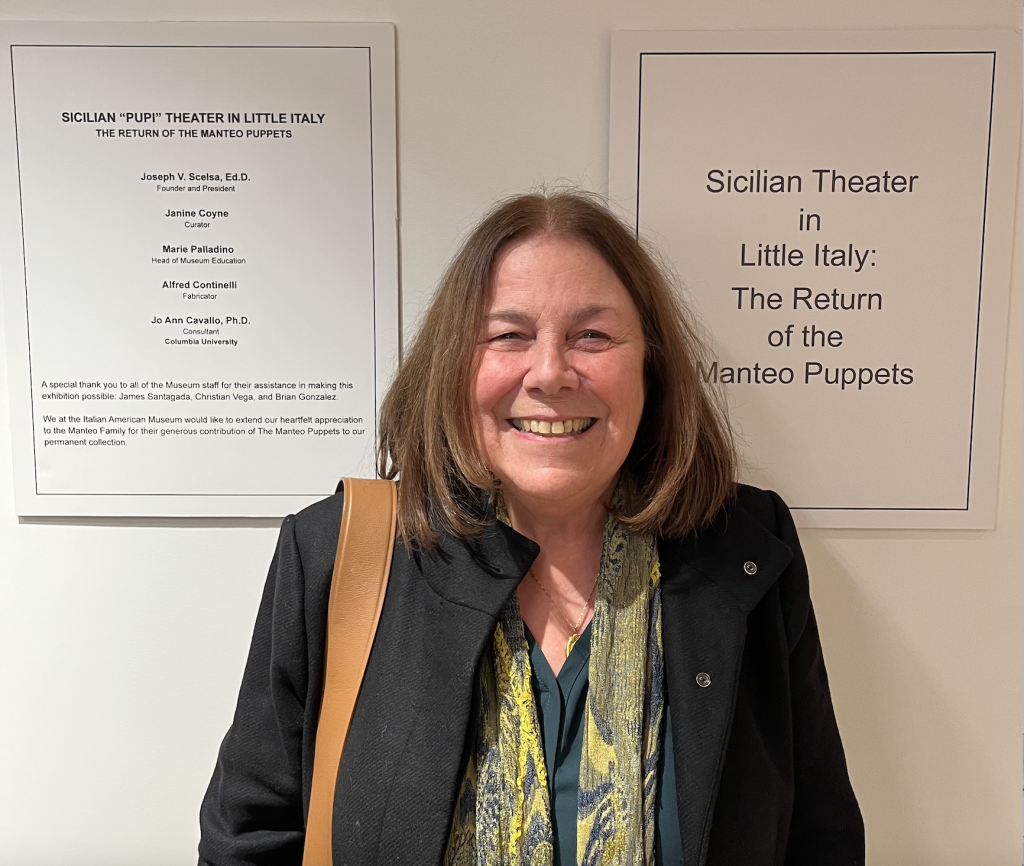
On July 30, 2025, I had the pleasure of interviewing Janine Cortese Coyne about her work as curator of the Italian American Museum in New York City, including preparations for the museum’s permanent collection and current exhibits on the Manteo family’s Catanese-style Sicilian puppets and the S.S. Andrea Doria. We also discussed her career as a photojournalist and professor of photography specializing in the photo essay, as well as her Italian American family history. Below is a slightly edited version of our conversation.

JAC: Thank you for taking the time to meet with me today. I know you have a busy schedule as curator of the Italian American Museum, especially with the new “Andrea Doria: The Final Voyage” exhibit.

JCC: I’m very honored, thank you.

JAC: I thought we might start off with your work at the Italian American Museum and then delve into your career in photography and your family background. So my first question is: how did you come to be the curator of the Italian American Museum (IAM)?

JCC: In 2014, I had the opening exhibition at the original location of the Italian American Museum, Banca Stabile, on the corner of Grand and Mulberry Streets. Dr. Joseph Scelsa, founder and president of the IAM, had asked me to do a one-person show on my photographic work on Naples (Napoli). We had been friends through City University since the ’90s, and I exhibited previously at the Calandra Institute (CUNY) where he was the dean. When I told him that I was going to retire from City University, he asked me, “Would you want to begin to curate here?” I had curated exhibits while I was teaching, and I thought, what a wonderful door that just opened to me, as I retire from one place, I’m moving into another. It was a hands-on operation, two people, we would brainstorm to plan different exhibits, and it wasn’t only art, although that’s my background. Before we closed to plan for the new museum to be built, we had nearly twenty exhibits and presentations there.

JAC: What were the most memorable ones that you curated in the museum’s original location?

JCC: I’ll mention just a couple that stand out in my mind. One was on the history of Italian bicycles. We collaborated with someone who shared his collection of bikes, including the bike of Gino Bartali, who was a famed Italian cyclist who won the tour de France and the Giro d’Italia twice. During World War II there were no competitions, but during the German occupation of Italy the Nazis allowed him to ride his bike throughout the country so that he could continue to train. And what he did was truly amazing. He put false identity cards in the frame and handlebars of his bike—documents that would enable the Jewish people to escape. He would ride his bike from Florence to Assisi, where monks would disable the bike, take the documents, and then find ways of getting the people out.

JAC: Wow, that is an amazing and heroic story! Especially how it connects bikes to people’s lives and world history.

JCC: We did another one with a Greek multimedia artist on immigration, but in a different way. He made suitcases out of iron, he used life jackets, he took pictures of immigrants arriving, and he also did some painting, using the natural elements of sand and dirt, as background. So it was an installation more than an exhibit, in terms of wall space. And that, again, was very meaningful. We were always looking for things that were meaningful. Another exhibit that I curated was Italian-American Women Artists. There were so many contemporary women artists that were involved, especially at the museum, so the time had come to have an exhibit of their work. There were painters, sculptors, collage artists, graphic designers, and photographers. There were many other notable exhibits, but we needed to close so that construction on the new building could begin.

Facade of the Italian American Museum on Mulberry Street NYC. Photo credit: Janine Coyne.

JAC: When did you reopen at 151 Mulberry Street? 

JCC: We reopened in October, 2024. Dr. Scelsa had always wanted to open this new space with an exhibit of the collection of Manteo puppets that were donated to the museum by the Manteo family. There were several on display in the previous location, but now we were able to put all 32 puppets on display. The exhibit takes up the entire mezzanine floor. It’s especially meaningful because Agrippino Manteo’s son, Mike Manteo, wanted to donate the puppets to the museum because he dreamed of a permanent home for them. And now they have returned, right up the street from the family’s former Sicilian puppet theater at 109 Mulberry Street. And I want to thank you for helping us put this exhibit together. You assisted us greatly by providing background information on the history of the family. And then, I love the day that you came with your daughter and identified the puppets for me. I thought that was so beautiful.

JAC: Thanks, Janine. I hadn’t seen the Manteo puppets since the early 2000s when they were hanging in Pino Manteo’s garage, so it was exciting to see them on display in all their glory. Could you say a bit more about the exhibit from behind the scenes? For example, how did you get those heavy puppets from storage to the location where they are now? What kind of work did it entail?

JCC: Dr. Scelsa had them in storage in the Bronx, and they were wrapped separately in moving blankets. He enlisted the help of a retired firefighter and a couple of his friends. They took the puppets that weigh, as you know, almost 100 pounds each, loaded them up, and brought them to the museum. So on that floor where the exhibit is now, you could see them all lined up, still wrapped. Dr. Scelsa also had a wonderful man who had retired from a job in construction—a lot of the work that’s done at the museum is through volunteers—who made thirty-two full-size heavy-duty stands himself over the course of a few months. When he brought them to the museum, we were able to stand the puppets up.

JAC: Who was present for the unveiling? How many people did it take to lift them onto the stands?

JCC: Dr. Scelsa and I were present along with two of our strong staff members. We unwrapped them together, and the two young men lifted them onto the stands.

Sicilian Theater in Little Italy, The Return of the Manteo Puppets exhibition at the Italian American Museum. Photo credit: Janine Coyne.

JAC: Did they need any restoration or were they good to go?

JCC: We just fluffed out the costumes that they had on and they were good to go. The costumes are so beautiful. And it was amazing, too, that all the hand-painted faces were in great condition, without cracks. Only a little wire was out of place here and there on some of the metal armor, so we simply adjusted it.

Final touches to the installation. Photo credit: IAM.

JAC: How did the Manteo family react after seeing the puppets after so long? 

JCC: When Susie Bruno, the daughter of Ida and granddaughter of Agrippino, arrived and looked at them, she had tears in her eyes and said to them: “Here you are, I’m finally seeing you again.” And honestly, it brought tears to all of us. She went over to greet each one, and she touched their faces. It was incredible to see. But then she said, “I have capes at home that need to be put on.” So she came back. There are several of us that work at the museum, and we were there with her, and we listened to her stories, and then she took the capes, and she remembered which of the puppets needed the capes, having worked on them with her mother since she was a very young girl. Even after she got married, she and her husband helped run the theater. Susie lovingly put the capes on them and then she fluffed them and inspected all of the puppets to make sure they were as they should be. So now we just need to keep the dust off them, but they really were preserved beautifully. When Dr. Scelsa decides that we will take them down, then we will wrap them up again, and we will store them. I’m dreading that day, though, because we totally love them.

JAC: Have you also had a chance to speak with the visitors to the exhibit? What’s their reaction to seeing the puppets so up close and right in front of them?

JCC: Oh yes, their reaction is amazing, especially the younger ones. At one point, I brought my entire family over, which involved my seven grandchildren from ages 2 to 18. I especially remember how the younger ones responded at the time. They were mesmerized and wanted to return again, and my 18-year-old granddaughter made a beautiful painting of a Saracen puppet out of fabric and paint. I saw it when I went to her high school art exhibition this year. You never know what inspires people, you know?

JAC: Have there been group visits? 

JCC: Yes, in addition to school groups of elementary through high school students that come on scheduled visits, some come as families. I have met several who bring their elderly parents and their children and grandchildren. The response is always the same. They’re just amazed that one family was able to do all this. I mean, how did they construct the puppets, perform with them, and memorize all the scripts? And how did they create those different scenes on several backdrops? Visitors can also watch the film by Tony De Nonno, It’s One Family, Knock on Wood (1982) on a small screen in the gallery. We have signage throughout that tells the Manteo story. There’s also a long snake that they made and we wonder how that fits in!

Manteo puppets (Arismondo and two pagan captains) with one of the family’s backdrops. Photo credit: Janine Coyne.

JAC: The backdrop is really striking, a work of art in its own right.

JCC: Yes, we had several that we could have used. My feeling was that we should use a backdrop on just one wall, and have the white wall on the other sides so that the puppets could stand out against them, and you really can see the contrast. So it’s a very exciting time, and we continue to get visitors coming in. When we had the presentation with members of the Manteo family, along with you, Tony De Nonno, and Anna Lomax Wood, we were really treated to hearing the family’s stories, especially the memories of Susie Bruno.

JAC: Yes, the audience couldn’t stop asking questions, there was so much interest. After the event, someone approached me who remembered the episodes of the Storia dei Paladini di Francia from his childhood. That’s still common in Sicily. Whenever I’m there, I try to strike up conversations with the elderly gentlemen, and many of them remember the stories. It’s sometimes enough to ask about a character, for example, what do you think of Marfisa, the woman warrior? That may prompt them to relate her entire history, from birth to death.

JCC: I think, Jo Ann, that would be a good oral history project, recording the recollections of people who remember the stories, you know?

JAC: Right, and sadly time is running out. The staging of cycles of over 300 consecutive plays ceased in the late 1950s. But I don’t want to get carried away talking about the Paladins of France. Let’s move on to the Andrea Doria exhibit. I saw in the news that you also had some survivors present to talk about their memories, and I was really touched by this. So I’d love to hear more about the preparation that went into this exhibit and the opening that just took place.

JCC: Gladly, I’m still on a high from it. To begin, there is a survivor group that has a reunion every year. It’s run by a lovely woman, Pierette Domenica Simpson. She was nine years old when she was on the Andrea Doria, traveling with her grandparents. Every year, she organizes a reunion of survivors in different locations. The reunion brought the survivors together with their families to hear their stories and give oral histories of their experiences. Pierette Simpson worked with the film director Luca Guardabascio to produce a documentary about the crash, Andrea Doria: Are the Passengers Saved?(2016). The subtitle reports the words that the captain, Piero Calamai, uttered after the MS Stockholm crashed into the Andrea Doria. He was haunted by the event. Even on his deathbed years later, Captain Calamai asked “Are the passengers saved”? The movie is excellent, and I think the museum will be showing it at different times during the exhibition. Pierette Simpson also wrote a book about it, Alive on the Andrea Doria! The Greatest Sea Rescue in History (2006). Generally, when they have reunions, John Moyer, the diver who made 120 dives to the wreck, supplies a few artifacts to exhibit. I saw some photos from the exhibit at the Noble Maritime Museum on Staten Island and this inspired me to propose to Dr. Scelsa an exhibit in which we could really tell the story of the Andrea Doria from start to finish. When I was in Belfast in April, I spent the day at the Titanic Museum to see how the story of the Titanic was presented. My husband and I also went to the house of John Moyer in Vineland, New Jersey, which is like a museum. He has countless objects not just from the Andrea Doria, but from other ships as well. But the Andrea Doria was very special. It was known as a “floating art museum” or “floating art gallery” because of all the original contemporary artwork that the Italian line put into it. When it was built, in 1953, it not only had state-of-the-art technology, but it also showcased Italy’s artistic excellence. We looked through his artifacts to make a selection for the exhibit.

JAC: It sounds a bit overwhelming to have to choose from so much material.

JCC: Yes, there were so many pieces to pick from. I selected items that would best tell the story and began to lay it out, making a large drawing where I measured where every piece would go. Writing the signage and titles came next and then John Moyer delivered the pieces to the museum and we were ready to install it. It was overwhelming but so satisfying to watch it all unfold.

JAC: The survivors must have been touched to have this kind of commemoration.

JCC: Yes, the exhibit complemented the survivors’ reunion this year.

JAC: What are some of the exhibit highlights?

JCC: Just to give you a little preview, we begin with an introduction to the Genoese admiral, statesman, and naval commander Andrea Doria (1466-1560) and to the Italian line that bore his name, including their flag, a sign from their office at the New York City pier, and a model of the S.S. Andrea Doria donated to the museum by a member of the House of Savoy, Eric Ieardi. We focus on the splendor and majesty of the ship. In the second part of the exhibit, we focus on the collision, which happened right off the coast of Nantucket with the M.S. Stockholm. In this section we see photographs, a map of where it happened, and copies of Life Magazine and the N.Y. Daily News in addition to many other objects. Finally, the last part of the exhibit focuses on the expeditions to the wreck and the original artifacts that John Moyer retrieved, including a collection of china, silverware, and glassware; a large brass bell; a deck chair, a life ring; and a life preserver worn by a 13-year-old girl. There is so much to see. It is really extensive. I also want to focus on the important part of the story: when the ships collided, some people were killed immediately—46 died on the Andrea Doria, and five crew members on the Stockholm. And of the 46 killed, 26 of them were Italian immigrants.

Andrea Doria – The Final Voyage Exhibition at the Italian American Museum. Photo credit: Janine Walsh.

JAC: It was a luxury liner that included Italian immigrants?

JCC: It was a cruise ship, but in addition to having celebrities and other wealthy travelers on board, they also had immigrants on the lower level, in very small cabins. Of the 1,706 people on board, 1,660 survived, which was incredible.

JAC: Yes, how did they manage to rescue so many people?

JCC: They continued rescue efforts from around 11p.m. until nearly 10 a.m. the next morning, when the ship finally submerged. During that time, they had two ocean liners, the Ile de France and the Stockholm, which, even with a damaged hull, was able to save passengers. There were also some merchant marine vessels and Coast Guard vessels that all came to the rescue. Considering what the loss of life could have been, it’s unbelievable that they were able to save so many.

JAC: It must have been such a terrifying experience.

JCC: I listened to the survivors explain the situation. When the ship was listing, the lifeboats on the higher side couldn’t be used, so people had to climb down to the lower side—and many were terrified. One woman I spoke with was 20 at the time and said that people were going down in an orderly fashion, but there was someone that was too scared to move. So she told her, “If you’re not going to go, move over, because we want to live, we’re going down.” And so that woman went down the rope. I met another woman who had a daughter who was six months old at the time. Both mother and daughter were at the reunion. I spoke with a woman who was four months in utero at the time—she was there representing her mother who lives in Boston and was in ill health. I guess she was the youngest survivor even if she hadn’t been born yet. They were all Italian, and they came here looking for work and wanting to start a new life. They were young and idealistic and had wonderful hopes for their future in America. And then this happened. I thought that their inner strength was incredible—the way they were able to rebuild their lives and move forward. Yet it is something they will never forget. The survivor reunions are so important, even 69 years later.

JAC: Until when will the exhibit run?

JCC: Through January of 2026.

JAC: I hope there will be many visitors. Before delving into your life before the Italian American Museum, I wonder if you could say something about the permanent collection.

JCC: Sure. The permanent collection on the lower level will trace the history of Italians who came to, and eventually settled in, America. We will begin with a multimedia presentation of the earliest explorers and then move across the centuries, telling our story and highlighting Italian Americans in the creation of America. We see where the concentration of immigrants came from in Italy and the later waves of mass migration. A special focus will be given to settlement in Little Italy, New York, including how the streets were divided by regional origin: Sicilians on one street, Neapolitans on another, Baresi on yet another. We’ll also look at local businesses and how people lived at the time, examining migration patterns, the ships that brought them over, and how their journeys unfolded. The collection will cover a range of topics, from Italian Americans in law enforcement to their contributions in World War I and World War II. Original artifacts will accompany each section—some displayed in cases, others integrated into wall-mounted narratives that tell the story throughout the space.

JAC: It sounds daunting to fit so much history into one level, so much careful selection.

JCC: Yes, and then we go up a level. That gallery will showcase people of influence in government, entertainment, and science, the arts and more. We will have some flip panels focusing on some 80 noted Italian Americans. I’m not sure of the exact number. And then we’ll have an interactive table with a screen behind it to accommodate many other Italian Americans. Visitors will be able to choose a particular name, and then read something concise about them. And then, of course, you will come up to the ground floor and the mezzanine, which would have the changing exhibits like we have now.

JAC: I think this will be wonderful, not only for families, but for groups of schoolchildren.

JCC: Yes! As I mentioned, school groups of all ages already visit, tour the exhibits, and have an educational component depending on the age group.

JAC: And you have programmed so many public events related to Italian American history and culture. It must keep you all constantly busy.

JCC: Yes, Jo Ann. The public events on Saturday afternoons are very well received and we try to vary them to appeal to all visitors. There are sometimes events on weekday evenings as well.

JAC: Shifting gears, I want to make sure I get to talk with you about your career as a photojournalist. I was particularly intrigued by the idea of the photo essay and the work that you’ve shared on your website (https://www.janinecoyne.com/). I’d therefore love to talk with you about that, and then finish our conversation by going further back in time to talk about your family history, beginning with your grandparents. So, my first question is about your approach to photojournalism. Can you describe what a photo essay is and what you aim to capture and to transmit?

JCC: Yes, just to preface it, I majored in fine arts as an undergraduate at Brooklyn College. And then I went back for my Master of Fine Arts degree. I always loved art, even as a young child, but once I was concentrating on my specialty, it was photography that I was most passionate about. Those were pre-digital days, hard to imagine, but we used cameras with color or black and white film. We processed our own film and worked in our darkrooms. It was magical. You had to lighten areas, darken areas, change the contrast. You couldn’t just press the button and get exactly what you wanted. Each photograph was one of a kind. All I knew was the darkroom, film, medium format cameras. My passion was people. I just loved photographing people and the human condition.

JAC: How did you get started?

JCC: My first photo essay came about when my husband was teaching swimming in a school in East New York. There were adolescent boys there, but I didn’t photograph them learning how to swim. I was interested in getting portraits of them, whether the awkwardness or the self-confidence that one might have at the age of fifteen. I then developed it into a story, The Swimmers of East New York. Then I put together another photo essay at two battered women’s shelters, in Brooklyn and Staten Island. This photo essay, called Angels by the Sea, featured mothers and their children who had escaped from domestic abuse and were secure in these locations. They were housed in single rooms, in an old hotel. I was allowed to go in and photograph them, and it just brought home to me that this is what I had to do, you know? Tell their stories through images. They were so young, they were just teenagers and yet they had kids of their own. Some of the photos are of them storing all the things that they were going to take with them when they could finally come back into society. In short, then, a photo essay tells a story visually, offering continuity rather than presenting disconnected images. It gradually unfolds the whole narrative. There are candid shots, portraits, groups, and there are some with the absence of people, but you feel their presence and they all contribute to the visual story. So, what I do is focus on a topic, and then explore it thoroughly with my camera. I also have some without people, just mood pictures that tell a story. Each one can stand up on its own strength, in terms of a photograph. And you want to incorporate all the things that you would in a regular photograph. It’s photojournalism, and you’re capturing the moment, but the moment has to be captured with all the elements intact. For example, lighting, balance, shadows perhaps, and composition. And you may have to do all that while people are moving, in order to capture the moment. As the famous French photojournalist Henri Cartier-Bresson insisted, it is always about capturing the decisive moment. So that’s how I lived my photography dream, approaching it in that way.

JAC: That’s inspiring. I saw on your website a series titled Echoes of Ellis Island. How did you approach that project? 

JCC: I wanted to photograph Ellis Island because they were restoring it at the time and my maternal grandfather came over in steerage through Ellis Island. I created a photo essay called Ellis Island: The Restoration and the Ruins. But I found the ruins much more exciting than the restoration. I was in the Great Hall when they were restoring the panels. An elderly Italian craftsman was working on it and I was able to get beautiful images, but that wasn’t what I was after. So I asked if I could have a hard hat and go off and take pictures of what was left behind. This was in 1989, and they said, “Okay, you just have to report back at the end of the day.” So I took a retired fireman—my neighbor, a beautiful, kind soul who loved photography—with me. He also knew floor structures, and he would know if something was amiss. He went around with me as I went through every inch of it that I could: dining halls, dormitories, the place where they steamed and fumigated mattresses. You know, the mattress steamers, mattress pressers, are huge, obsolete pieces of equipment. The people weren’t there, but these objects were still there, and you could feel that people were once using these things, sitting in the dining room, lying in the bunk beds in the dormitories—rows and rows of iron beds. And then I went over to the hospital area, which was on Island 2 (of three islands). We went onto the roof, we saw the infectious disease ward, and then they had these little corridors that took you to what they called Island 3, which was the recreation area for the people who were detained there. The morgue was there as well, so it wasn’t all so pleasant, but they did have recreation rooms. There was also the commissioner’s house.

JAC: What was the most memorable thing you photographed on Ellis Island? 

JCC: You may have seen the photograph of the red door on my website (https://www.janinecoyne.com/featured-work/). That’s the one that defines me, I feel, as a photographer. My maternal grandfather Francesco DeSantis came from Italy in steerage and processed through Ellis Island.  I get the chills to think that he was not detained, that he entered and was processed and was able to leave. There is this corridor with muted brown walls and the paint is peeling. It was once the place all the immigrants walked through, and what was on the other side of the red door for them? Was it opportunity? Or were they sent back? Some were detained and had to return to their countries, for example, if they had glaucoma, or if they couldn’t speak English. Sometimes, by not understanding English well enough, they couldn’t complete the simple tests that were imposed on them, like putting a puzzle together. So they were considered mentally unfit and were sent back. You really couldn’t know in advance how it would go. However, most people got processed and came through the same day. In the case of young girls, there were arranged marriages so that they could stay. All of this whet my appetite to learn even more. I wanted to understand more about my family, before they emigrated from Italy. So my next photo essay was Sicilian Journey, in black and white, printed in my darkroom. Thanks to a grant, I spent some time in Sicily in 1998, while a professor at City University. I went to Stromboli, the northernmost of the Aeolian islands off the coast of Sicily. At the time, there were only about 300 people living there. I visited the cemetery where my great-grandfather is buried and when I looked at his photo on his gravestone, I could see my father’s face! It was very moving to see how my family lived with the active volcano constantly spurting smoke and lava. I really concentrated on the people, the faces of the fishermen on the black sand beaches of Stromboli. My husband later said, “They all look like you, Janine.”

JAC: Is your whole family Sicilian?

JCC: No, my mother’s side is from Puglia, so I wanted to explore that region as well, from Lecce up to Giovinazzo, the hometown of my maternal grandparents. Here was another small village on the Adriatic where my grandparents got married before coming to America. As a child, I remember my parents both spoke different dialects to their parents, Sicilian and Barese.

JAC: How did things change for you in the digital age?

JCC: As digital came into play, I adapted. I began to photograph more in color. I still taught photography in the darkroom, though. I also taught photojournalism, a four-semester sequence, all in black and white. And students created their own photo essays. Their essays were so fascinating, beautifully executed, so I feel that I influenced a whole generation of students. They could have taken photography with someone who had a different perspective, but they loved telling a visual story with their cameras. And there were so many of them that have gone into photography. I keep in touch with many of them, and I love to follow their careers and successes.

JAC: For how many years did you teach?

JCC: I taught for 35 years at Kingsborough Community College and 10 years at the College of Staten Island. During that time, I had one-person exhibitions in different museums, galleries, and libraries nationally and internationally, including The Statue of Liberty and The Riverside Metropolitan Museum in California, among others. I was honored to be featured in photography magazines as well. I also enjoyed being part of group exhibitions throughout my career. Teaching and photography went hand in hand. My life teaching and doing photography has been very full. Like you, I was blessed to be able to make a career doing what I love to do.

Janine Coyne photographing in Matera, Italy, 2018. Photo Credit: Louise McCarthy.

JAC: I agree, it is a blessing. Before we end, I wonder if you might share a bit about your family background.

JCC: Sure. On my mother’s side, my maternal grandparents Francesco DeSantis and Luisa Di Palo came from Giovinazzo, which is just outside Bari, in Puglia. My grandfather, born in 1880, came here first to try to find work and after they married in Giovinazzo, he brought my grandmother to America. Sadly, she never returned to see her mother again. I always remember my mother saying that she missed them terribly. And my grandfather became a shoemaker. He had a little shop in Brooklyn and he would repair shoes but he also made them. I remember as a child that he replaced the worn soles of my shoes with new thick leather soles that nobody else had. And I was a little self-conscious, thinking, oh my goodness, no one has soles on their shoes like this! In any case, they had seven children, and my mother, Anne, was one of them. It was her brother who introduced my parents to each other. My father and my uncle were in the same outfit in the U.S. Army during World War II. He said, “I have this girl I want you to meet.” One thing led to another, and they wound up marrying.

On my father’s side, my paternal grandfather, Francesco Cortese, born in 1890, was a bird of passage, traveling back and forth from Italy to New York. He first served with the Italian military and then, during World War I, he enlisted in the U.S. Navy and was accepted. A year later, during his service, he received a Certificate of Naturalization which made him an official U.S. citizen. He then returned to Stromboli and married my grandmother, Giovanna Conte. My grandmother was pregnant with my father when they left Sicily, so my father would always say he was made in Italy, but born in the USA. My grandfather was a fisherman, but began a business selling fruits and vegetables with his cousin in Brooklyn. In 1939, my grandfather opened his own storefront on Flatbush Avenue in Brooklyn and called it the Golden Gate Fancy Fruits and Vegetables. My father worked there until he was drafted into the U.S. Army at the age of 18. He served in the European theater, fighting in the Battle of the Bulge.  After returning from the war, my father could have done other things in life, but he chose to be in the store, to work with his dad and be part of the community. My parents raised my siblings and me around the corner from the Golden Gate Fancy Fruits and Vegetables. We grew up having delicious fruits and vegetables and, of course, dishes made by my mother with her mother’s recipes. My dad kept the store open after my mother passed mainly because that was his life. And he would simply lock the door with two little padlocks when he left for the day. He felt that no one would break in because there was nothing in there but refrigerated fruits and vegetables. He worked in the store until 2020 when COVID struck. I remember him putting the lock on that last day and saying, “I don’t know, I just don’t know, I don’t think I’m going to get back here.” And he didn’t. He didn’t pass from COVID, but the store was closed for so long…. He was 95 at that point.

JAC: Did you ever work in the store?

JCC: I was raising my three children, but my sister and brother both worked there part-time during their careers. And each of my children, as well as my brother’s two children, worked there while they were teenagers. In my father’s later years, I would pick him up at the end of the day and help him close the store. 

JAC: Wow, a real family business. 

JCC: Yes, it was truly a mom-and-pop store. There was so much love—for each other and for that store. From when my mother passed at the age of 88, my father just wanted to be in the store. So we would help him keep the store open. My brother would go in each morning and set him up. And then he would go and teach. During the week, my father ran the store by himself, and my brother and sister would take turns joining him on Saturdays. He had a wonderful pot-bellied stove that he used to heat the store. He would feed it with wood and charcoal and even cooked potatoes and vegetables on it. The store had such a homey feel to it. He put the produce in crates and had hand-made signs with prices displayed. He also had several old-fashioned hanging scales to weigh the produce.

The Front of the Golden Gate Fancy Fruits and Vegetable Store with owner John Cortese. Photo credit: Janine Coyne.

JAC: Would you consider it an Italian-American grocery store?

JCC: Yes. There were Italian and Italian-American products in terms of pasta, tomatoes, beans, but it was mostly fruits and vegetables. And my father had tons of records, CDs, and tapes, many by Italian-American singers like Frank Sinatra and Tony Bennett. Every morning he would begin his day playing a song he loved by Tony Bennett, where the lyrics were his motto for living—”Every day that comes, comes once in a lifetime.” The name of the song is called “Comes Once in a Lifetime.” It sends a beautiful message and it would inspire everyone to live life to the fullest.

JAC: I can imagine, and I’m sorry that I didn’t get to meet him. Who were the customers?

JCC: Early on, it was mainly neighborhood women who would walk over and buy groceries every day. But as people moved to the suburbs, other ethnicities came in. My father loved them all. I would ask him, “Dad, how was your day?” He’d say, “Great, so-and-so came in, and we were dancing in the store.” I think that’s why he lived so long. He just loved being around people. The store eventually became like a landmark, so folks would come from all over by car. My father, John Cortese, is mentioned in a lot of books about Brooklyn, and The New York Times did a story about him. There is a street named after him too, John A. Cortese Way, across from where the store was.

Inside the Golden Gate with John Cortese. Photo Credit: Janine Coyne.

JAC: That’s beautiful. It’s moving how the work ethic, sense of family, and deep humanity have come down through the generations in your family.

JCC: Yes, it’s a cycle that continues, from both my paternal and maternal grandparents and parents, to my sister, brother, and me. My parents were very loving and loved their family. They were also very giving in the community where they live—giving back was part of who they were. That’s what I feel I learned from them. And I’ve tried to impart these values to my children and my grandchildren, and I see it coming out in them. It’s a good feeling, when you can accomplish a lot in life, but you also want to be there for others.

JAC: That’s a beautiful note on which to conclude. Thank you so much for talking with me about your work at the Italian American Museum, your career in photojournalism and teaching, and your family’s history.

JCC: Thank you, Jo Ann, it was my pleasure.

Janine Coyne, also known as Janine Cortese Coyne, is the curator of the Italian American Museum in New York City, where she organizes exhibitions that explore Italian American identity, history, and culture. A distinguished photojournalist and fine art photographer, she has created extensive photo essays including Ellis Island: The Restoration and the RuinsAngels by the SeaSicilian Journey, and Napoli, among others. Her work is featured in the permanent collections of the Brooklyn Museum, The Museum of the City of New York, and The Ellis Island National Museum of Immigration, as well as The Italian American Museum. Coyne holds an MFA in Photography from Brooklyn College (CUNY) and has taught photography for decades at Kingsborough Community College and the College of Staten Island. Her curatorial work and photographic practice both reflect a deep engagement with memory, migration, and the Italian American experience.

Daniele Fioretti

Manuela Filomena is PhD candidate in Comparative Studies at Florida Atlantic University. I had the pleasure to watch her wonderful documentary My Florita, focused on the Italian American identity in South Florida, so I decided to interview her – and the producer Eufrasio Volpe – for the IAC website.

Can you tell us something about this project? How did you get the idea of making My FlorÌta?

The documentary My FlorÌta is a 60-minute film set in South Florida. This area has a large Italian community that includes both Italians who emigrated to the United States and descendants of Italian Americans who families emigrated decades ago. What makes My FlorÌta unique is that it breaks away from traditional documentary styles. While it features interviews with different people, the film is told from the perspective of a young Italian American man who reflects on his family’s history. As he examines old photos and memorabilia, his narration connects the personal stories and cultural insights of the interviewees. The film is the product of a creative collaboration with Vincenza Iadevaia. We were introduced by a mutual friend who had studied at Florida Atlantic University where I am currently pursuing my Ph.D. in Comparative Studies. Iadevaia had previously earned her doctorate in Comparative Studies from FAU. Interestingly, we both come from nearby towns in the same region of Southern Italy and thus, share a heritage that instantly created a sense of connection and common purpose. She is an expert in ethnography and migration. She teaches at Bosphorus University in Istanbul. Her passion for sharing stories about communities and cultural identities sparked this unique project, which aims to explore and celebrate Italian heritage in today’s changing world. From our first meeting, we immediately sensed a strong connection between our projects: we were heading in the same direction with complementary approaches and visions. Vincenza mainly focused on writing and production. My experience primarily involved working on set and film editing. I later earned two master’s degrees in film writing and directing and acquired film expertise through national and international collaborations. We decided to co-write the screenplay, drawing on our insights from research and scholarly sources. We realized that the focal point should be the concept of memory and the dichotomy of Italian experience and aspiration for a new life in Florida. She shared the dream of creating a documentary that would tell the story of the Italian American community that has made South Florida its new home and would shed light on the challenges faced by new generations of Italo-Floridians as they navigate the balance between their Italian heritage and the opportunities of American life. At the same time, we wanted to give voice to the newly arrived Italians whose hopes and aspirations are now intertwined with this “New New Land.” Iadevaia had authored an article entitled “Italian Floridians in South Florida: “An Oral History Collection in the New New Land” which provided source material for the film.” Both Iadevaia and Volpe, the producer of the film, entrusted me with directing the project.

How did you meet and select the interviewees?

During our doctoral studies, we both had the opportunity to engage directly with the Italo-Floridian community. We took part in their social life, listened to their stories, and shared important moments. This immersive relationship enabled us to gain a deep and authentic understanding of the reality we wanted to show on screen. When the opportunity finally arose to bring these voices to life through the film, we worked closely with the producer to carefully select which stories would best serve our visual narrative. We decided to explore the American experience through in-depth interviews both with individuals who made the journey from Italy to the United States and their descendants as well. These interviews offered an intimate look into their journeys and allowed us to depict their stories with depth and authenticity. Our goal was to identify testimonies that captured a wide range of experiences while ensuring a coherent narrative thread that could connect the personal journeys into a collective reflection. One of the main challenges that I faced was selecting and condensing these stories to fit the 60-minute structure of the documentary. Since this was not an academic paper but a cinematic work, it was also crucial to focus on visual storytelling rather than relying solely on a traditional narrative format.

All these people come from different backgrounds. Did you find any common elements in their stories?

The interviewees featured in My FlorÌta come from varied personal and cultural backgrounds, yet their stories share common elements centered around resilience, adaptation, and the pursuit of a better life in a new land. Many narratives emphasize themes of overcoming challenges associated with relocation, such as integrating into a new environment while maintaining cultural identity and traditions. A key common element is the connection to both their Italian heritage and the new South Florida landscape. The film highlights how similarities between the climate and scenery of South Florida and Southern Italy help foster this cultural continuity. Another shared aspect is the experience of hope and aspiration, particularly among recent Italian newcomers, who face the uncertainty and demands of starting anew but remain motivated to create opportunities for themselves and future generations. Overall, despite their diverse backgrounds, they collectively reflect the universal immigrant experience of balancing preservation of identity with adaptation, determination, and cultural pride.

Some themes seem to recur in different interviews, such as food, the hardships that first generation immigrants had to face, the transformative value of historical events like WW2. What is the most remarkable for you?

One element that deeply recurs in the characters of My FlorÌta is separation, both physical and emotional. In both cases, however, it involved an uprooting from their home country that often resulted in a nostalgia and desire to return, not just to the national origin, but to the very nature of themselves. This persistent nostalgia for their roots unites them. Both through memories and actual personal possessions that act as an invisible thread connecting them to the past. For many generations of Italian Americans, this reaffirmation of Italian identity has been a powerful driving force. This inner impulse pushed them to rediscover their roots and to cherish the culture, language, values, and traditions at risk of being lost over time. One of the most powerful testimonies in the film came from a female protagonist whose story left a deep impression. She shared that what she treasures most is the opportunity she was given in 1972 to continue her education after high school. At the time, some relatives tried to persuade her father not to invest in a daughter’s education and argued that her destiny as a woman would simply be to get married and have children. However, her father rejected social conventions and chose a different path for her. To this day, she remains deeply grateful for the vision that her dad had back then. Another character’s decision to return to school later in life to fill a personal void demonstrates the transformative power of learning at any age.

Stylistically speaking, I found very interesting the use of cartoons in your documentary; could you tell us something about the purpose of this choice?

The use of 2D animation to depict past events in certain scenes stems from the idea that memory is never perfectly linear or sharp. It is typically filtered, softened, liminal, and fragmented. The 2D technique helps convey this quality of recollection with greater authenticity. It embraces the haziness and emotional texture of memory. Thus, the film weaves together two dimensions: history and memory, both personal and collective. The animated sequences serve a dual purpose. On one hand, they visually reconstruct moments from the past for which no archival footage exists. On the other hand, they establish a more immediate, emotional connection with the viewer by making the interviewees’ memories visible and almost tangible. Through a simple and expressive visual style, the animation acts as a bridge between individual experience and shared memory. It opens a narrative space between what was and what is now remembered, what is told, reimagined, and passed on.

The 2D animation scenes were created using a drawing technique that works purely within the dimensions of length and width, without depth, just like traditional pencil drawings on paper. I have always had a strong personal connection to pencil sketching. It was a natural form of expression for me growing up, though over time I set it aside to pursue other creative paths. Still, I always believe in the communicative power of hand-drawn images. That’s why I chose this technique not only for its aesthetic quality, but as a conscious narrative tool, to bring to life memories, gestures, and moments that were never captured on camera, but remain vividly alive in the interviewees’ recollections.

I noticed the presence of mirrors several times in the movie: in one scene, a person is reflected in the car rearview mirror; in another one, two interviewees are filmed in profile facing each other in front of a mirror. Do you use mirrors in a symbolic way in you documentary?

The use of mirrors was a central visual device for me to depict the complexity of identity on screen. The mirror becomes a metaphor for the “double,” the coexistence of multiple selves – the discovery of being one, yet also the other, engaged in a continuous dialogue between past and present. In the two-shot interviews, even the use of the dolly and shots compositions based on reflections played an essential role. Through these camera movements, I aimed to visualize the process of identity revelation and multiplication. This suggests that identity is never fixed or singular but fluid and evolving, especially for those living between two or more cultures. In the case of the two shots, the scene where Alpha is reflecting in the car mirror, or the other character at the ballet studios, I consciously chose to use the mirror as a prop that could reflect both visually and symbolically their Italian origins and the imprint they leave on their current identity. I like to think of the mirror as that in-between space, a key concept in Gloria Anzaldúa’s theory. This border space, this “in-between,” is a condition in which we are in motion toward a new and unified identity. Equally crucial in evoking this layered emotional journey is the film’s original score, composed and arranged by Andrea Chiodetti. His music not only complements the visual storytelling but also deepens the emotional resonance of the character’s inner conflicts and transformation. Chiodetti’s compositions provide an emotional bridge that guides the viewer through the film’s themes of memory, identity and belonging.

When they discuss their Italian heritage, some interviewees talk about the reasons why they decided to go back to their roots; one in particular says that the memory of his ancestors is an encouragement to be a better human being. Do you see this push to remember and preserve their Italian ancestry as something that will be maintained in the future generations?

Yes, I believe that this drive to remember and preserve the Italian heritage will continue to resonate with future generations, especially when it is deeply connected to identity, values, and the desire to understand oneself within a broader historical and cultural context. In the film, the character Alpha, played by Will Graziano, serves as a symbolic bridge between the past and the future. His journey of discovering his roots is not just an act of nostalgia but a way to shape the man he wants to become. By reconnecting with the memory of his ancestors, he begins to ask fundamental questions: Who am I? What kind of man do I want to be? Which values will I carry with me? These are not just personal reflections but powerful reminders that our stories define us and that understanding where we come from can help clarify where we are headed. This is why taking a step back, tracing our origins and discovering who our ancestors were, what they experienced, and what they achieved becomes an essential act of awareness and continuity. It isn’t simply about preserving the past for tradition’s sake but about activating that memory to build a future shaped by choice that acknowledges those who came before us. Remembering them gives meaning to our path forward and reminds us that our actions today can become the foundation for someone else’s tomorrow.

Few questions for the producer of My Florita, Eufrasio Volpe.

Both you and the director have Irpinian roots and met thanks to this project; in what way did this shared background help you identify and explore the themes of identity and memory portrayed in the film?

Although both Manuela and I were born in Irpinia, she in Ariano Irpino and I some 40 miles south in Montella both in the province of Avellino, our formative years diverged. At the age of six, and some 12 years before she was born, I went to grade school in Mortara, a city in the province of Pavia in Lombardy.  In effect I experienced a northern Italian upbringing by southern Italian parents. Then, just before middle school, on August 30th of 1972, I disembarked on the shores of NYC after a brief greeting by the Statue of Liberty on Liberty Island in New York Harbor.

So, I believe that what truly was helpful in creating a connection with Manuela was my adult perception of how she came across as a confident, talented director with years of experience in the editing world.  I strongly believe that a successful documentary/film requires not just the clear vision of an experienced director, but also the well discerning eye of a skilled editor and the storytelling ability of a raconteur.  Manuela embodies all of those rare qualities.  And of course, she is an empathic individual with a tremendously generous heart and a sharp mind that cuts through to substance.

In summary the exploration of the themes of identity and memory for the film became an exercise in practicality for me rather than simply a question of theoretical approach.  As my formative memories of identity truly had a transformative effect on how I viewed myself in the multiple worlds I had already inhabited and experienced, and would continue to evolve to the present moment.

How would you describe your working relationship with the director during the production of My FlorÌta?

One word “synergistic”!

by Rosie Schuermann


Dr. Dominic Rizzo’s Italian American journey began when he was just seven months old
when his family immigrated to the United States. HIs father’s family owned a multi-generational
battery business in Italy that went out of business and sparked their move to the United States.
Initially his family lived briefly in New York before moving to Cincinnati, OH. His grandfather had
friends in the fruit and vegetable business in the area.


Growing up, he visited his family in Calabria annually and continued this streak for 34
years. Now most of his family are not in this town anymore. He has cousins on the Amalfi coast,
in Naples, Florence, and Milan. He hopes that in a few years, when his children are a bit older,
that they will be able to visit Italy every summer as he did as a boy.
He fondly remembers the sense of community that experienced in Italy. Even when he and
friends biked into neighboring towns, he was safe. He described how if you were acting up as a
child the grandmothers of the neighborhood would reprimand you before feeding you and calling
your mother. The people were proud of their culture and always took care of one another.
Riding your bike around Florence as a kid was never unsafe or worrisome. While the
neighborhoods in Cincinnati were not as protective of one another, he said he generally felt
safety in the United States as well. The real difference was in how Italians protect one another.
His son has a traditional family name. Dr. Rizzo also has a name that has been passed
down through generations. This has been done very intentionally as he is proud of his heritage
and wants to instill that pride in his children. His daughter is the first girl in eight generations.
The stereotype of Italian Americans preferring boy children is certainly not applicable here as
his daughter is cherished and was very wanted.


Dr. Rizzo’s father speaks with his children in Italian and they both try to introduce their
culture to them. COVID-19 travel restrictions, and the young age of his children have made
visiting with them something that will happen later rather than now. He explained that Italy is not
fitted well for children, and he is unsure that his kids are old enough to appreciate their heritage
in this way. He does, however, instill pride in his children’s culture and plan to continue their
education as they age.

Similarly, in his Catholic Church community, everyone was treated as family. There were
constant gatherings and celebrations. He had many aunts, uncles and cousins through the local
Italian American community. They would protect each other, and all adults took on familial roles
to the children. This strength in family love is a part of the Italian culture that was especially
significant to his identity and Italian American experience. In his upbringing family was always
the most important thing. He described how difficult the COVID-19 pandemic was for his family
in Italy and all Italians. Seeing one another and showing love through shared meals and
physical affection is so central to their lives. He knew some people snuck out during the
quarantine to visit family. Even if seeing each other meant they could get sick or die, they
wanted to be together.

He described food as a central part of the community, culture, and family. The recipe for
his family’s red sauce has been passed down from generation to generation for over 300 years.
He discussed how it took two years for his grandmother to share her recipe rolodex with his
German mother. He speculates this was a combination of his grandmother being a bit too
prideful and having lived through the Second World War. It was difficult for her to accept that her
son had married a German. When she did give her the recipes, this action was like “handing
over the holy grail.” He describes these recipes as cherished, celebrated, and highly protected.
In the end they grew very close. No family or community event ever occurred without fresh,
homemade food. In joyful and sorrowful moments, homemade food was a source of comfort and
connection. Food ensues the whole soul and culture.


He was never pressured to become a physician or lawyer. His family wanted him to do
something he was passionate about rather than simply focus on salary. He would always have
his community to support him if his dreams did not come true. This perspective on careers is
one of the main differences he sees between the two cultures. He said that in America people
live to work. In Italy they work to live. In the United States there is a huge culture of working
hard and making a name for yourself that has been passed through generations. It is not that
family is not important, but work is a large part of your cultural identity and contribution. There
are many sacrifices of your personal life due to this practice. In Italy there are long breaks within
the workday to go home and eat with your family. Work is a necessary part of life but it is not
your first priority in the way that it is in the United States. He says this more relaxed lifestyle
always leaves him feeling less stressed after visiting Italy. In typical American fashion, it took
him a while to let himself take these breaks and vacations, but he wants to continue to visit. He
hopes that when his children are older, he can take them on more trips to connect with their
culture. He described generations losing elements of their culture and heritage as a natural
process. In his words you must work to keep traditions alive. You must choose to pass your
heritage and keep the traditions from disappearing. There are elements of both countries that he
loves and misses when away from them.


His family wanted to assimilate to American culture as quickly as possible. While he did
grow up learning Italian, they did not speak it constantly at home. He picked up the language
throughout his upbringing, especially through his church community, but does not consider
himself fluent. His grandfather was adamant about Americanizing. Dr. Rizzo wishes they had
used the language more frequently in his childhood and said many of the second or third
generation Italians he knows will learn Italian even if they were never taught it growing up. Dr.
Rizzo expressed how he was fortunate enough to never face discrimination for his Italian
heritage, however knowing the history and being Italian American gave him perspective on the
way different people are treated. Hearing Dr. Rizzo’s story as a first generation Italian immigrant
allowed me to better understand the Italian American experience and how Italian practices have
merged with the American experience.

Interview by Jo Ann Cavallo, Columbia University

On April 2, 2025, I had the privilege of interviewing Anna Lomax Wood about her experiences researching the musical traditions of Italian immigrants in the tri-state area (NY-NJ-CT) during the 1970s and 1980s, her involvement in various initiatives to document and support folk culture, as well as her long-term leadership of the Association for Cultural Equity (ACE) and the Global Jukebox. Below I present a slightly edited version of our two-hour conversation.

JAC: Thanks so much, Anna, for meeting with me. I thought we could begin by talking briefly about the Association for Cultural Equity. There’s a lot of information on the website, but I’d like to start by reading ACE’s mission statement: “Our mission is to stimulate cultural equity through preservation, research, and dissemination of the world’s traditional music and dance, and to reconnect people and communities with their creative heritage. ACE is a living archive that puts its collections and works at the service of communities of origin, endangered cultures, emerging cultural leaders, students and teachers at all levels, and the scientific community.” That’s so beautiful and so important. I’m wondering if there’s anything you’d like to say about ACE to folks who haven’t heard about the association.

ALW: The Association for Cultural Equity (ACE) is a 501c3 not for profit organization founded in 1983 by my father, Alan Lomax. He had been at Columbia University for 30 years, collaborating with other specialists to research folk song style, dance and speaking cross-culturally. In the early 1980s he was invited to move to Hunter College by the Chancellor of CUNY, Robert Murphy. When my father retired in 1996, out of necessity I was obliged to step in. However, I have managed to contribute to the fields of ethnomusicology, public folklore and cross-cultural anthropology, and this continues to be a privilege. I’ve also worked directly with communities with living traditions, documenting and witnessing music, stories, social life and interactions, and working closely with practitioners of Italian, Greek, Spanish and Caribbean music.

JAC: How did it all begin?

ALW: Well, in a general sense, with my father’s passion for the field, his respect and affection for those he recorded, and his idealism and humanistic goals. 

JAC: Can you talk a bit about your long-term involvement with your father’s work? When did you first get involved?

ALW: I was close to my father. He was a warm, affectionate man, spilling over with eager enthusiasm and ideas. Ever since I can remember, he confided in me about his experiences with people he’d recorded, his ideas and approaches to his work, his reading and scientific inquiries, and the work of his colleagues. Starting when I was quite young, he’d give me various jobs to do. For example, when he was preparing to publish three albums of his Italian recordings on Folkways, I worked on the transcriptions and translations of the song lyrics.

JAC: Transcribing and translating Italian folk songs is no easy task! Were the songs in Italian or dialect?

ALW: Many songs were in dialects that are no longer spoken. Today, people from those same villages can scarcely understand them.

You see, in 1954-55 my mother and I lived in Positano while my father and Diego Carpitella recorded folk music all over Italy. He used to talk about how exciting it was to find some new and surprising musical treasure and group of people on every hilltop, in every village and town.

JAC: What do you remember of Positano from that period?

ALW: In Positano and Naples people sang out of doors all the time. The streets rang with the sing-song cries of street vendors, each one different according to their wares. Farm women sang 3–4-part polyphonic songs while they reaped grain and harvested and processed grapes, nuts and olives. There were songs for plowing and threshing, mining, shelling almonds, courting, venting jealous rage, and insulting an unfaithful lover or a hated neighbor (these songs of insult were called dispetti). Women sang while they were scrubbing the steps and washing and hanging clothes on lines that stretched across the small streets. Porters and muleteers sang on their way down from the mountains to bring produce to market. In his fascinating book, The Mediterranean World in the Age of Philip II, Ferdinand Braudel describes the networks of roads and people that connected the Mediterranean world. You know, in Italy and other parts of Mediterranean Europe, muleteers were essential to trade and the transport of goods for centuries, in Italy, Spain, Greece and the Balkans through the 1950s. Their ancient tracks crisscrossed the whole region. Another ancient occupation was the migratory herding of sheep, along with charcoal making, silk making, the manufacture of linen by hand, tuna and sword fishing, and many others, not to speak of the artisanal trades in towns. There were professional washer women who laundered for a whole village. All had their songs. Diego Carpitella pointed out the distinction between music of artisans and that of farming folk and others of their class that prevailed throughout Italy. The artisans belonged to the “civilized” world of the towns and villages. They played stringed instruments—violin, mandolin, and guitar, mainly—and the village bands played aerophones—trumpets, trombones, horns and drums. They gathered at barbershops to play music and recite poetry. However, la classe contadina, the “peasant class” (a term covering everyone laboring with their hands and mainly without property), produced a huge variety of handmade instruments—the guitar (chitarra battente resembling the small 16 c. Spanish guitars), large frame drums, small tambourines, castanets and an infinite variety of percussion instruments, and also instruments made of iron like the jews harp; the Roman sistra and many types of bagpipes; oboes, panpipes and cane and wooden flutes, including the Greek double flute. In the towns around Vesuvius and formerly in Naples itself, fraternities of musicians still gather on feast days to beat large frame drums (which expert women also played) for the tammuriata, with other handmade percussion instruments of antique design, and the double flute to accompany verses dedicated to the Madonna, girls and women. They sang and they danced in a highly stylized manner, formerly for days at a time. Until tourists and outsiders came in droves to dance, these were serious devotional rituals—and still are. When venerated older women danced, everyone made way. They wore black with their hair in a tuppa (bun) carrying themselves with dignity and authority as they danced in the “correct” way, in older styles, commanding great respect. These ritual dances begin after the leader addresses the Madonna directly and intimately, and in long ornamented rubato parlandophrases calls her mamma schiavona and figliuola, praises her beauty and begs for her blessings. I have been blessed to witness these rites both as an impressionable child and as an adult.

JAC: What a life-changing experience for a child.

ALW: Yes, it was. At first these sounds were utterly foreign, at once fascinating and repellant, and so different from what we may think of as American folk singing, like the Pete Seeger-ish “let’s all join in” kind. Listening to them in their environment and on the tapes, they became part of my psyche. One way of finding the beauty in unfamiliar music is to listen attentively to one piece many times and try to identify its special attributes.

After being in. Italy, we lived in London. My father asked me to review his Italian tapes (¼” acetate) and cut white leader in between the songs. It was necessary to listen to each song and any talk to find the places where it ended and another began. It was rather like dressmaking or making a collage. My father also wanted me to transcribe the lyrics, but for the most part I found the dialects unintelligible, although I knew Neapolitan at the time.

JAC: Oh no, that seems a rather impossible task he gave you.

ALW: Yes. But in trying, I listened to the songs many times. And after hearing them live in Italy, they got under my skin, and surprisingly, the sound of Southern Italian folk music prepared my ears for real old timey American folk singing, which was also far out. 

JAC: What was it like to work with your father?

ALW: He was encouraging, helpful, demanding, and always inspiring. But I didn’t want to become professionally involved in his work, and take on its completion and the curation of his archive. After I had completed a degree in anthropology, he asked me to do just that. Coming from him, this was a great compliment. He did not suffer fools and must have believed I was capable. But I said, “Look, I’m establishing my own professional path I don’t want to become another version of you.” It’s not what I’d planned for my life, or desired in the slightest.

JAC: So how did his passion become yours?

ALW: I’ll go back to 1975 when, fortuitously, I began to work in his field and found a passion and a path. The Folklife Division of the Smithsonian Institution had developed an annual festival of folk music and folklife on the Mall in Washington, D.C., at first featuring the music, crafts and work traditions of Anglo, African, First Americans and Mexican Americans. In the 1970s various ethnic groups began to assert themselves, and the Smithsonian folks realized that these groups should be represented at the festival. They devised a new program called Old Ways in the New World, in which 25 folk artists from their home countries and 25 from the same background in the U.S. were invited to present their traditions. The overseas groups would then be toured to perform in corresponding communities around the US. My father was an advisor to the program and put its director in touch with folklorists and ethnomusicologists from all over the world. In 1975, the Smithsonian decided to feature Italians and Italian Americans, and two other groups—Mexican and Inuit. In Italy, anthropologists Annabella Rossi and Paolo Apolito knew or knew of folk artists from the various regions, but someone was needed to identify and engage Italian Americans. Normally, experienced scholars were brought on, but no North American scholars specialized in Italian folk music could be found; few if any had even heard it. So it happened that I was asked to identify 25 Italian American folk artists and prepare them to perform at the festival although I was still finishing up a BA at Columbia. But I spoke Italian and was familiar with Italian folk music and there was no one else.

JAC: There wasn’t one person? We’ve come a long way since then.

ALW: We have, yeah. 

JAC: Gosh, that’s crazy. That was amazing, though, to be in that position. 

ALW: I know. I was shy and timid then. It was a fearful thing to knock on strangers’ doors, and I had no contacts or leads,except from Carla Bianco and my old friends at a senior center in Brooklyn [see below]. Carla was an Italian folklorist with a PhD from the University of Indiana who’d recorded folk music in the New York City area fifteen years earlier. I knew her and her recordings well, but she was only able to give me a couple of addresses, one belonging to an amusing, elusive Abruzzese bagpiper, for whom my mission was simply too suspect and the pay too low. I inquired at Italian social clubs, delicatessens, vegetable markets; I appealed to the Italian Cultural Center, the Consulate, to Italian American organizations, Italian American festival organizers, and Italian community radio. I visited parish priests, befriended people and followed leads. I even wrote an ad in Il Progresso. I drove endlessly around Italian neighborhoods in New York City, Brooklyn, the Bronx and New Jersey, wondering where to turn next. Mostly, doors were closed. No one would talk about traditional music; they’d say, “No one does that anymore” or “You can’t be interested in that old stuff.” No one wanted to remember it.” Or they’d sing Neapolitan classics like O Sole Mio.

JAC: Why do you think that was the case?

ALW: For one thing, you could see they were struggling to put their hardships behind them. As immigrants, they had often met with rejection, sometimes violence, and were very reluctant to expose themselves to outsiders. The moreprominent people would say things like, “We have a beautiful and refined culture, we invented opera, fashion, architecture, engineering, design, beautiful cars and buildings—and we have true art. We are a cultured people with a great history. Why are you looking to drag up this old peasant music? No one wants that. We are not cafoni. Those peopledon’t even speak correct Italian. We want to leave these things behind.” Or they’d just smile and shake their heads.

JAC: Did they say that to you as an outsider because of the impression they wanted to project or because they really didn’t sing those songs anymore?

ALW: It was clear that they wanted to associate themselves with “high” culture and protect themselves from ridicule andbury a difficult, painful past—which was also often romanticized. Many Italian American homes at that time were furnished and decorated in the Baroque style of the landowners and barons who had oppressed them. In Italy, they had been an underclass; here, the earlier immigrants had endured rejection and persecution because of their language, looks, food and customs. So even those who remembered the old songs refused to sing them.

JAC: How did you approach the people you found?

ALW: I would call or visit and ask if I could talk with them about their culture and traditions. I took pains to dress quite nicely and modestly. And when I was allowed to enter someone’s home, I greeted the woman of the house first, and always made sure a woman was present when I was speaking with a man. To introduce my topic, I’d prepared a cassette tape with a compilation of folk songs from the different regions of Italy, which was a good way to make clear that I was interested in local folk traditions. Otherwise, people often assumed I was looking for songs that were widely put forward as representative of Italian Americans as a group, such as O Sole Mio or Calabrisella Mia.

JAC: You visited neighborhoods around New York?

ALW: In greater New York, New Jersey, Connecticut, and eventually Rhode Island—mainly neighborhoods of working-class Italian immigrants. Eventually, I met people who led me to others, even from other parts of Italy. I also turned to the Church. I called on neighborhood priests and got to know them. It was through parish priests and a newspaper ad that responses came at last. Two gentlemen actually called and left messages. What a thrill! One was Vincenzo De Luca (God rest his soul), a bagpiper from Molise. Vincenzo was an exceptional person, almost a saint—eloquent, and wise, generous with everyone. In Italy he’d been a casual laborer and shepherd. He and his wife, Assunta, worked in a factory in Newark. Like many others, they lived in an old building built for workers, in a narrow, sparsely furnished apartment with linoleum floors and little natural light. They kept it immaculate and homey. Placed high on the walls were a picture of their hometown in Campobasso, photos of their parents and daughters and their wedding, and images of St. George killing the dragon and the Madonna del Carmine. The De Lucas were proud of their home. Like many of that era, they’d come out of great poverty and had always lived ‘na vita sacrificata—a life of sacrifice. But they saw themselves as more fortunate than us (my husband and me), poorly dressed students with a rundown car. On one occasion, Vincenzo rescued us when our car collapsed on the highway not far from his house at one in the morning. He and Assunta made us freshly cooked food, put us to bed, and forced us to take money to get home—che peccato, poverini, what a shame, the poor things, they commiserated. In the same spirit, with no thought of payment, the couple spent every weekend with one of the musicians to help him convert his porch into a bedroom (his eight children had no bedroom). The couple slept on the floor, and when their host got drunk and abused them, they smoothed things over and carried on good humoredly. Vincenzo spoke eloquently about the state of the world and how essential it was to preserve and study the old traditions. We were discussing human nature one day when suddenly his voice became stern and serious. “Anna,” he said slowly, “L’Italia è il regno dell’Invidia,” ringing the word “regno”—Italy is the Kingdom of Envy. I’ll always remember that moment. It struck me like a thunderbolt. I was often privileged to hear similarly succinct, striking pronouncements and turns of phrase from my Italian friends, whose powers of expression had not been dulled by years of formal schooling and television.

JAC: That’s fascinating. So, you eventually met other people who shared their traditions with you? Do you have more memories that stand out from that period?

ALW: The priest at the church of Santa Rosalia in Bensonhurst suggested I speak with his sacristan, who worked at the chapel behind the church. Giulio Gencarelli met me there. He was a beaked-nose, red faced man who appeared to vibrate with some inner mirth; in all truth, he might have materialized from the pages of the Decameron. “What are you doing? Why are you interested in us? Music? What music? We don’t make music—we don’t have any,” he said (terms like “musica popolare” [folk music] meant nothing to these people, and I didn’t use it). Cutting to the chase, I whipped out my little cassette recorder and played a couple of songs from northern Calabria where I’d ascertained he was from. “What?” he said in disbelief, “Oh that’s what you’re looking for! Those are just little things we do, little things we brought from Calabria—i cuose nuostre. Where did you find that? Play it again.” He listened attentively and grinned. “Well, then, come to the church on Saturday. We’ll be there.”

My friend Elizabeth Mathias (God rest her soul), a folklorist and Italianist, happened to be staying with me at the time, so that Saturday night we went together to the chapel of Santa Rosalia. We followed the sounds of an excited flock of chattering birds and strains of an accordion to the basement and opened a door. About 25 people were gathered in a large room. At the back, a long table was loaded with homemade specialties and red wine. A small group of men and women were singing a song about immigration, one of a type called a vidanedda (villanelle).* They paused when they saw us and walked toward us with open arms.

The villanella of Acri was a form unfamiliar to me, based on the classic ottava rima (eight-line hendecasyllabic) poem but with an ababcdcdee rhyme scheme. It turned out that the people of this township, many of whom were illiterate or functionally literate and barely familiar with Catholic doctrine, could appreciate and play with the poetic devices of Renaissance verse and could recite an untold number of powerful, artful compositions. In fact, the oral tradition of Southern Italy produced countless ottava rima poems, recited whole and sung in couplets. In variations unique to each community three to four singers intoned each couplet in solo and polyphonic chorus with a drone voice. The villanella was unique to Acri, Cosenza, but there were similar genres throughout the interior of Southern Italy. When I inquired about its origins, I was given this astounding reply: “Well, long ago, before I was here (he gestured to indicate a remote time) there was a man who came here.” “Do you know his name?” “He was called Virgilio (Virgil).”

In any case, when I walked into that scenario with these people singing a villanelle, one might say I found my purpose.

Villanella di Serricella (Comune di Acri, Cosenza, Calabria). “Si stu piettu forrà de vitru” (If this Breast Were Made of Glass). Antonio Di Giacomo, Angelo and Bambina Luzzi, Maria and Giovanni Luzzi. Westerly, Rhode Island, 1976. Photo by Anna Lomax Wood.

The other person who responded to my appeal in Il Progresso was Antonio Davide, one of the best singers I’ve ever heard. I immediately went to see Antonio and his wife, Michelina, and son Vincenzo.

JAC: In New York?

ALW: They lived in Brooklyn. Antonio was a butcher and made good money compared to a factory worker. He knew many ballads and accompanied himself on the cupa cupa, a friction drum made of a large oil or produce can with cloth stretched tightly over the top and a smooth, long stick with a notch about a third from one end so it could be securely tied to the cloth from below. It produced a sound you would imagine coming from deep within the earth in a reverberating rhythm and functioned like a continuo under Antonio’s tenor. For him to rub the stick without chafing his hands, another person was required to pour a small stream of water over the stick. Antonio had been a shepherd in Basilicata. He was a skilled healer and treated animals and people with broken bones, sprains, and other injuries. One day Joseph Sciorra accompanied me to his house, barely able to walk because of a painfully swollen sprained ankle. I said, “Antonio, Joe is suffering with his ankle.” “I can fix that right away,” he replied. He sat Joe in the basement and manipulated his ankle. Joe screamed just once, but the swelling went down in a few minutes and the pain vanished.

Antonio Davide sings a ballad with the cupa cupa (Matera Province, Basilicata). At his home in Brooklyn, New York, 1979. Photo by Anna Lomax Wood.

The Davide family and I became friends, but performing in a distant place before crowds of strangers was an outlandish, anxiety producing prospect, especially for someone of Antonio’s intense, rather otherworldly nature. But it was that way for all the people I tried to recruit, and for months they all refused, absolutely, even though they’d begun to trust me. “You want us to go to Washington? I don’t think so! How much are you going to pay us? Oh, that’s not enough! It’s not enough to compensate for my days off from work, no way.” And, of course, “What’s in it for you? How much will you make? What do you really want from us? Why would you want to do what you are doing? Why are you interested in us?” I began to understand that the profound mistrust and bitterness were the consequence of the cruel system of peonage and exclusion that the mass of the piccola gente had been trapped in for two thousand years. Of course they had misgivings. Moreover, they were being asked to expose their women to public view. But of everyone I knew, only Federicchiello pulled out. Federicchiello was much sought after for his good-humored jokes and tricks, as well as his singing talent and extremely high-pitched voice. He pretended he didn’t want his wife to be seen, but in fact it was his wife who forbade him to be exposed to the dangerous gaze of other women.

AC: How did you get them to go to Washington?

ALW: How did I convince them? I spent almost every weekend with them for months, going from one to the other. They did most of the talking. It was mutually stimulating and enjoyable to sit and talk about just about everything, including wives and husbands, kids, illness, magic and evil portents, sex, dreams of sex, and of course personal histories, childhoods, work, America and Americans, comparing themselves with gli Americani. I realized that this was the only sustained, close contact they had had with an American—or with any person with a college education, of a different class, or from another neighborhood or another town in Italy. And I told them my story as well—whatever pieces they could dig out of me. I joked, ate, drank with them, told anecdotes, and pretend-complained about my husband. But I needed to maintain propriety and reserve. My friends would not have wanted me to step out of my role and become one of them, although they were intensely curious not only about me, but about space travel, the president, other religions, strange animals, abortion and much more. They knew a great deal about animals and animal behavior, human nature, the stars and seasons, the moon and the harvest, plants, horticulture, food processing, building, making and fixing, childbirth and child rearing, and the art of storytelling and conversing. They also had a philosophical turn of mind, and eventually broached difficult subjects—their history, their anger and fears (seldom hopes and dreams). We talked about their lives in Italy and how they felt in their new environment, and seeing their children turning away from their language, behavioral patterns and customs, even food. “When we came here,” they said, “there was nothing but work and family. We can eat, thank God, but we are nobodies.” They found no mental or heart space for their music and dancing, which had been a source of pleasure and liberation in their former lives. “Once they go to school, our children don’t understand. They don’t even want to hear (let alone learn) our music”—although to this there were a few exceptions.

Here was an opportunity to reopen the subject of the festival, and this time I went in with smoking pistols. “Americans have never had the chance to tune into the real Italy. Washington is the capital of the United States. You are being invited there to share your art. Hundreds will see and appreciate you. You will be the first Italians in America to reveal the soul of Italy through your music and your presence. Imagine sharing your music and culture with Americans—all kinds of Americans, immigrants and Italian Americans—they’ll be amazed, thrilled, and charmed by you, just as I have been. And imagine meeting the musicians from Italy coming to play with you—even a bagpiper from Calabria! So it went until one family accepted, and their acquiescence influenced the others. And it turned out that money was not the real obstacle. If nothing else, through me they’d learned that outsiders could appreciate them and their music. 

JAC: That makes sense. You said you contacted parish priests. Were they generally helpful?

ALW: No doubt with some exceptions, the American Catholic Church did not support or approve of the folkways that Italian immigrants brought with them from Italy—la cultura contadina. Local parishes didn’t reach out and make a place for it, as did the Greek Church for Greek folklife, so they had no legitimate, local venue in which to share it. Moreover, many priests were Irish. Irish Catholicism came out of the Calvinistic Jansenist tradition from France and the Netherlands and shaped American Catholicism. The church authorities were strict and regarded as pagan nonsense and dangerous to the faith the festivals, processions, special cults and unrecognizable saints (such as St. Cono in Williamsburg). They tended to discourage and restrict them. However, several individual priests were helpful or tried to be. One of them introduced me to the Trentini from the north, in the Italian Alps.

As you know, Italian wasn’t taught in schools or in churches (as Greek is in the Greek Church), and dialects were considered “bad Italian.” It’s only recently that dialects, or alternate forms of Italian, have been considered valid languages. As Pasolini said long ago, the disparagement of dialects and inculcation of the “true Italian” enormously impoverished Italian society and culture, and through the mesmerizing influence of television prepared village folk to consume the goods that began to circulate in the ’50s and ’60s. A degree of homogenization began to set in, and with the decline of dialects, the elderly lost their authority and could no longer communicate properly with their grandkids; and handicrafts were put aside as well. All over the world speech, music, dress, deportment, beliefs, attitudes—even personalities—are being washed away to sell products. For Italy, with its rich tapestry of local traditions–linguistic, musical and religious expression, cooking, architecture, horticultural, you name it—it is a silent tragedy still in the making. The immigrants I knew often spoke in rhyme and shoot out proverbs, riddles and barbs at one another, with double entendre and competitive battute (wisecracking). It was like watching a Shakespeare play or a live fairy tale. I learned that among Southern Italians gender relations varied from area to area. The Calabrian women played a visible, active role in social life at home, with men. In mixed company and in the family much of their talk was shot through with veiled sexual allusions in joking play with words. The raunchy tales told by the men were enjoyed by all. At that time, Sicilian women and girls would still sit in a room apart from the men, as a preventative or protective measure, depending on the company. Married Sicilian women with grown children played a decisive role in family affairs and finances, and in maintaining the family’s good reputation and honor. They weren’t supposed to know about certain plans the men might be concocting, but of course, they did, so such arrangements shouldn’t be interpreted to mean that women were powerless. There is always so much to learn. One can’t lean on stereotypes.

JAC: For how long did you visit them?

ALW: Intensively, for about 15 years. The Smithsonian festival episode was just the beginning. It was a life-changing experience for the folk artists. Within two weeks, hundreds of people appreciated them. They met new people, made new friends and found fans. They mingled with their cohorts from Italy, and in the festival dormitories they danced with Inuits, Mexicans, American cowboys and others.

JAC: Were there other Italian American groups beyond those from northern Calabria?

ALW: Yes, many. I did my best to locate people from every possible region of Italy, finding fewer from the North. Central and Northern Italians had immigrated at or before the turn of the century and had become acculturated in certain ways. However, I got very close to recruiting a man from Emilia Romagna who sang stornelli with his guitar. It would have been so great to have him with us. In Queens/Brooklyn, I found a community from Trentino-Alto Adige. They were quite fascinating, completely different from the Southerners. They had other reasons for hesitating to perform in Washington: they didn’t believe they could live up to the standards of the Coro SAT, a highly regarded professional chorus that for decades had performed Alpine songs all over Italy. In fact, the SAT presented a completely different performance model to theirs. A choir master with baton and precisely choreographed movements directs a large, front-facing chorus. The songs are performed in a tempered scale using conventional harmony with scalar modulation and dramatized dynamic shifts, in a nineteenth-century orchestral style. Singers have assigned parts and sections, the dynamics are perfectly controlled, the voices blend in perfect simultaneity. In contrast, and as in all the many Northern Italian choral traditions, the Trentini in Queens sang around the table or stood in a semicircle, their arms around each other, fluidly changing parts and roles, communicating great pleasure and the joy of singing together with their bodies and eyes, adding little variations, and passing on song leadership. It is something very beautiful to watch. The Trentini made every decision consensually within their group and the impetus to sing seemed to come to them all at once. They sang all the time at their club and sing sang almost all the time. But with the shadow of the Coro SAT and its strict standards looming over us, I barely convinced them to come.

JAC: So they did participate in the festival?

ALW: Yes. And many Sicilians, and folks from Basilicata, Molise, Abruzzo, Naples. I could find no one from Central Italy, Liguria or Veneto, although I tried.

JAC: And you recorded their music?

ALW: Yes, and their stories, their talk, whatever I could. Now at last I will have time to transcribe and publish them.

JAC: That’s a treasure.

ALW: Yes, it is. I began to see that the Southern Italian Americans felt powerless and overlooked and felt that this was simply the way it was—niente da fare (nothing to do about it.) Even though they enjoyed their expressive traditions privately, my friends believed that outsiders, including other Italians, would not appreciate them. As a result, they seldom interacted beyond their own social circles and communities. They lacked the confidence and esprit de corps of the Northern Italians, and the Greek and Spanish Americans I knew. I can think of no other group of people who felt as they did. The conditions producing these attitudes had persisted for too long.

JAC: Were they mostly first, second, or third generation?

ALW: They were first-generation immigrants who’d come to the US in the ’50s and ’60s and a few second-generation immigrants. Even at village festivals in Italy, their music had little or no place. Preeminent were village bands, moving and charming for their passionate playing and the original adaptations of the processional band to Southern Italian music-making. There were traveling opera and operetta singers, in the 80s, pop singers whose songs boomed out deafeningly over huge sound systems and echoed through the chasms and mountains reaching other villages. The rural folk sang devotional songs of their own or adapted from those learned in church. The Church kept changing its policies on folk tradition. Until the sixties they were quite tolerant and encouraged Marian cults even though they were unorthodox and had many pre-Christian and wildly imaginative invented features and themes. In America, Italian immigrants often encountered a much more orthodox church. They found a network of community leaders, bosses and fixers, church associations, and fraternal organizations like the Sons of Italy that promoted and romanticized rather limited, stereotyped images of Italian Americans and their history. These were considered the official voices of the Italian community. Italian American historians and novelists wrote about the hardships endured by immigrants, the importance of family, family gatherings around food, the home, the saga of one family, the struggle to become educated, and the divide between the generations, but they barely treated folk traditions.

JAC: Did you manage to change their perception of their traditional music?

ALW: I don’t think I did, at least not immediately. You see, in those days, in my own mind, I was prejudicially dismissive of these representatives of the Italian community, and that was a shame. Thinking about it now, I feel great sympathy for their self-protectiveness and reserve. It was entirely justified. If I had spent as much time with them as with the folk artists, I believe they would have opened up, with unexpected and interesting results. But our “project,” which went on for fifteen years, did help make a difference in the wider community and got people thinking a bit differently about their Italian identity, perhaps feeling more comfortable with it and more adventurous. The work also influenced individuals, one of whom—Joseph Sciorra—created a generation of experimental, progressive Italianist scholars, writers, and artists. And the music we recorded helped to inspire a cohort of young Italian Americans who were seriously interested in their traditions, and militant tarantella-ists.

Going back to the festival, it was hugely successful for one and all. Many unexpected things transpired there. There’s no time to go into them, but I should mention this. On the last day of the festival, the performers from the US and Italy organized a celebratory procession. Led by the venerated Zi’ Gennaro Albano with the Paranza di Ognundo from Naples, a group of fifty people processed down the Washington Mall playing their instruments. They entered the Lincoln Monument, where they danced for two hours. Nothing like it had ever taken place. It was a symbolic act: representing the piccola gente (little people), the Italian folk artists simply took possession of it, making it echo with music. We were able to memorialize it on film. This is what rural Italian folk did on feast days—they brought their dancing and singing, their sick and their animals festooned with ribbons, inside their churches to be blessed. The Church opposed the practice but for the people these were acts of deep devotion, uniting them with the sacred through the saints and the Madonna.

JAC: Wow, after such an experience, I imagine they were more open to performing for the public. What did you do after that?

ALW: Over the following years through the 1980s, we put on neighborhood shows and bigger events. We made two records that were released on Folkways record label in 1979. They were included in the Library of Congress roster of best records of the year. In 1994 Raffaela and Giuseppe De Franco were honored with a National Heritage Award in Washington, D.C. And we made a documentary film about the Italians at the festival.

Giuseppe De Franco (Serricella, Acri), sings a serenade: “Affaccia alla fenestra, biella mia!”  Battery Park, NY, July 4, 1982. Photo by Martha Cooper, used with permission.

JAC: All this must have gone a long way in changing people’s attitudes toward Italian folk music.

ALW: It sometimes took extra effort. For example, after the documentary aired, a gentleman from Long Island, a columnist for an Italian American newspaper, wrote to me as follows: “I must tell you that I’ve seen your film and was extremely disappointed. You may mean well, but you don’t understand Italian culture. You celebrate ignorant people from the docks and the fields—cafoni (boors). They do not represent Italian Americans. Italians are an advanced, cultured people, and in the United States we’ve made incredible progress. We came to this country because we wanted to progress, and we have. We left behind many things that should remain behind….” And more. He sounded very upset, so I replied to thank him for his comments and suggested that we meet for lunch to discuss his concerns.

JAC: That was brave of you! And he accepted?

ALW: Yes, he came into New York from Long Island. I clearly remember sitting down to lunch with him and inquiring about work, his beliefs and activities on behalf of Italian Americans, and what he thought should be done. Then I explained my/our motives for making the recordings, the film and our concerts (the musicians and I had become a “we”). Wouldn’t he agree that the folk traditions of these people, and their voices, were really those of most Italian immigrants no matter how successful they might have become? Didn’t they deserve to occupy a place in Italian and Italian American memory and history? Shouldn’t they and their folkways be recognized? 

As an aside, the term ‘folk’ can be diminishing, implying that the folk were a separate race of people who no longer exist. We need to talk more about tradition and the power of culture.

JAC: But it’s hard to find another suitable term.

ALW: Yes, it is. In any case, I told him that I had learned how these people felt about themselves, that in America they found nothing that corresponded to them, nothing to support their culture, so they hid themselves away in silence. Tears began to stream down his face. “That is how we feel,” he said. “I know exactly what you’re saying. What you’re doing is good.” At that moment he understood. He had assumed that Italian Americans were being disrespected and stereotyped.

JAC: So you also won people over one by one! How did you come to make a documentary of the 1975 festival?

ALW: RAI TV had a subsidiary in New York, and they were interested in making a documentary about the Italians at the festival but didn’t have a budget for it. I got a grant from the National Endowment for the Arts, and RAI New York supplied the cameramen and the editing facilities. The film was also extremely important to the Italians from Italy who had performed at the festival. They watched it many times. Public showings were held in the Naples area and in Liguria. The film was shown on Italian and Italian American television. Its protagonists were incredibly proud of it, and still are. To them, it was tangible evidence of the value of their culture.

JAC: Is the film still available? What’s it called?

ALW: It’s called L’Italia vive anche in America. For the film to be acceptable and self-explanatory to a general Italian American audience, I thought it should be presented in Italian by a well-known Italian American radio personality. I knew one, and he was willing. I wrote the narration, and he helped get it into good Italian. The narration was good but too long and elaborate, and I regret it now because it interferes with the music and main events. Nowadays, you want to focus on the film itself without an imposing voiceover to explain the action. But luckily I have a cousin in Greece who is an accomplished sound and restoration engineer and might be able to remove the narration from the film.

JAC: I hope the documentary can become available again because it captured something priceless and can get more people to appreciate traditional Italian American music.

ALW: When the records came out, an Italian American student at Brooklyn College called me to say he was excited to hear authentic Italian voices. We met and talked and I said, “Why don’t you work with me?” And he did. This young man went on to pursue his own interests in this field, obtain a doctorate in folklore, and become a leader in Italian American scholarship and a transformative influence on the wider Italian American cultural project. I am so proud of him. Do you know Joseph Sciorra?

JAC: Oh, my goodness, yes! That’s how you two met? He came to work with you?

ALW: Well, he came to talk about Italian American culture. And I said, “Look, why don’t you just come along with me? To see everything firsthand. You might become interested in this field.” And so, he did.

JAC: He certainly did!

ALW: He and I met many wonderful people. Each group, each person, was unique and fascinating.

JAC: What other groups or people come to mind?

ALW: There was Vincenzo Ancona, a Sicilian and a prolific poet, who also created figurines and scenes of Sicily with telephone wires supplied by a son who was in the building trade. He had been a farmer and seasonal tuna fisherman in Castellammare del Golfo in Western Sicily. He sang me the songs that accompanied those tasks, and for the recording brought his friends together to recreate the scenes of threshing wheat and hauling in the tuna. The canto della trebbiatura (threshing song) is sung while mules trot round in a circle to separate the grain from the chaff. The farmer cries out to the saints and the Madonna to bless the wheat and give the mules the strength and courage to carry on for the many hours it takes to complete the threshing process. Mr. Ancona and his friends found hay and a whip to make sound effects. They hauled on a rope for the song that brings the tuna up into the camera da morte (chamber of death). All of this took place at the long table in Mr. Ancona’s basement kitchen, with his wife present, smiling approvingly.

I learned that the Italians love to invent scenarios. At the festival, for example, they would sit at a table at the back of the stage as if they were in a caffè or at home in the kitchen. During a song the men strolled back and forth behind the performer, pointing, laughing and making comments behind their hands, as if they were in the piazza. This was so interesting and no less hilarious.  They told jokes and tales and Raffaela De Franco told fairy stories, and I translated every few lines. She spoke in her own storytelling manner without the calculated drama of contemporary storytellers, and completely engaged with her audiences.

JAC: What a treat for the audiences! Folk groups from Italy perform every year at the Ocean County Columbus Day Parade in Seaside, NJ, and the groups that recreate such scenarios, with the singers interacting to evoke traditional work activities, get the most enthusiastic response from the public. So, the festival must have brought widespread attention to these popular traditions.

ALW: Yes, although some of the attention was unwelcome. We were invited to give a performance in Pittsburgh. Paolo Apolito, an Italian anthropologist, was present. The Sons of Italy were in the front row. Antonio Davide played the cupa cupa while Carmine Ferraro poured water on the stick, which spewed out around. Antonio went on singing impassively as usual, but Carmine shook with suppressed hilarity. It was the last straw for the pezzi grossi (VIPs) who had been especially invited by the Italian Consul. After the show, this gentleman approached us, clearly furious. “How dare you,” he said. “How dare you bring these toothless, ignorant, country bumkins onto a stage to represent our great country? It is disgusting.” Paolo became even more furious and gave the consul a dressing down, which we followed with a letter to the Italian foreign ministry. We received a letter of apology.

JAC: That’s so disheartening. But I see that attitude didn’t deter you.

ALW: No, and I’ll tell you another thing that happened. After the festival the Italian participants were elated. They had not imagined that they would be applauded and appreciated, that audiences would ask them questions, that they’d be sharing their traditions with people from other countries. It totally rocked them. But I will always remember what Francesco Chimento said to me a few months later: “Anna, out of all that I’ve achieved in America—I’ve bought a house and a car, and I’ve sent my son to college—what we did in Washington means much more to me. It’s the most important thing I have done in my life.”

JAC: Did the women have the same reaction?

ALW: Yes, in different ways. Raffaela De Franco sang the caiauto (high pitched drone voice) in the villanella.Approaching me one day, she suddenly announced, “Anna, a vidanedda è muorta”—the villanella is dead.” I asked her why, although I knew, and she said, “It’s because my children won’t learn it. Nobody wants to learn it, so it’s finished.” Tears streamed down her cheeks. She and her paesani loved the villanella. Both its poetry and the singing of it were deeply meaningful to them. I’ve never forgotten her words. The dying of culture is terribly painful. 

JAC: What you experienced—and recorded—is invaluable. Is this material available?

ALW: I did publish some of the recordings, and the film. And as I said, I hope to remove the narration from the film. And here’s another positive outcome of the festival. You know about the rivalries between towns and villages in Italy, right? Whose girls were prettiest, who made softer polpetti, and so on, flinging insults back and forth. At the festival, Italian communities and regions mingled and found fellowship together and with people not only from different Italian towns and regions, but from completely different backgrounds.

Do you know the Madonna di Montevergine in Avellino province?

JAC: My grandparents were from the province of Avellino, so I should know of it, but I don’t.

ALW: Really, what town were they from?

JAC: A small town called Montefalcione.

ALW: I’ve never been there, but I’ve been to other little towns in Avellino. We repatriated the recordings my father and Diego made there. Local researchers led by a remarkable cultural activist from Montemarano, Luigi D’Agnese, dove in and identified the people in the recordings and the places where they were made, and recorded memories of Alan’s visit from people who were still living.

JAC: It just takes some people who are interested to keep a tradition alive.

ALW: Italy, as you know, has a unique, ancient urban culture, and with that an ethos of civiltà (of being civilized) by virtue of living within the confines of the city and participating in civic life. Those beyond the bounds of civiltà and the towns (small holders, sharecroppers, day laborers, fishermen, shepherds) were piccola gente (little people) or cafoni(boors). People living or working in the countryside—and for that matter the many impoverished townsfolk—did not take part in la vita civile. As I said earlier, Diego Carpitella pointed out to my father long ago that throughout Italy there weretwo consistent strains of Italian traditional music: contadina (peasant) and artigiana (artisan). The latter was acceptable inthe purview of civiltà. The artisans played stringed instruments in trios and quartets, or soloed with guitars: serenades and romantic songs, topical ballads, arranged tarantellas, waltzes and mazurkas, variations on opera tunes and Neapolitan songs. There were also the musicians who played in the bands accompanying processions, some of whom had formal training. The “artisan tradition” was also beautiful.

JAC: You’ve also been interested in this second strain?

ALW: Yes, definitely. I’m interested in all things Italian—literature, poetry, art. When I was a student, I studied Dante’s Inferno with a tutor and took classes in Italian poetry. In 1972, when I was a student at Columbia, I took a class with Margaret Mead. She asked us to do a fieldwork project. I arranged to volunteer at a senior center in Ridgewood, Brooklyn, where most of the seniors were Sicilian. Calogero Cascio, a small, cherubic man with black curly hair and ivory skin, was the social worker at the center—a marvelous, surprising person. I gave him my name and said I was interested in learning about Sicilian folklore from the residents. “WHAT?” he cried, and rushing into his office he brought out a worn LP, Southern Italy and the Islands, recorded by my father and Diego Carpitella in 1954. “This is incredible. This record is my bible. Except for my family and my beloved anziani (elders), what I live for is folk music!” We formed a great friendship. I wrote down several life histories at the Center, most of them quite sad. Calogero introduced me to four elderly men who had formed a little string quartet and played for the seniors for forty years. I met Mrs. Mammina,who was legally blind, and was born in Trapani, raised in Tunisia, and married off to someone she disliked even more than her daughter-in-law. Mrs. Mammina sang old ballads, devotional songs, and the Fascist anthems popular in her youth. Mrs. Mammina and I had many adventures together. Calogero also introduced me to the Sicilian poet Vincenzo Ancona, who sometimes recited for the anziani. It was a wonderful place, but people could be suspicious of my motives. “What are you doing here? What are you trying to show? Are you trying to make us look bad? Are you writing a book?” But they were pleased when they learned I was a student.

When I’d found a few folk artists, we were awarded an NEA grant to put on small performances in the neighborhood, which was also Mafia territory. Through Calogero, I’d met Father Kelly, the parish priest, who was Irish and spoke Gaelic and Sicilian, a jovial wheeler dealer and very helpful, I must say. He sponsored little heritage appreciation programs in the neighborhood, so I asked him if we could hold concerts in his community room. “Sure, you can indeed. But you know, in this neighborhood, we usually ask permission,” he added somewhat evasively. “What?” I said, not understanding. “Just go down the avenue to such and such a place (an Italian hometown club),” he said. “Go there and ask them if you can speak to someone. I will tell them to expect you.” The young men who received us were extremely polite. After offering us coffee and water, they led us to an elegant gentleman seated on a dais in a throne-like chair. We approached him and said, “Good morning.” “I hear you want to put on a show,” he replied. “Show” had a Broadway ring, and I wanted to avoid that connection. “Well, it’s not actually a show. It’s more of a demonstration of Sicilian traditions. For example, one gentleman will recite poetry in Sicilian and a quartet will play old fashioned Sicilian songs. I hope you will come.” “How will you pay for that?” he asked. “With a grant of $1,500 from the National Endowment for the Arts.” He smiled. Our audience was over. “Well, let me know if there’s anything I can do to help.” He extended his hand as if to be kissed and graciously waved us away. 

JAC: My goodness. Did your father encounter similar situations when he recorded folk music in Italy?

ALW: Not really, not in the field. He was once held hostage under a bridge, but that’s another story. Incidentally, he hadfriends in Rome—writers, musicians, poets, intellectuals—and when he played them his recordings, they threw up their hands. “Alan, this is barbaric! We can’t listen to this! How can you? You’re wasting your time. This isn’t music—it’s the howling of wild dogs.” A tenth-century prelate made the same observation about his congregants, and it was this mindset that led Guido D’Arezzo to work out the first iteration of staff notation.

In any event, as I was saying earlier, a culture of music and oral and written poetry flourished in the towns. From antiquity, the art of composing and reciting poetry was of great importance in Sicily. Poets’ academies abounded on the island for hundreds of years. Poets of all stripes gathered to recite and circulate their compositions and compete in gare poetiche. Mr. Ancona clued us into this little-known phenomenon. What an eye-opener.

JAC: In Brooklyn?

ALW: Yes. One day he said, “We’re going to have a poetry recital at the Castellammare Club. You must come.” So we went, Joe and me. The room was packed. There were corpulent matrons, foxy young girls, smooth young sports, elders, children. University professors recited medieval Sicilian poetry, lettered and oral poets and poetesses introduced their own compositions in Sicilian. Mr. Ancona was the star of the show. He and a colleague, a barber in the Chrysler building, composed contrasti over the phone, verse by verse (contrasti are dialogue poems in which two protagonists debate on a chosen subject). On this night, Ancona opened with his masterpiece, “Bread from Wheat,” followed by his newest contrasto, a daughter-in-law debating with her mother-in-law, which the spectators thoroughly appreciated, applauding the opponents for their bravura in the art of slander. The evening went on for hours.

It was here in the Castellammarese Club in Brooklyn, not in a university classroom or scholarly book, that I learned that Sicily ought to be famed first and foremost for its poets and its very old traditions of poetic composition and recital which still thrive at every level of society—and not least for its invention of the sonnet, which is said to be pastoral in origin. And then perhaps for its ca. 500 varieties of wild edible and medicinal herbs.

JAC: Did you record the poetry recital?

ALW: We edited a volume of Mr. Ancona’s poems in Sicilian and English, with a CD recording of Mr. Ancona reciting his work solo and with debating partners. His poems are so diverse, some comical or satirical, others philosophical, others sentimental; yet they all portray the places and people he knew in Sicily and the Sicilian experience in America. My favorite is “Bread from Wheat.” If you read it, Jo Ann, you will be astonished. It is an epic about the farming of wheatand the labors that until just yesterday went into making a blessed loaf of bread. It is well documented that the agricultural implements and methods used in Southern Italy—and throughout the Mediterranean region—through the 1950s, had changed very little since antiquity. 

“Bread from Wheat” by Vincenzo Ancona, Brooklyn, NY 1979 (first four lines)

L’arba spunta e chista è la vita.

E a lu livanti una vampata ammunta

Lu suli affaccia li soi raggi chianta

Sopra la terra d’oru d’argentu nfrunta.

[Dawn cracks and there is life / In the east flames climb the skies / Sun’s face appears and he plants his rays / And veils the earth with gold and silver. (translation by Anna Lomax Wood)]

In the mid-80s, Gaetano Giacchi founded Arba Sicula, the first literary journal in this country for and by Sicilians, printed in Sicilian and English.

JAC: Really? I didn’t know that Arba Sicula went back to those years. So, you were there for its founding?

ALW: Yes, I think so, and I was on its board for a while. It happened like this. One day I answered the phone. A gentleman with a gravelly voice and the accents of the street said, “Is this Mrs. Lomax? My name is Gaetano Giacchi, I know about your father’s work. It is epic. I would like you to meet with me to discuss something of utmost importance.” We met at a gleaming Italian caffè in Bensonhurst. Ominous music was playing when I entered and a mosaic snake crawled across the television screen under the credits for I, Claudius, threatening to portend some misfortune. I spotted a middle-aged man hunched over a cup of coffee in the back of the diner. Mr. Giacchi rose and greeted me profusely. He seemed rather unwell, but he launched immediately into a detailed history of the language and literature of Sicily and how crucial it was for Sicilians in America to know about and reconnect with this shared heritage. He was one of those people who once upon a time could be found in most Italian communities who were quite learned and knew everything about local and regional history and tradition. Mr. Giacchi lived with his mother and was an extremely devout Catholic, and made his livelihood as a neighborhood fixer, helping people with immigration matters, marriages, papers, passports and so forth. But his true aim was to found an organization devoted to Sicilian culture to be called “Arba Sicula” (Sicilian Dawn), and to publish a literary journal in Sicilian and English accessible to all. Miraculously, his dream had just materialized, through the intervention of friends in the church hierarchy. Mr. Giacchi formed a board composed of community members, literati and academics, and he insisted that meetings be conducted in Sicilian, which occasioned a few comedic moments during board meetings. Arba Sicula was inaugurated in 1978. It was a brilliant coup. Sadly, he was elbowed out of the organization he founded by a professional scholar who made him out to be an embarrassment, and he subsequently died. I loved Mr. Giacchi, who to me embodied the endless surprises and possibilities that effervesce from the Italian personality and culture.

JAC: Thank you for bringing attention to Gaetano Giacchi’s work and poetry. It’s fascinating to think about the foundations of Sicilian and Italian American cultural expression, especially through poetry and music. The richness of these traditions—carried across the ocean and spanning centuries—intertwines deeply rooted histories with contemporary practices that continue to evolve.

ALW: Yes, that continuity is palpable, not only in Sicilian poetry but also in the enduring vibrancy of Italian folk traditions. For instance, the improvisational poetry duels, known as gare poetiche, remain an emblematic feature, showcasing the wit and passion of Sicilian culture. Such practices echo a timeless connection between the artistic identity of a place and the people who inhabit it.

JAC: And it’s remarkable that Arba Sicula is still going strong. Did the local communities keep up their tradition of music and poetry?

ALW: My friend David Marker documented young men improvising poetry and engaging in gare poetiche (poetry duels) in the square in Palermo. Young Italian Americans and Italians have adopted the tarantella. Alessandra Belloni, an actress who came to America in the ’70s to perform and spread the art of the tarantella had great influence. Her dancing was highly stylized and dramatic and emphasized the magical; Alessandra assumed the persona of a benevolent strega (witch). Quite an extraordinary woman, much followed by young women fascinated by the healing pizzica tarantata of Puglia.

JAC: What do you think about the debate over whether the pizzica should be danced for pleasure and self-expression or in the spiritual way?

ALW: Without reference to Alessandra, I will point out that in general many people treat folk music and dance as a vehicle for personal expression. Also, they may learn the melody and the words of a song or the moves of a dance, but not other features and how they combine in a unique aesthetic—like a shell without a living body. Authentic folk music comes across as both an expression of the culture and its values and of the artist.

JAC: Indeed, and this brings me to the Global Jukebox. I was thinking, as you talked about the two different strains, the urban versus the countryside, that one of the things that impressed me about the Global Jukebox website when I searched under “Italian American” is that you present both strains without creating a binary. You have the folk music from Calabria and Campania and Sardinia, but then you also have Perry Como, Bruce Springsteen and Ariana Grande as names that are likewise part of Italian American musical culture.

ALW: Yes, we do.

JAC: For students who go onto the Global Jukebox and look up “Italian American,” what guidance do you have for them? What would you like them to find on the website?

ALW: There are Italian and Italian American songs on the Jukebox, and Professor Giorgio Adamo (University of Rome; President, Centro Studi Alan Lomax, Palermo) will choose a larger sample. What else would I tell students? Since the Global Jukebox is so big and broad, it needs to be cut into bite-sized pieces. We’ve come up with several ways of doing that. There is an item on the menu called Journeys, created by academics, lay experts, and musicians who present one kind of music through stories of a particular tradition, place, style, or personal experience. Journeys are very diverse and provide a good entry point for students. The first, “Global Journey,” presents a selection of 50 songs to listen to and follow around the globe. Professor Sergio Bonanzinga (University of Palermo; Centro Studi Alan Lomax) contributed a moving Journey on Sicilian music. A future Journey could connect Italian immigrant music from the 1900s to the 1950s, illustrating mutual influences.

JAC: Thanks for sharing all this! Is there any final thought or memory with which you’d like to leave us?

ALW: Yes, you understand how much music means to people when you know them. In 1982 the folklorist Robert Baron asked my colleague Elizabeth Mathias and me to go to Buffalo on behalf of the National Endowment for the Arts, which was funding a series of folk festivals at Artpark: African American, Polish, and Italian American. We were invited to organize an Italian American festival at Artpark, a state park for the arts about 30 miles outside the city. There were murmurings that it was elitist and didn’t serve the people in Buffalo. Apart from Charles Keil and one or two other academics, we didn’t know a soul there. We talked on the way, and realized we could never pull this off without the engagement and leadership of trusted community members. The Italian community would never contribute to or attend a distant festival unless it was produced by their own. On our first day in Buffalo we visited Dominic Carbone, host of a weekly Italian radio show, at his studio. Hearing the words “Italian folk music,” Dominic whipped out the 1957 LP of Southern Italian recordings (recorded by Lomax and Carpitella) and played us his favorites from Calabria. We talked things over, and Dominic suggested putting together a committee of respected community members, promising to be part of it. He introduced us to Filippo Riggio, a Sicilian construction worker who produced miracle plays, and Margherita Collesano, a Sicilian American teacher and advocate for Italian culture. We met with them almost immediately and the next day found us working with a willing and excited committee. Margherita introduced us to Elba Farabegoli Gurzau, who led a chorus of singers from Trieste, post-War refugees from Istria; Elba joined us. So, the festival committee was socially and culturally diverse, with lines of connection and influence to different sectors and people in the Italian community. They were wholeheartedly engaged in the project. Elizabeth and I were to act as advisors and give guidance. Filippo Riggio was the lynchpin of the operation. His father had been a carabiniere (military police officer) in Sicily and sent Filippo to a Jesuit high school where he’d participated in the mystery plays that continued to fascinate him. In this role, and as a construction foreman, he knew many Italian immigrants who practiced music and crafts from both the artisan and rural traditions. We decided to set up traditional craft and trade demonstrations—a barber shop, for example—and to feature a group of young Sicilian American dancers. The committee named the event Scampagnata Italiana (Italian Picnic). Here is an anecdote about the making of this festival:

Filippo introduced me to the Galletti sisters, three imposing ladies from Montedoro, Agrigento, one of the sulphur mining towns in Western Sicily, whose husbands were in the meat business. Their father had died of lung disease contracted in the mines. They were a tight-knit group of which Giuseppina was the most independent and contemporary-minded, having sent her daughter to grad school in biology. When the sisters were girls back home, to escape the suffocating heat of the house, they sat outside to iron, mend and do needlework for their trousseau, but modesty demanded that they sit with their backs to the street. As you listened to the sisters, you could almost hear the sirens whose singing enchanted Odysseus’s crew. They sang lullabies, sacred songs and ballads including the iconic Baronessa di Carini and a stunning version of Santa Rosalia, the patron saint of Palermo who starved to death resisting the advances of the Devil. On the appointed day, the sisters were dressed and ready, but suddenly their husbands said “This isn’t happening. We don’t want people looking at you.” These were middle-aged women with grown children. Filippo, Elena and I begged and argued until at last a solution was found. The sisters would wear scarves low on their faces, big dark glasses, and blouses covering their arms and necks. And so it was. They brought needlework and ironing to replicate the scene in front of their house in Montedoro and sang and sewed while their husbands looked on from a safe distance. It was beautiful. They were formidable women. Santa Rosalia was licensed by Frances Ford Coppola for The Godfather Part II. They were very proud of this and the payment they received.

An interesting coda. A Mafia man approached Filippo and said, “What are you doing?” Hearing Filippo’s explanation, he said, “Well, when you get to the Artpark, I’ll be beside you and for every dollar you put in your pocket, you’ll put one in mine.” On the opening day, this gentleman came as promised. “Well,” he said after a couple of tedious hours, “There’s no money in this.” The following day he joined us for fun with friends and families.

Thirty people plus the dance group represented Sicily (the largest group of Italians in Buffalo), Calabria, Abruzzo, and Istria, with music, crafts, games and cooking demonstrations, and food for sale. The festival was a great success for all concerned and was featured on local television. It continued for several years and after a certain point I was no longer needed. During the first two years I contributed expertise, experience, and external validation. We also made four records in Buffalo.

JAC: Are the records still available?

ALW: No, but we will put them on the Lomax Archive website and the Global Jukebox. Sergio Bonanzinga also wants them at the Centro Studi in Palermo. We recorded them at Filippo’s house over three weeks. It was another great collaboration. The festival committee and participants were involved in every phase. I asked them to contribute their own words to the liner notes. They dictated, then I’d say, “I will read you what I’ve written, and you can tell me if it’s okay—if you’d want your grandchildren to read it.” They’d reply, “No, no, don’t bother, don’t worry—you’re the expert.” But I’d insist. It was always like that. “Tu sei la ‘sperta” (you’re the expert). And I’d reply, “No, no, how can I be the expert on your life or your ideas or your songs? You are the experts.”

JAC: You have such a fascinating background and so many stories and so much that’s important to share in the present moment.

ALW: I have a concluding story, if there’s time. It’s one for the future.

JAC: Of course!

ALW: Giovanni Coffarelli was one of the folk artists who came to the Smithsonian Folklife Festival from Italy—we later became close friends, almost brother and sister. He came with the Paranza D’Ognundo from Somma Vesuviana (Campania), but, unlike them, he came from a working-class background. He’d worked for Fiat, where he joined the union. Under his tough, cynical exterior he was vulnerable, sentimental, and subject to debilitating depressions. Giovanni had had minimal schooling but thirsted for knowledge and read widely and was more ambitious and worldly than the farming folk. When we first met, I asked, “Giovanni, would you let me write down the verses of your songs so that our English-speaking audiences can appreciate them?” “Are you kidding?” he laughed sarcastically. “I’m not letting anyone steal my songs.” (They weren’t his songs, but had been taught to him by Zi Gennaro Albano.) He assumed we planned to make money from them. With time, Giovanni mellowed and cast his cynicism aside. After the festival, the people from abroad toured around the US, with me as artistic director and presenter—and caretaker and dorm mom, which included washing certain people’s clothes. New York was our final stop. My father invited us all to dinner in his small apartment—25 folk artists. When we finished eating, my father toasted the group, saying, “Now you must return to Italy and teach the children in the schools!” Giovanni Coffarelli listened. He returned to Somma Vesuviana and did the impossible—he somehow persuaded the school to give him a teaching post. For years he taught children the dances, instruments, songs and festival traditions of Somma, and sent them out to collect stories from their grandparents, which they would dramatize. It was extraordinary that a school in Italy would allow anyone without credentials to teach. Using his own resources, Giovanni also opened a small museum and teaching center which was recognized and partially funded by the Region of Campania.

JAC: That’s really the trick to survival, to teach these cultural traditions in the schools. They’re doing that now, for example, with the epic Maggio in the Garfagnana, in the province of Lucca. In Tuscany, the tradition risks dying out, whereas in Emilia, it’s still very strong because the families pass it on to their children. And so, they’re going into the schools, teaching the schoolchildren to sing the epic Maggio using stories that can interest younger people.

ALW: Oh, that’s great. This is happening in different parts of the world, even in America. Barry Ancelet, a Louisiana folklorist who taught for many years at the University of Southwest Louisiana, found a way for Cajun musicians to join the faculty and teach his students. 

JAC: So maybe there’s hope for the future of the villanella.

ALW: I don’t know. It is a great tragedy that there is no one left to pass it on, that this precious tradition has dropped into oblivion unnoticed, vanished with aging and death, leaving no one who learned it, no one who knew about it or cared. I could have done a lot more, but at that time I had personal problems to deal with.

When I first heard the villanella, Jo Ann, I nearly passed out. It was so intense, so moving, and so clearly of a very old type. Of course, all their music was splendid. I dream of going to Acri, where villanella once lived, to try to convince the mayor to erect a monument like the Vietnam Memorial—a flat piece of polished dark marble inscribed with their poems. And I will do this.

JAC: But what you’ve done is to inspire people to keep singing the songs.

ALW: Yeah, well, that only goes so far. They needed to teach, if not their children, others. I now see how I could have facilitated that. Even now, there may be young people, perhaps of Calabrian heritage, who would want to learn from the recordings, and I could show them how the singers grouped themselves, using breath, spacing, posture, and the placement of their hands and arms to make the song, verse by verse.

You must realize that little that I’ve said here would be news in Italy. You know, there, scholarship on and commitment to la cultural popolare goes back a long, long time. If the precious books, articles, films and recordings that have come out of all those years of research and experience could be made available to Anglophone Italians everywhere, I think it would make a huge impact over the long term. As things are, they are not even accessible to many Italianist scholars here. If I were an Italian Mr. Soros, I would get them all translated and republished here, in Australia, and in the U.K.

JAC: That would indeed be extraordinary, but right now I feel blessed to have had this glimpse of your experiences with Italian and Italian American communities.

ALW: I was blessed to have had this opportunity, to have been allowed into their world through music. It was a miracle. And I learned from them, Jo Ann, about family life, caring for children, and respect. I found out how powerful it is to work with people at a positive, creative level, making it possible to contribute something of permanent value to people’s lives. It was rather like teaching and watching your students blossom. It was the most difficult, thrilling, meaningful job I’ve ever had. 

JAC: It’s absolutely a treasure what you’ve shared and also everything you’ve collected and recorded through the decades. I hope more and more people become aware of these traditions. So, thank you again and I also hope we can talk further about these matters another time.

ALW: My pleasure, Jo Ann, thank you.

*See Anna Lomax Wood (published as Anna L. Chairetakis), “Tears of Blood: The Calabrian Villanella and Immigrant Epiphanies,” in Studies in Italian American Folklore, edited by Luisa Del Giudice (Logan, Utah: Utah State UP, 1993), pp. 11-51. 

Anna Lomax Wood is an American anthropologist, ethnomusicologist, and public folklorist who for over two decades served as president and executive director of the Association for Cultural Equity, an organization founded by her father, renowned musicologist Alan Lomax. A pioneer in archival preservation and cultural repatriation, she led the digitization and global dissemination of the Lomax Archive, launched the Global Jukebox project, and curated more than 100 albums from historical field recordings—earning multiple Grammy nominations and awards. With a Ph.D. in anthropology, Wood has also contributed significant scholarship in public folklore—particularly examining immigrant expressive cultures in Europe—and continues to champion equitable access to cultural heritage worldwide. She was appointed Cavaliere dell’Ordine al Merito della Repubblica Italiana in 1980, and in July 2024 she was honored with the Premio Nazionale Loano per la Musica Tradizionale.