Home

Our most recent interviews…

[yotuwp type=”videos” id=”CgqMwiLw8ms,-wpFSpNbDW0,74UFO1sBcD8,Pnbi6gOMfDU,84uLZ2pPebI,fkJIaeWklIk” ]

Our most recent interviews…

Upcoming Events

Italian and Nepali Immigration From Foreign Birth to American Life.

As a Nepalese immigrant, I never imagined that other immigrant groups would have encountered such difficulties. My family and I immigrated to America when I was only six. Each one of us had different expectations of America and our American dream. My sister and I saw a rich lifestyle widely publicized online, and new materialist things that we would own. In contrast, my parents saw employment opportunities, a new place to live, and a chance to see my grandparents again. All of us were excited to begin our new lives, but we had no idea how difficult the road ahead would be. Although I was aware that other groups, such as those from China, Mexico, and India, were also entering the country, I did not know enough about Italians who, like us, left their hometowns in search of a better life in a new country. During this course, I discovered the similarities and differences between my immigrant family’s experience and those of Italian American families. 

The process of coming to America began when we received our official papers that “congratulated” us. My parents say, “There were certain time frames for each requirement, one for vaccinations and the other for payment, and so on”. After that, we boarded the bus and headed towards Kathmandu, the capital of Nepal. We were kept in a cell-type room where there were multiple bunk beds for approximately 4 months. Food, a medical clinic, and a portion of the building that was gated were provided to us. When watching the scenes of the movie, Golden Door, I witnessed a group of Italian Immigrants going through a similar process. I was very interested in those scenes as they brought back so many memories. Just like how the characters were taken for check-ups, we also had weekly check-ups. However, our check-ups were not as bad as shown in the movie scene; their situation seemed much harsher than ours. There were doctors there for regular health checkups. We were always with our clothes on and with our parents at all times during the check-up. The movie scene where everyone was getting checked naked was surprising to me, my experiences with the checkups were not that intense.

During the four months, our schedules were pretty much set, the workers would have time slots for each family to pick up their breakfast, lunch, and dinner. We would all sleep when the lights were out and many woke up to the morning light. Another similarity I found with both immigrants was that they were always cautious and scared. For example, during the check-ups, many people along with my parents would fake not getting sick and act like they were perfectly fit and fine to come to America. In their head, if the officials found any issues with any one of us, like weakness or hygiene problems, they thought we would be sent back, which was most definitely not an option. My mom says that she made sure my sister and I got a short haircut, so they could prevent any lice or issues with our hair popping up during the weekly check-ups. With Italian People, many were also scared during the process before getting to America. Similar to Nepali immigrants, most Italian immigrants had also left everything they owned so they could use that to afford the cost of travel. Going back was something none of the immigrants could have borne. Not only had they left their homeland, but they also left family behind, while others like my parents were eager to finally reunite with their families. This process was their only hope and chance to come to this new country. 

As it was time to say goodbye to the new friends we had made in the last few months, we all were relieved that we were finally coming to America. The officials boarded us onto the plane and wished us a blessed new life. I remember being excited to see the tall buildings and big cars that I imagined would pick us up. However, my dreams were crushed once we arrived at the CVG airport in Ohio. We were picked up by our family in some old-looking cars and the buildings were not tall. The highways were not magical, there were no flowers, nor were there many famous people around. As a Matter of fact, America was not the same magical America of my dreams. The moral of this experience was that immigrants hold many massive imaginations and delusions of America, and when they come here, their worlds get turned upside down for a while. I learned that America is what you make out of it. Not everything is perfect, and the ones who happen to live luxurious lives also have faced a harsh reality to achieve what they have. The struggles of America are not as popularized as the fun and happy life of America, which is believed that everyone has. In fact, due to high expectations, people go through higher struggles, stress, and pressure. The pressure of living your dreams and fulfilling a good life for your kids can sometimes emotionally drain an individual.

My parents were on a similar boat. Once they arrived in America, they saw other members of our families thriving and doing their best. However, for us, it would take some time to get used to the lifestyle. To achieve the life we dreamed of, my family and I had to go through a major barrier that separated the Americans from us. Being from Nepal, where Nepali was the only language that was predominantly spoken, coming to America, we were thrown into another world where no one but our family understood us. The language barrier was the most challenging part of immigrating to a new country for many people. We were forced to attend school and jobs however, we never got any lessons in English. We were left all alone, and such separation was never talked about. Italian Americans also went through related struggles. While some knew a little English, many were not completely fluent. In my family, my dad was the only one who knew a little English. However, he only knew broken English. 

Due to the lack of English, many immigrants faced discrimination and a sense of alienation in this new community. When I was in second grade, I struggled more in comparison to other classmates. While they were learning advanced vocabulary, I was given filler words and basic stuff to learn. I did not mind that, at the end of the day my main goal was to learn how to speak English fluently. I wanted to be able to communicate with my classmates and make friends. However, without English that was not possible. For immigrants, the majority of the people they met were of other races. For that reason, they only had a few people whom they could talk to or even reach out to for help. That’s another part of immigration that people tend to overlook. We did not have others to help us. We were to figure things out ourselves, whether that be with knowing English or not. Many immigrants would use hand signs to communicate with others while some would isolate themselves, away from this unknown place. Due to that, many people including myself, felt like I did not belong here, I would get looked down upon and stared at during lunch for bringing the “unpopular” and “smelly” food to the table. Other kids in my class would talk behind my back, they thought just because I couldn’t understand them, I had no idea of what was going on. I would come home crying to my parents about how mean everyone was and how I wanted to go back home, back to where everyone understood me and made me feel wanted. Although the six-year-old me had given up already, my parents never gave up. Nor did they make me feel like they were going through the same thing but twice as bad as what I went through. 

No matter how hard the challenges were, from adapting to the new lifestyle to financial instability, Italian American and Nepali Immigrant parents never gave up on their American dream. For instance, in the movie Christ in Concrete, even though they faced a very bad financial situation due to the Great Depression, the main character never gave up. Instead, he found other ways to try to bring food to the table for his wife and kids, such as working in dangerous conditions and being okay with any chance he got to work and make money. My dad was also the only one working to provide for our family; he would pick up extra hours to work so we could have food on the table. Because we did not have a car, he would take his bicycle and go to the stores. He would cycle for over thirty minutes to get to the store and come back with a load of groceries hanging on the left and right handles of the bicycle. What I realized about both Italian and Nepali parents was that they both were very hardworking and determined. They did not let anything get to them and never complained about the struggles they went through. Although many Italians worked in construction-like jobs due to the lack of education and language, Nepali people worked in companies, welding auto parts or working with metals. Both jobs are dangerous and tiring. However, they were happy to be working and earning so they could build a path to their dream. 

In Italian American culture, there is a stereotype of women, of which is believed that they should be stay-at-home wives, taking care of the children, cooking, and cleaning. Throughout the different movies we watched, we witnessed the evolution of women characters overall, from going from caretakers of the family to being the money-makers of the family, women characters are striving to change stereotypical views throughout the generations. Learning about this was interesting to me because although in villages in Nepal, many women are still bound by family and cultural responsibilities, my family was different. As I began 4th grade and my sister began 6th grade, my mom started working with my dad to try to help aid him with the responsibilities. In my family, it was never like only the women cooked or did house chores; it was equally both my dad’s and mom’s job. That’s why when I watched certain scenes in different movies, I felt uneasy because it was completely the opposite for my family. My parents believed in helping each other out instead of assuming that certain tasks were only a man’s or a woman’s responsibility.

Italian and Nepali immigrants have faced a few similar experiences in their journeys; however, there are also many differences. For instance, the timing of the immigration was different among these groups. While Italian immigrants started to immigrate to America in the late nineteenth century and early twentieth century, Nepali immigrants started coming to America in the late twentieth and twenty-first centuries. Italian immigrants settled in places called “Little Italy,” where they lived with people who shared similar ethnic and cultural values with them. Their motivation to come to a new country was to seek better economic opportunities and to build a better life for themselves. To do so, they worked in places like construction, factories, and small restaurants. They also introduced their cultural dishes to the markets, such as pasta and pizza. Nepali immigrants, on the other hand, settled in places around the states, such as New York, Ohio, and Texas. They came to America looking for a better education, a stable job, and a place to resettle from being a refugee. They work in places that pursue manual labor, caregiving, or other public service jobs. Nepali food is also very popular in different parts of America, including foods such as momos, different types of curries, sweets, and traditional dishes like dal bhat. Overall, their differences make them unique in their ways. 

Moving on, my parents have struggled through a lot to be where they are today. Because they never gave up they were able to achieve their goals and give us a beautiful life. Throughout my journey and through the content I learned in this course, I learned being an immigrant can be very stressful, no matter what part of the world you came from. These two groups have managed to overcome the struggles and make an important impact in American society. As they both hold strong family values, share the importance of food and culture, and are committed to hard work, they strive to work together in the community to help others struggling and to build a community full of love and support. Going from not belonging in this new country and facing hardships to adding a new layer to America’s diverse population, both Italian and Nepali immigrants have come a long way and still aspire to do better for themselves, their families, and their communities. 

Introduction 

Mass Italian immigration to the United States in the late 19th and early 20th centuries left its mark on nearly every aspect of American culture from film and television to cuisine. As Italian immigrants planted their roots in the United States and later generations began to assimilate, Italian Americans became increasingly integrated into these industries and more, particularly the music industry. Although they may not specialize in traditional Italian music, many of America’s greatest singers, songwriters, composers, and musicians are of Italian descent. Just 100 years ago, Italian Americans were a very marginalized group that struggled to achieve upward social mobility. Today, Italian Americans are often lumped together with other ‘whites’ which can be interpreted as a sign of successful integration into American society or a loss of the true Italian culture that was first brought to the United States. 

History of Italian Music 

Italy has a rich history of music that dates back to a time when Italy did not exist as a unified nation. In fact, much of the development of European music throughout history was led by Italy. The genre of opera originated in Italy in the late 16th century and ‘conquered’ most of Europe, showcasing talented homegrown composers but also attracting composers from across the continent. Wolfgang Amadeus Mozart, despite being of Austrian origin, spent many of his early years in Italy writing famous operas such as Le nozze di Figaro and Don Giovanni which served as a springboard for the rest of his illustrious music career. Italian opera had such a strong grip on European music that it became standard to use Italian libretti (essentially the script and stage directions) for operas of any other national origin. During the mid-19th century, Italian composer Giuseppe Verdi became an icon of the movement to unify Italy because of his revolutionary operas that resonated with the Italian people. These operas mainly focused on the drama of ordinary people rather than royalty and prominent members of society. 

In addition to opera, Italy has historically been a stronghold for classical and instrumental music. During the Baroque period of music (~1600-1750), several genres and forms of music arose in Italy. These include the concerto (a piece written for a soloist with orchestra or ensemble accompaniment), the sonata form (three-part piece consisting of exposition, development, and recapitulation), and the cantata (a vocal piece played with instrumental accompaniment). Although the Baroque and Classical periods were largely occupied by opera, there was still plenty of room for Italian composers of instrumental music. Antonio Vivaldi’s collection of violin concertos titled Le quattro stagioni (The Four Seasons) is among the most recognizable music in human history and is backed up by an impressive repertoire of over 500 additional concertos, nearly 50 operas, and several sonatas. Niccolò Paganini transformed violin technique forever and became one of the first true musical ‘superstars’; in fact, many believed his ability on the violin was a gift from the devil. 

Italian folk music differs from opera and classical music in the sense that it varies greatly from region to region. The folk music from each region of Italy is influenced by a unique combination of ethnic groups including, but not limited to Celtic, Slavic, Greek, and Byzantine; the specific ethnic influences vary depending on the geographic location of each region. Despite their differences they are similar in the sense that they each use their own regional dialects instead of standard Italian. Italian folk music consists of many kinds of vocal, choral, and instrumental styles and is played for a wide variety of purposes. Children’s lullabies, wedding

songs, cattle-calls, ballads and more are all important parts of Italian folk music. Additionally, Italian folk music features different instrumentation depending on the particular region, with traditional instruments from each region often seeing a lot of use. 

Intersection with American Culture 

As we can see, Italy has a rich history of music that was introduced to the United States by Italian immigrants. However, American culture was not necessarily ready or willing to accept this tradition, as Italians were typically portrayed as simple-minded or criminals. If Italians (including musicians) were to have a chance at success in America, they were essentially forced to assimilate into the rest of society. Often, this meant abandoning aspects of their Italian roots in order to sound more ‘white’ or ‘American’. Despite all of this, there was actually a gateway that exposed Americans to Italian music, that being the opera. Although the United States did not contribute nearly as many significant operas as Europe, European operas would often tour American opera houses in the late 19th century, many of which were Italian. This marked the beginning of the American legacy of Italian music, as Italian musicians began to gain notoriety. Enrico Caruso was an Italian opera singer who resonated deeply with American and especially Italian audiences in the United States, and became a beloved musical figure through the sale of his records. More importantly, however, Caruso was a stepping stone for future Italian American musicians and performers such as Frank Sinatra and Dean Martin. 

Starting in the early 20th century, new generations of Italians (who were now American citizens) were growing up and entering American society. Though many stayed in their own “Little Italy”, others grew up surrounded by American popular culture on top of their Italian culture. As jazz was becoming increasingly popular in the 1920s, jazz musicians like Bing Crosby were capturing the minds of Americans everywhere, young and old. Crosby in particular helped pioneer a smooth and intimate style of singing that achieved great success even outside of the United States. Though he himself was not of Italian descent, he was idolized by aspiring Italian American musicians, like one Frank Sinatra of New Jersey. Sinatra was interested in music, particularly big band jazz, Italian folk music, and Italian opera from composers like Giacomo Puccini. Interestingly, he would often request hints of classical music in his own music because he enjoyed them so much. Otherwise, Sinatra’s vocal style was very similar to that of his idol Bing Crosby. Tony Bennett, a fellow Italian American singer believed that Sinatra had “perfected the art of intimacy”, the vocal style defined by artists like Bing Crosby. Frank Sinatra’s lyrical mastery and effortless way of singing was a huge success with the American public and made him a pop culture icon during the mid 1900s. Similarly, stars like Dean Martin, Perry Como, and Vic Damone found similar success through the intersection of American popular music and traditional Italian themes. 

On the other hand, musicians like Louis Prima found inspiration from another marginalized group in the United States, namely the African American community. Since neither the Italian community nor the African American community were widely accepted in the early 1900s, the two groups often interacted at the same clubs and bars. Louis Prima’s interest in jazz came from interacting with African American musicians in this way and from hearing jazz. musicians like Louis Armstrong. Prima’s music incorporated elements of folk music like the tarantella from his Sicilian heritage with American jazz, and even added Italian language to some of his songs. Thanks to his proud display of his family’s Sicilian heritage, Prima is also

credited with paving the way for not only Italian American but other ethnic American musicians to wear their heritage as a badge of pride in their work. Thanks to the success of Louis Prima and other musicians like him, American music like blues and jazz (and later, rock and country) was even able to find audiences overseas including in Italy. Italian DJs like Massimo Ferro have spread the genre of American roots music, as well as British and Celtic folk music, to Italian audiences. 

Interview with Michela Musolino 

For this project, I had the privilege of having access to an interview of Sicilian American singer/dancer Michela Musolino, conducted by Miami University professor Dr. Daniele Fioretti. This interview gives me some great insight into how Italian American artists let their heritage guide their work in the modern day. 

Michela Musolino’s family mostly originated from Sicily; her Sicilian grandparents immigrated to the United States during the mid 1910s. Although Musolino was born in the United States, she began visiting Sicily after learning some southern Italian folk music at a workshop in New York. In her words, “That set me off on a path where I wanted to learn everything I could”. Musolino frequently describes the feeling of “floating between worlds”, or the balance of being part of two different cultures. To her, both her American and Sicilian homes have something to offer, and despite being born in the United States, sometimes she even feels more at home in Sicily because of how open they are to her music. Despite hating the label “Italian American”, Musolino believes that everybody should have a sense of identity connected to their heritage, even if they don’t like it. In terms of music, she said it best by stating, “It is a social glue. If we lose music we lose a way of thinking, of communicating, of uniting with people.” For example, take the United States national anthem. Fundamentally, it’s only a specific series of vibrations of specific frequencies. However, to most Americans it represents national pride and brotherhood—so much so that it’s played before nearly all sporting events, including children’s. In this era of globalization and cultural imperialism, folk music is at a severe disadvantage because it’s mostly restricted to a small geographical region. I interpret Michela Musolino’s statement about preserving folk music to mean that we each have a responsibility as members of our family to preserve it and our history for future generations. In the future, Musolino plans to continue her journey of mixing Sicilian root music with American root music and exploring how southern Italians changed the trajectory of American music. 

Conclusions and Opinion 

Although Michela Musolino works to learn and preserve her Sicilian culture, she is just one of many singers and musicians who all share Italian roots. The reality is that not every artist with an Italian background works to integrate their heritage into their work or lives. More Italian Americans than ever before have been fully assimilated into American culture, though some such as Musolino preserve the original essence of their Italian culture through their work. But is there a right or a wrong choice? 

I believe that Musolino was completely correct to say that we each have a responsibility to recognize our heritage. In fact, reading her words prompted me to discover folk music originating where I’m from. That said, I believe that it’s completely acceptable for musicians and composers to not integrate their heritage into their work or even their lives. We live in a much

more tolerant United States than that of 100 years ago that allows for greater expression of unique cultures, so people have more choice than ever before regarding what they wish to identify as. There were many popular musicians and entertainers over the past 30 years who I was not aware were of Italian descent until I did a bit of research. Some of these include pop singer/songwriter Taylor Swift, country singer/songwriter Tim McGraw, and rock singer/songwriter/guitarist Rivers Cuomo. Although their music doesn’t come across as Italian in any obvious way, McGraw was honored by the National Italian American Foundation in 2004 because of his grandfather’s Italian heritage, and Cuomo’s first name comes from a trio of Italian footballers from the 1970 World Cup. 

Before starting this project, I had assumed that Italian culture was essentially gone from American music in 2024, but I’m glad to see that I’m wrong. Some musicians work to learn and preserve the folk music of their ancestors, others carry a name representing their Italian heritage, and others are okay with simply acknowledging their Italian origins. Ultimately, today’s popular music as a whole owes a lot to Italian culture as a bastion of popular music throughout history in the form of classical music and opera. The integration of Italian culture in 20th century American music paved the way for more expression of other cultures (even those not related to Italy) in popular culture. Although you may not see it every day, Italian folk music does exist thanks to the efforts of those dedicated to preserving Italian culture; all you have to do is look for it. 

References 

American Opera. Web.. Retrieved from the Library of Congress, 

<www.loc.gov/item/ihas.200197506/>. 

Frater, Bill. “American Roots Music in Italy – No Depression.” No Depression, 22 May 2019, www.nodepression.com/american-roots-music-in-italy. 

Italian American Song. Web.. Retrieved from the Library of Congress, 

<www.loc.gov/item/ihas.200197431/>. 

Newman, William S. “Concerto | Definition, History, and Examples.” Encyclopedia Britannica, 20 July 1998, www.britannica.com/art/concerto-music. 

Wickham, Christopher John, et al. “Italy | Facts, Geography, History, Flag, Maps, and Population.” Encyclopedia Britannica, 4 Dec. 2024, www.britannica.com/place/Italy/Music.

Italian-Americans have lived in my hometown of Ashtabula, Ohio, for well over a hundred years. In that time they have become an integral part of the community’s culture, economy, and history. Many of the immigrants that came directly from Italy throughout the 20th century were able to find steady work in one of the area’s numerous factories, allowing their culture to prosper through the building of predominantly Italian-American schools, churches, and even bars. However, as rustbelt cities began to decline in the late 20th and early 21st century, Ashtabula was no exception with many factories and jobs being moved. This has affected the Italian-American community there greatly, with families having to again face the difficult decision of whether or not to move to a place with better opportunities, or stay in Ashtabula and try to make the best of their situation. Sadly, many left the area as it became too hard to lead the successful life that was once a near guarantee.

This exodus out of Ashtabula has left a direct impact on the Italian-Americans who chose to stay in the area. Most of the unique traditions that came out of Italian and American cultures blending together have become nearly unrecognizable from what they once were. Furthermore, the Italian business, schools, and even churches that were once so important to the culture of Ashtabula have fallen to the wayside, and are on the brink of being lost forever. In some scenarios groups of dedicated members of the community have been able to come together and save these institutions, like the only Catholic school in the county, which was on the brink of financial collapse a decade ago and has since made an astonishing recovery. On the other hand some institutions have not been as lucky, despite the effort of the community, two out of the three churches that used to be vital to Italian-American culture in the area have sadly closed. When places like this close, not only are great institutions lost, but vital parts of the Italian-American culture in Ashtabula are being lost too. In the end very little remains of the once flourishing and prosperous Italian-American culture, but what has remained gives a beautiful look into the past and the impressive accomplishments of an immigrant community that worked together.

Just short of a hundred years ago my Grandmother’s family made the arduous journey from a small town on the Amalfi coast to the United States. They did this for the same reason as countless other Italians, they were searching for a better life in America. After making it to the United States, they decided to settle in a small industrial town on the coast of Lake Erie, along with many of their fellow Italian-Americans. They chose to live and work in Ashtabula because of the numerous opportunities and jobs available to them, but more importantly, they chose Ashtabula because of the strong Italian community that already existed there. Ashtabula was a haven for immigrants for decades, being host to large Swedish, Irish, and Italian communities. But by the mid twentieth century the Italian community had begun to establish itself as the dominant immigrant group, forcing other groups of immigrants out of their neighborhoods. This is how Ashtabula became home to a neighborhood in the harbor known as ‘Swedetown’ that was filled almost entirely with Italian-Americans. However, while the Italian community began to dominate the larger immigrant community, they were still a marginalized minority. There still existed the discrimination, stereotypes, and prejudices that Italians all over the country were victim to. For example, while Italian-Americans were able to prosper in their working class, industrial jobs. They were rarely able to advance into executive positions, and were kept in the same roles until they either retired or passed away. All of this goes to show the situation that my Grandmother’s family found themselves becoming a part of when they finally arrived in the land of limitless possibilities and opportunities.

Mother of Sorrow Church     

When interviewing my Grandmother for this article a common theme began to emerge in her stories and descriptions of Italian-American culture in Ashtabula, it’s not what it used to be. An example of this decline in culture has become evident in recent years, as Italian-American Catholic churches, like the historic Mother of Sorrows Catholic Church in Ashtabula’s harbor, were closed due low attendance. This low attendance was caused partly because of a dying population of dedicated church goers, and partly because of the exodus out of Ashtabula by people searching for greater opportunities elsewhere. The closure of Mother of Sorrows Church may not seem like a big deal to some, but for the Italian-American residents of Ashtabula this was devastating. A family friend, who sang in the choir and was a large participant in this church, described to me the devastating effect that this has had. It wasn’t a building that was closed, it was a key part of the community. Mother of Sorrows Church was built by Italian immigrants in the late nineteenth century, and has stood the test of time providing its community a vital location to meet and worship together. Since its closure a few years ago parishioners have been faced with a tragic loss, and for many of them this church was the only connection they had left to their heritage. With this connection lost, many of these people began to leave Ashtabula in even larger numbers, either to find better opportunities, or join their family and friends that already left. As the page on this historic church turned, so did a milestone in Italian-American culture in Ashtabula.

Another large part of Italian-American culture in Ashtabula are the annual celebrations and festivals that take place. Fortunately many of these traditions, like the annual blessing of the fleet in the harbor, still take place due to the dedication of community members. But unfortunately, some of these events have declined or completely disappeared. Examples of these events include the annual summer festivals that allowed the Italian-American community to come together and celebrate their heritage and culture. I have already discussed in this article the closure of Mother of Sorrows Church, and the impact it has had on the local Italian-American community. Years before the church closed its doors, it was forced to stop another key event, its summer festival. This led to two churches being forced to consolidate their annual festivals, and the funds they gained from them, at the behest of the parishioners who naturally     preferred two parties instead of one. The annual Mt. Carmel festival that still takes place in late July has filled this void, but it is not immune to the issues that plagued the previous celebrations. My Grandmother has described to me in incredible detail the fond memories she had as a child attending this celebration of Italian-American culture. Memories  including parades, rides, and of course incredible Italian-American cuisine. All of this was brought together year after year by dedicated members of the community, who volunteered their time and efforts to put these spectacles on. However, as time has gone on, and more Italian-Americans have left the area in search of a more prosperous life, these festivals have become a shell of what they used to be. With the decline of these events, the Italian-American community in Ashtabula has lost some of its uniqueness and vitality. It may not seem like a lot for an outsider looking in, but for the people like my Grandmother who grew up looking forward to these events each summer, and who now have to watch them wither away, it is devastating.

Mt. Carmel Festival, 1985.

These cultural events that my Grandmother and members of the community have long cherished didn’t appear out of nowhere. They were the result of hard work from dedicated members of the Italian-American community. These members did this not because they were bored, but because they didn’t have anything else. They were excluded from mainstream culture because of their immigrant and minority status. They didn’t have anything else, and they needed a way to protect their history, heritage, and culture. The traditions that they created, and the institutions that they founded, not only showed the vitality of a prosperous community, but they kept the unique culture and spirit of their community alive. Now that these traditions are fizzling away, they are leaving behind a community that is yearning for something to fill this void. Without these traditions and events, and without something to replace them, the Italian-American community in Ashtabula will suffer greatly, and lose a part of its unique identity.

All of this goes to show that, as my Grandmother poignantly put it, Italian-American culture in Ashtabula is not what it used to be. In one generation it has gone from a flourishing culture, to one that is barely surviving. This is tragic but it brings the question, is there anything the community can do to fix it? The answer is not that simple, in order to bring back Italian-American culture in Ashtabula back to its heyday several, near miraculous things need to happen. Firstly, the economy of the area needs to be revitalized, incentivising people, especially the working class Italian-Americans, to stay in Ashtabula instead of flock out of it. Secondly, the Italian-Americans in Ashtabula need to work together again to recreate the same sense of community and camaraderie that they once had in their institutions. Finally, the Italian-American community needs to open up, and welcome others into their community. By being more inclusive the Italian-American community will be able to access a larger population of people with broad and unique skills. This is what they did when they first came to Ashtabula, now they simply need to do it again.

All in all, the Italian-American community in Ashtabula has been in a state of decline ever since the end of the twentieth century. This has come from numerous different factors and events. The most impactful of these has been the decline of the area, in accordance with the decline of countless other rustbelt communities. The factories and jobs that were once the reason why Italian-American flocked to Ashtabula are gone. Now people are leaving the area for the same reasons that they came to it, they need more opportunities and better work, and this simply cannot be found in Ashtabula anymore. This is a tragic loss for the Italian-American community, and the many people that remember what it was like at its zenith. I can account from personal experience how sad this is, and how people like my Grandmother’s family not only lost parts of their community, but lost a part of their culture. Jamaican activist Marcus Garvey perfectly sums up the importance of culture when he said “a people without the knowledge of their past history, origin, and culture is like a tree without roots.” The Italian-American community in Ashtabula is losing its roots, and in doing so is losing itself.

In the end, the story of how Italian-American immigrants were able to create a vibrant and successful culture and community in Ashtabula is truly astonishing. It started as a small group of immigrants saw the potential that awaited them in a new country of limitless opportunities, and the leap that they took in going across the world to find Ashtabula as that place of opportunity. This then grew into a vibrant community of hardworking, blue collar workers in a quintessential rust belt town, who were able to create a unique microcosm of Italian-American culture as a whole. This is an incredible story, and while the current situation may not be reflective of this great history, there are still examples of it that give us a glimpse into the past. A past filled with a vibrant and growing community that was able to do great things through cooperation and hard work. Ultimately, while the future may never again look like the past, the Italian-Americans that live in Ashtabula are living in a far better situation than when they first arrived in America, and this is in no small part because of the community that was able to support them.

Interviews with different Italian Americans on the Italian American collective website can open our eyes to the perspective of Italian Americas. It is one thing to watch movies about Italians, or Italian immigrants, or even to read articles regarding these things, but getting firsthand interviews with Italian Americans is the best way to go about getting this information. Interviews from the Italian American collective website provide this resource. The interviews discussed in this article are from Alexandria Chiaberta, Carmine DiLonardo, and an interview with two women named Susan and Annie Settevendemie. These interviews have a relatively wide range of different people including an older male, a young woman and two older woman. These interviews go to show the variety but also the similarities amongst Italian Americans. Generally the stereotypes associated with Italians and even Italian Americans have to do with an emphasis on family importance, food, being hard-working, and importance of tradition. These are going to be some common themes among thee interviews. Some negative stereotypes associated with Italians include being mobsters or apart of the mafia, being loud, and overly emotional. A lot of the traditions that these interviews revolved around had a lot to do with food and also the fact that food gathered people which ties into family importance. Another big part of this article will be looking into the different ‘traditional’ Italian foods spoken about in these articles but also different foods that are considered Italian but actually have no root in Italy. This article will explore these three interviews and will delve deeper into the food mentioned in the interviews as well.

Part One: The Interviews The first interview we are delving into is the interview between Dr. Fioretti and Alexandria Chiaberta.

Alexandria is the youngest amongst the other interviewees on this article. Alexandria Chiaberta is an Italian-American from Youngstown, Ohio. She claimed that she feels connected to her Italian roots through her family’s traditions, but she identifies herself as an Italian American. Originally from France, her ancestors moved to Italy and then to the U.S. in the 1920s, where they settled in Youngstown’s steel town. Though her grandparents initially saw their move as temporary, they remained and worked to preserve their Italian heritage despite the pressures to assimilate, yet they also ended up wanting to assimilate. The motivation behind them moving to a steel town was to guarantee her relatives those factory job. Alexandria’s father wasn’t allowed to speak Italian as a child, which has led to a complicated relationship with their cultural identity. For Alexandria, Italian traditions, especially revolving around food, played a central role in her life as well as her family’s life. They continue to make homemade wine, prosciutto, pancetta, and cheese, skills passed down through generations dating back to when her family was actually living in Italy. Her family bonds over spontaneous gatherings, often debating who makes the best pasta sauce, though some recipes from her grandmother have been lost over time. While she mostly speaks English, Alexandria knows some Italian and wishes to visit Italy with her father and family, where they still have relatives. Inspired by her sister’s dual citizenship, she is open to the idea of pursuing it herself. As Youngstown has become more diverse, Alexandria remains proud of her heritage and wishes to pass on these traditions to her own children. She is critical of Italian stereotypes in media, particularly the emphasis on loudness, but appreciates how food is accurately seen as an expression of love and comunity. Alexandria values her family’s traditions and hopes to keep them alive across generations.

The second interview is about Carmine DiLonardo, born in Cincinnati in 1966. He is the son of Italian immigrants who moved to Ohio from a small Italian town called Cauci. His parents arrived in their twenties with little knowledge of English, but they worked very hard to build a life for their family according to Carmine. His father, employed at a tailor shop with his brother’s help, held additional jobs fixing machinery and cleaning a bank, which goes to show how hardworking his father was. His mother attended night school to learn English, which shows his mothers hard work ethic as well. Carmine grew up speaking Italian at home but retained only a basic understanding of the language as English was encouraged outside of the house. Raised with strong family values, Carmine spent much of his time with cousins and siblings, including his twin brother, and celebrated family gatherings rooted in Italian traditions, again, showing the importance behind family for Italians. Carmine has continued many family traditions, such as making wine and sausage using his mother’s recipes. After attending a Catholic high school, where he had to pay for part of his tuition, which helped engrain a hard work ethic, he pursued finance and marketing in college. Now president of an insurance company, he takes pride in his Italian heritage and wants to pass it on to his children, who also appreciate their cultural roots. Carmine’s life remains deeply intertwined with Italian traditions, celebrating big family gatherings, attending church, and trying to keep his heritage alive in these different ways.

The last interview is about Susan and Annie Settevendemie, who were both born in Cleveland, Ohio in the 1950s. They identify primarily as American with some Italian heritage, as only their father was Italian, so they are not extremely attached to their Italian heritage. Their Italian ancestors came from a lineage of vineyard workers, although their surname was altered by a clerical error upon immigration. Their grandmother, who rarely discussed her life in Italy, moved to the U.S. after her twin sister’s tragic death and ironically married the man initially promised to her sister. The family settled in Cleveland, notice a common theme of the Italians in this interview settling in Ohio, where they valued steady work, such as their relatives’ jobs with the railroad. Another commonality to the other interviews is that food and hospitality were key parts of their Italian traditions. Meals included scratch-made sauce, plenty of meat, and Italian holiday favorites like ricotta pie, Easter bread, and polenta with sauce. Although they didn’t preserve a traditional Christmas Eve fish dinner, they preserved the spirit of family gatherings and large meals. The family prioritized being American, so they did not speak Italian, yet family events still centered around Italian customs like bocce and the tarantella dance at weddings. Despite facing discrimination, including harassment from the Ku Klux Klan and anti-immigrant sentiments, they take pride in positive Italian stereotypes, such as the emphasis on family loyalty, good food, and hard work. For Susan and Annie, family is central, and they hope to pass down these values alongside Italian recipes and traditions, ensuring that their heritage and the importance of family remain strong in future generations.

The interviews with Alexandria Chiaberta, Carmine DiLonardo, and Susan and Annie Settevendemie reveal shared themes of Italian heritage, family values, and the importance of preserving cultural traditions. All three families originally immigrated to Ohio for stable job opportunities, highlighting a common motivation of to build better lives through hard work, attributed to their Italian heritage. Food traditions were deeply rooted in each family’s Italian identity, with every interviewee emphasizing the role of homemade dishes in maintaining cultural connections and bringing loved ones together. Each person also experienced pressures to assimilate; for instance, Italian was not spoken much in Alexandria and Carmine’s households, and Susan and Annie’s family prioritized being American. Despite this, family gatherings centered around Italian traditions remained central for all, showing the enduring significance of these customs. Furthermore, each interviewee encountered stereotypes, either in society or through media representations, that influenced their views on Italian identity. They all expressed a desire to pass on the positive aspects of their heritage, like family loyalty, hospitality, and food as an expression of love. Overall, these interviews underscore a shared commitment among Italian Americans to preserve their cultural roots, adapt to American life, and carry their traditions forward for future generations.


The importance of Food:

Italy is renowned, for good reason, for their delicious food. Food is not just food in Italy though, food is a way to gather family and to have a good time with community. This is This part of the article is dedicated to not only talking about the importance of food to the Italian culture, but also meant for inspecting some of the foods discussed in the interviews. We will investigate at least one food from each article, pancetta from Alexandria Chiaberta, sausage for Carmine, and then ricotta pie from the last interview. All of these Italian Americans held a tradition of making some sort of meat with their family as well, either being prosciutto, sausage, or another kind of meat and another common theme of an item being made in these interviews was wine.  Ironically, a lot of food considered Italian food is not even original to Italy, so I would like to try and figure out if there are roots to the foods discussed in these interviews or not. However, this is not to try and disprove that the food discussed wasn’t important to these Italian Americans heritage, but I just want to see if these foods were considered original to Italy or not to either prove or disprove that claim. Also, this is meant to quell my curiosity towards these foods as well, so I hope you learn as much as I do from this!

Pancetta:

Pancetta was the Italian food discussed in the first interview with Alexandria. As you can see from the picture, pancetta looks very similar to bacon, but it is in fact different. Bacon is also a type of cured pork, but it is also smoked and cannot be eaten raw. That’s right, pancetta can be eaten raw, and it also takes about three whole weeks to cure. Similar to bacon, it is also made from pork belly. Pancetta is commonly eaten in carbonara, a noodle dish typically cooked with egg yolk and other ingredients. According to allrecipes.com pancetta is an Italian specialty, so it is fitting that Alexandria’s family considers making this apart of their Italian heritage. Pancetta is also a very fatty meat, so it is very flavorful (Sedghi).

Salsiccia (Italian Sausage):

The second food we will be looking into is sausage, which was talked about in Carmie DiLonardo’s interview with Dr. Fioretti. Sausage seems like a very common meat, certainly more well known than Italian cuisines like pancetta or prosciutto. Now, Italian sausage sets itself apart from the normal sausages we usually have in mind when thinking about sausage in general. Authentic Italian sausage is made up of ground pork, and it is typically flavored with fennel seed and garlic. This type of sausage is very popular to put on tip of pizza as chunks as well. Wine is also sometimes used in the making of this type of sugar as well, which is fitting as we learned that many of the Italian Americans in the interviews made wine with their families. To make this kind of sausage, you can grind the meat up yourself using a meat grinder if you want it to be very homemade. Then you put a hog casing around a sausage filler and stuff it. It is very interesting because I never knew how the meat came to be shaped like that but it makes sense that it is in somewhat of a casing (Chef Billy Parisi). As the name entails, Italian sausage is authentic.

Torta di ricotta (Ricotta Pie)

The last food that will be discussed is ricotta pie. This food is from the last interview as well. Ricotta pie is a traditional Italian food that continues to be made by Susan and Annie Settevendemie. This type of pie is traditionally served at easter. Ricotta pie is a sweet dessert and an easy way to imagine what it is like is that it is a mix between a cheesecake and pie. The pie is filled with ricotta cheese and is flavored with a bit of lemon for some zing (Angelakallison ). According to Angelakallison, this dessert is indeed a traditional Italian recipe.

All the different foods from the interviews were found to be authentic Italian foods, and they are all a bit distinct from each other. These types of foods and many other traditional Italian foods will be made for family gatherings to spread the love and warmth surrounding the traditions made by these foods.

Works Cited

Angelakallison. “Ricotta Pie (Italian Sweet Ricotta Pie Recipe).” This Italian Kitchen, 25 Jan. 2024, thisitaliankitchen.com/ricotta-pie/. 

Chef Billy Parisi. “Homemade Italian Sausage Recipe.” Chef Billy Parisi, 19 Oct. 2023, www.billyparisi.com/homemade-italian-sausage-recipe/. 

Fiortetti, Daniele. “Interview with Annie and Susan Settevendemie.” YouTube, YouTube, 2021, www.youtube.com/watch?v=twj-e0nVo5k. 

Fioretti, Daniele. “Interview with Alexandria Chiaberta.” YouTube, YouTube, 2020, www.youtube.com/watch?v=WYYjptQUyd4. 

Fioretti, Daniele. “Interview with Carmine DiLonardo.” YouTube, YouTube, Oct. 2024, www.youtube.com/watch?v=xXKh-NWU5m8. 

Sedghi, Sarra. “What Is Pancetta?” Allrecipes, Allrecipes, 30 Mar. 2022, www.allrecipes.com/article/what-is-pancetta/. 

Providing insight to the beliefs, values, and needs of a particular culture, architecture and design prove crucial to better understanding a group of people. The design of different buildings and structures, for instance, must be functional to meet the needs of a community, but the way in which the design accomplishes its goals reveals the values of that community. Originating with ancient Roman civilization as early as 509 BCE, Roman architecture has been developed into its own style that draws influence from earlier cultures while simultaneously impacting many stylistic choices of later designs. Though the Roman Empire may have fractured, the innovative designs and achievements of their time in power have made an astounding impact on modern architecture and design across the globe. With the turn of the 21st century, ancient Roman architecture has remained through both the preservation of Roman structures and governmental buildings in the United States, demonstrating the continuity of historic and cultural relevance that architecture and design have in modern culture.

As Roman architecture formed and acquired its own attributes, the Romans borrowed from the Greeks that had come before them but maintained their own individual traits as well. One unique action of the Romans was their “ready adoption of Hellenistic planning and a daring use of new materials, such as brick and especially concrete” (“Roman Art”). With Hellenistic planning, Roman designers were able to combine classic Greek traditions with their own new innovations, putting a focus on urban planning that led to improved town layouts and military architecture along with more creative ideas. By utilizing new materials such as concrete and brick, the structures created by the Romans had more strength and durability that allowed them to endure many centuries, as evidenced by the Pantheon remaining in Rome. After integrating these new techniques, the Romans capitalized on columns, arches, and domes as trademark advancements of the Roman Empire. Arches, for example, enhanced “Rome’s ability to build massive projects across the empire,” as they redirected weight from the center of a beam to the posts (“Ancient Roman”). As a result, arches enabled a variety of projects to support a heavier infrastructure, allowing for more immense, grand designs, such as the featured aqueduct, to be built. Similarly, the introduction of domes has expanded the potential of large interior spaces, as domes spread out the weight carried by the structure to enhance the durability of wider, more open structures (“Ancient Roman”). Most famously used in the Pantheon, domes are also featured in temples, palaces, and churches alike. Finally, columns are highly symbolic in Roman architecture, representing the power of Rome’s empire as “columns were closely associated with the concept of Triumph and were erected as monuments to honor emperors” in ancient Rome (Staff). Showing the glory and might of the Roman Empire, columns progressed the artistry of ancient Roman architecture whether through stand alone columns such as the Column of Marcus Aurelius or through the structurally vital and intentionally visible columns making up the temples to Roman gods and goddesses. Through each technique of design and unique attribute, Roman architecture has become its own significant style from which many other designs have sought inspiration.

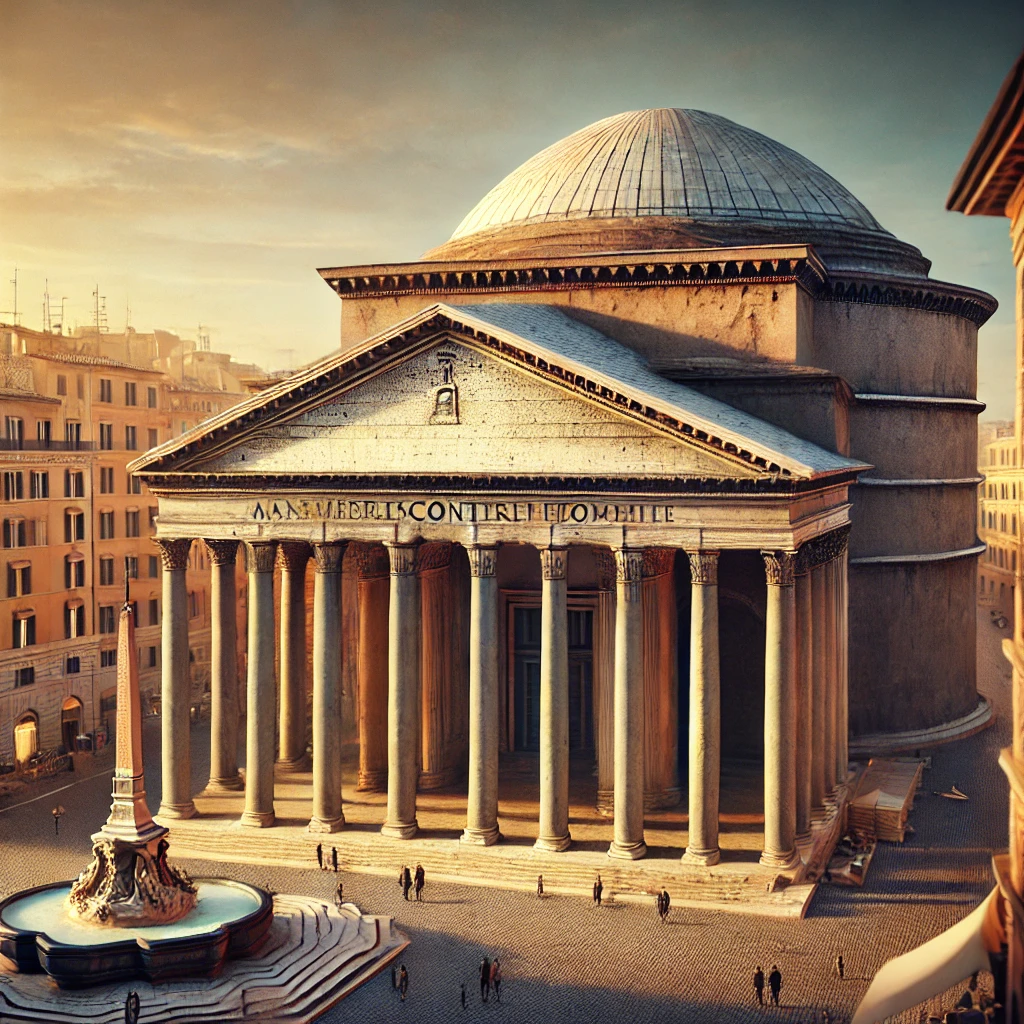
Even as the communities living across Europe have changed, shifting to new civilizations and cultures over the centuries, the architecture of the ancient Roman Empire has remained, to some extent, as many buildings were preserved throughout the years. Through enduring structures such as the Pantheon and the Colosseum, the value of ancient Roman architecture and its impact on modern culture cannot be diminished. The Pantheon, for instance, was built by Marcus Agrippa between 27 BC and 14 AD and was reconstructed by Emperor Hadrian around 126 AD (“Unveiling”).

While the Pantheon originally served as a temple for pagan gods, it was later dedicated to St. Mary and other Christian martyrs, which “ensured its preservation through the centuries, as many other Roman temples fell into ruin” (“Unveiling”). With a new status as a Christian building, the Pantheon was able to escape the plundering and vandalization of other ancient buildings. Not only does the Pantheon’s purpose demonstrate the cultural significance of religion to the people of Italy, but the columns framing the entrance of the Pantheon alongside the dome making up the interior reflects the symbolic attributes of ancient Roman design as they have been preserved. Similarly, the Colosseum’s history and preservation reveal further cultural values that connect ancient Roman architecture to modern groups of people.

With almost a whole decade of construction, emperor Titus dedicated the Colosseum in 80 AD as an amphitheater “where the public could enjoy gladiatorial combats and other forms of entertainment” (“Colosseum”). Housing over 50,000 spectators, the Colosseum allowed audiences to marvel at the gladiator fights while surrounded by grand arches, stone and concrete walls, and Doric, Ionic, and Corinthian columns, as seen in the photo to the right. Though the Colosseum was abandoned in later centuries and used as a quarry site, various popes sought to conserve the stadium beginning in the 18th century (“Colosseum”). Both through their efforts to protect the Colosseum and modern efforts to restore the Colosseum in the 1990s, the Colosseum has triumphed as an architectural marvel, attracting tourists from all over the globe. Just as the Colosseum held cultural value to the ancient Roman Empire, the Colosseum holds significance now to reflect the great achievements of different nations and the inspiration that such a wondrous building emits. Both the Pantheon and the Colosseum, as a result, help tell the story of the transition between cultures and how people have grown as a civilization, switching authority and leadership but upholding the accomplishments of humanity along the way.

In contrast, American architecture and design has focused on more modern elements such as open concept layouts, clean lines lacking decoration, and an emphasis on low, horizontal structures. Within the Modern Era, the modern American architecture development between 1930 and 1970, Louis Sullivan was famous for his philosophy that form follows function. By rejecting ornamental decorations and structural clarity, Sullivan’s architecture, “embodied the value of democracy, the importance of nature, the autonomy of the individual, and the earnest expression of function without extravagance” (“What is”).

In a very American fashion, the lack of concern for decor and particular detail matches the fast-paced spirit of capitalism dominating the American market. Rather than imitating and trying to perfect another culture’s artistic design, American architects have boldly created their own style which reflects the ambitious nature of the country, showing again how architecture and design are able to provide connections between a culture’s architectural environment and the cultural relevance behind it. Additionally, American designers used modern materials such as “steel columns, exposed concrete block, stained concrete floors, column-free spaces, and radiant heating systems” (“What is”). While American architects still made use of traditional materials, they focused on an innovative use of the materials that showcased their natural features rather than focusing on making each element a highlight or centerpiece of the design. Through each stylistic decision, therefore, the more rushed attitude of American designers complemented by a desire to create something new is revealed.

Following The Modern Era, a more holistic design mission integrated both the cultural elements of American architecture with the welcoming atmosphere of more personal design. Though the Modern Era elements of American design became well known and iconic, at the start of the 1970s, “modern principles such as excess space and the stark nature of building materials became too cold for everyday living and sparked new forms of architecture” (Thomann). Many architects began to challenge the lack of decor and the strict use of space as cold or impersonal, becoming concerned with the connotations of modern American architecture. Consequently, a flurry of artistic movements and debates such as the Whites vs. Grays and the “Chicago Seven” were born, as architects tried to discern what modern architecture should look like after the Modern Era, whether designs should follow after Le Corbusier or Venturi (Simonson). With branching forms of architecture and artists searching for greater abstraction in their designs, a new era of Postmodernism overtook the prior era to welcome back varying structural shapes such as pyramidal and triangular forms. As a type of backlash to the Modern Era of architecture, postmodernism architecture emphasized “the pre-modern architecture styles which felt colorful, vibrant, ornate, and decorative” alongside more eclectic styles and lines, such as in the building to the right (Thomann). With these changing styles of architecture, the culture of the American people is better reflected, as the nation began opting for a fuller integration of color and more imaginative design rather than simply the harsher forms of demonstrating achievement that the Modern Era upheld. With each new movement of architecture, the narrative continues to evolve to fit the spirit of the community, just as ancient Roman architecture told a story about the Roman Empire as well as the current values of the city of Rome in present times.

Though American architecture has sought to design its own style that accurately reflects the culture of American people, there are also a significant number of buildings that have characteristics from ancient Roman architecture. The interior of Union Station, in particular, features arches that were a classic part of ancient Roman architecture. In Washington D.C., the arches provide the building the stability necessary to create such an open area while highlighting the intrinsic beauty of the building, as pictured below.

Additionally, there are 46 statues surrounding the room which are modelled after ancient Roman soldiers and symbolically serve as “a protective force, guarding over all who travel through the halls of Union Station” (Dudac). Taking after the Romans, the architects of Union Station have clearly borrowed the symbolism behind the ancient architecture, underscoring the importance of Roman architecture in modern American design as well as the cultural values of protection and guidance that both nations wanted to emphasize.

The Jefferson Memorial, too, integrates a great number of attributes from ancient Roman architecture. At first glance, Jefferson Memorial pictured below is actually quite similar to the Pantheon. Both structures are built with a great domed area in the back of the building that is encircled by many columns for both support and style. These Ionic columns are a trademark to ancient Roman architecture but now frame the interior of the Jefferson Memorial as well as the front opening of the memorial (“Memorial Features”). The marble and granite steps, too, create a parallel vision of the Pantheon compared to the Jefferson Memorial, as was common for many Roman temples. By utilizing the same elements and features of ancient Roman architecture, American designs are able to convey similar themes about power and authority, as the Roman Empire is associated with having mass amounts of territory and great strength in both their advancement and conquest as a nation. These Roman features are especially found in federal or state governmental buildings, as it is the American government that wishes to share this message with the public. As a result, the Roman elements form a bridge between cultures and prioritize the same values to the public, proving how crucial architecture is in better understanding a culture or community. How Roman architecture influenced modern architecture.

As time has passed, many nations have risen and fallen, yet a few manage to gain influence to then leave a mark in future communities. The ancient Roman Empire, for example, was one of the greatest empires of its time due to its proud military success, economic expansion, and growing reputation in the ancient world. Though the Roman Empire no longer stands, their architectural advancements have remained, showcasing the artistic progress that the Roman Empire possessed. Both in modern Rome and in the United States, elements or structures of ancient Roman architecture are preserved or held on display. While Roman architecture focused on arches, columns, and domes with new materials, the Modern Era in America denied such decorative elements in favor of functionality over form. However, the columns, domes, and arches alike are still present in many American governmental buildings, demonstrating how much inspiration was drawn from Roman architecture and the influence that they had on the United States. Since the original culture that constructed these famous features is now gone, the fact that the elements remain indicates the current meaning that these structures and features have to modern audiences. To better understand modern cultures as well as the ancient Roman Empire, proper examination of each culture’s architecture can enlighten audiences to both the meaning and values of each culture as they are reflected through architecture.

Works Cited

“Ancient Roman Architecture Characteristics and History.” Kinnu, 3 Oct. 2023, kinnu.xyz/kinnuverse/culture/an-intro-to-the-big-architectural-movements/ancient-roman-architecture/. Accessed 23 Nov. 2024.

“Colosseum ‑ Dates, Facts & Location.” History.Com, A&E Television Networks, www.history.com/topics/ancient-rome/colosseum. Accessed 24 Nov. 2024.

Dudac, Yvette. “Preserving the Guardians: The Legionnaire Statues of Union Station.” John Canning & Co., 21 May 2024, johncanningco.com/blog/legionnaire-statues-union-station/. Accessed 25 Nov. 2024.

“Memorial Features.” National Parks Service, U.S. Department of the Interior, nps.gov/thje/learn/historyculture/memorialfeatures.htm. Accessed 25 Nov. 2024.

“Roman Art and Architecture.” Oxford Art Online, www.oxfordartonline.com/page/1762. Accessed 23 Nov. 2024.

Simonson, Hannah. “The ’70s Turn 50: Divergences in American Architecture – Docomomo.” Docomomo US, 17 Aug. 2020, www.docomomo-us.org/news/the-70s-turn-50-divergences-in-american-architecture.

Staff, Roman Empire. “Exploring Roman Columns – Their History, Types, and Famous Examples.” The Roman Empire, 3 Dec. 2023, roman-empire.net/roman-columns/. Accessed 23 Nov. 2024.

Thomann, Lauren. “What Is Modern Architecture? Everything You Ever Wanted to Know.” The Spruce, The Spruce, 19 Sept. 2024, www.thespruce.com/modern-architecture-4797910. Accessed 25 Nov. 2024.

“Unveiling the Pantheon: A Journey through Rome’s Architectural Marvel.” RomaExperience, RomaExperience, 19 Sept. 2024, www.romaexperience.com/post/the-imperfect-perfection-of-the-pantheon-in-rome#:~:text=Originally%20built%20as%20a%20temple,Roman%20temples%20fell%20into%20ruin. Accessed 24 Nov. 2024.

“What Is Modern Architecture?” Hammond Historic District, www.hammondhistoricdistrict.org/what-is-modern-architecture. Accessed 25 Nov. 2024.

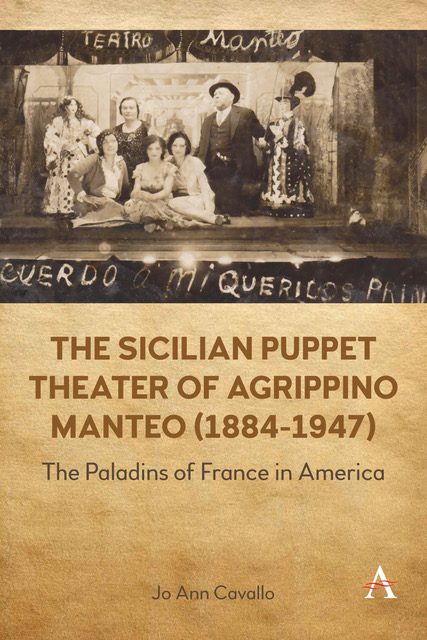
Cover of the Italian edition of The Sicilian Puppet Theater of Agrippino Manteo (1884-1947). Provided by Jo Ann Cavallo.

Portraits of family members hang in the restaurant today, creating a multigenerational atmosphere. Provided by Laura Northup.
Mr. Vitale in his restaurant. Provided.
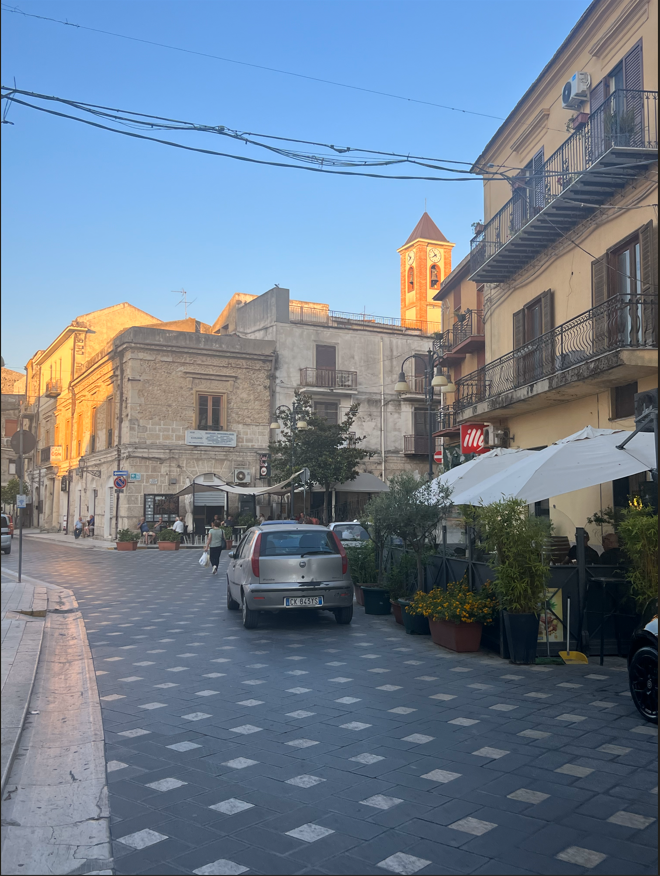
Street view of Grotte from Fran’s recent trip. Provided by Fran Marafino.
Alley view in Grotte. Provided by Fran Marafino.