Home

Our most recent interviews…

[yotuwp type=”videos” id=”CgqMwiLw8ms,-wpFSpNbDW0,74UFO1sBcD8,Pnbi6gOMfDU,84uLZ2pPebI,fkJIaeWklIk” ]

Our most recent interviews…

Upcoming Events

Madeline Northup

On July 21st, 2023, I walked into the National Portrait Gallery in Washington D.C. for some air conditioning and free art. We were on a family vacation and were walking around the city searching for something to do, when I pointed to the building on the corner of 8th and G streets. We scrambled up the marble steps and into the gallery, grabbing a map from the information desk as we went. As soon as we got in, we all sat down to study it in silence, taking in the tranquility and peace that art museums always seem to have.

My brother, the athlete of the family, went to check out the paintings of his favorite sports heroes, while my parents headed down the hall to look at the presidential portraits. As for myself, I journeyed to the top floor of the building, out onto the mezzanine, to the entertainment section. There, I saw pictures and sculptures of all the great American stars: Roy Rogers, Elvis Presley, Ginger Rogers, Shirley Temple, and Dizzy Gilespie, to name a few.

At the very end of the hall, almost hidden from view, was a portrait of world-famous singer Tony Bennett. Painted by his good friend Everett Raymond Kinstler, the picture displays Bennett as a jovial man, his bright blue eyes piercing through the canvas as he smiles softly at the onlooker. His cheeks are rosy, and his hair just turning gray, streaks of brown shining through.

Kinstler’s painting of Bennett. Provided by the National Portrait Gallery.

I admired the portrait as I walked by, having grown up with his music playing at every family function. I thought nothing of it as I walked out of the building with my family, or even as we drove away. It was not until I reached for my phone and saw the news notification that Bennett had passed away that I realized the weight that portrait carried.

I knew I wanted to write about Bennett. He had an impact on so many people’s lives, shaped their childhoods, adulthoods, those moments where they listened to his music for comfort and reassurance. But what connection could Tony Bennett have possibly had with Ohio?

As it turns out, Tony Bennett was not only a singer, but a painter as well. While music is what made him famous, visual art is what gave him peace, a subject which he truly loved. While people were painting him, he was painting others. And it was an art museum in Youngstown, Ohio that discovered his talent and finally put it on display.

Many years ago, Tony Bennett was guest starring on a radio show, discussing his love of art with the host, when Dr. Lou Zona, director of the Butler Institute of American Art in Youngstown, called in. Having grown up in Newcastle, Pennsylvania with Italian parents, and living with a brother involved in the art industry, Dr. Zona had been exposed to art at a very young age. He had combined his love of art with his passion for education when he became an elementary school art teacher, before being promoted to a high school position. After studying at Carnegie Mellon University to get his doctoral degree, Dr. Zona took a position as a professor in the Fine Arts department at Youngstown State University. This, combined with his role at the Institute, made a conversation with Bennett about art quite easy. At the end of the show, Dr. Zona invited Bennett to Youngstown and the Institute, and Tony Bennett went, eager to be able to share his art with his new friend.

Dr. Zona and Tony Bennett examining a work of art. Provided by Business Journal Daily.

Over the years, Bennett and Dr. Zona developed a wonderful friendship. Dr. Zona remembers the many concerts that he was invited to fondly, the road manager showing up with his tickets and leading him to his seat at the front of the theater, or even backstage. One of his most cherished moments with Bennett occurred at the Benedum Center for the Performing Arts in Pittsburgh, PA, where Bennett pointed Dr. Zona out to the audience and introduced him as his close friend. Dr. Zona still wonders if he had died that day and gone to heaven.

To Dr. Zona, as well as many others, Tony Bennett’s art was sincere, and showed a true love for his craft. Having used his given name, Anthony Benedetto, to sign his pieces, he showed onlookers that there is no glitz and glam in good art- he could be himself in his paintings, and that was enough. Bennett had struggled to the top of the music industry, creating a life for himself that his Calabrian parents were proud of. Having been discovered by Bob Hope during one of his performances, he had changed his name to sound more Anglican. Bennett wanted to use his real name in one of his passions, so he finally settled on art.

“Homage to Hockney” by Bennett. Provided by the Butler Insitute of American Art.

The best painting that Bennett ever did, according to Dr. Zona, is called “Homage to Hockney,” and sits on permanent display at the Butler Institute of American Art. Referring to David Hockney, famed painter and friend of Bennett, the portrait shows a vase of vibrant yellow flowers situated on a small table looking out onto the California coast. The ocean peaks through one side of the open bamboo blinds and pulls onlookers further into the painting. The effect is breathtaking.

The Tuscan countryside, New York City, and Central Park were some of the other places Bennett found inspiration from and painted. When he was not performing on stage, he was in his studio directly overhanging Central Park, looking for his next subject. His range was so wide in terms of styles, that one never knew what he was going to paint next.

Tuscan countryside painting by Bennett. Provided by the Butler Institute of American Art.

About two years ago, Dr. Zona got a Christmas card from Bennett, as he did every year, with one of his paintings on it. This card in particular boasted a beautiful winter scene in Central Park, a white horse-drawn carriage set against a mist of flurries. Even in his ill health, having been diagnosed with Alzheimer’s five years earlier, Bennett was creating magic with his paint brush. Whether he was singing or painting, crooning or drawing, Tony Bennett was selflessly using his creativity to make other people happy.

Art brings people together. It brought Dr. Zona and Tony Bennett together, and it brought me to them both. Through its connections, art has woven a tale between two individuals who knew seemingly nothing about each other until it touched their lives. Both Dr. Zona and Bennett shared many qualities that art only highlighted: their similar upbringings, their Italian heritage, and so on. Through the power of paintings, a friendship was created, one that would last many decades and provide great happiness and joy to both people. I only have art to thank for letting me discover and share their story.

Madeline Northup

In a city known for its strong presence of German immigrants, so much so that a district of the city was named “German Village,” Hamilton, Ohio was surprisingly home to many Italian immigrants during the late 1800s and early 1900s. During the Italian diaspora, roughly 15 million Italians left Italy in search of a better life and more opportunities, with about 5.5 million coming to the U.S. Many settled along the Eastern seaboard, while still others in the Deep South. The population of Italian immigrants grew steadily in the Midwest too, especially in states like Pennsylvania and West Virginia.

Although Hamilton’s Italian community started out small, with one man arriving by 1860 and dying soon afterward, the number of Italians in the city steadily grew throughout the mid 1900s. Within twenty years, another immigrant came and settled there, starting a successful new life. Twenty years after that, the number of Italian-born immigrants grew to twenty-eight, with it finally reaching 274 immigrants in 1930. The censuses conducted excluded the children of the Italian immigrants, as they earned American citizenship at birth.

With this growing population came new businesses, innovations, and ways of life. A notable businessman at the time, Cosimo Dattilo, became the patriarch of the Italian community after he founded an extensive citrus import business. The business included a market where people could shop and place orders, as well as a delivery service, courtesy of his horse and cart. Seeing how much success and profit he derived from his market, other Italians joined him in the citrus businesses. This, in turn, created a vast distribution network where the owners of each citrus wagon or store could sell the fruit imported by Dattilo. Dattilo’s Fruit Market was operated by members of the Dattilo-Pirano family for four generations, their stores stayed open well through the end of the twentieth century and into the early 2000s.

Other notable establishments that grew from Italian immigrants and their families were Milillo’s Pizzeria, founded in 1968. Members of the Milillo family operated the pizzeria, in addition to their bakery, beer distribution business, and store. Unfortunately, the pizzeria closed in early 2023, but their legacy still lives on with all those that frequented the beloved restaurant. Some Italian restaurants in the area fared just as well, shutting their doors for one reason or another. Isgro’s Restaurant, founded by Felix Isgro and his wife, was a supper club established in the 1950s as a way for Hamiltonians to spend a nice evening out on the town. The restaurant boasted multicourse meals, ornate décor, and live music. Unfortunately, it closed in the late 1980s when Felix and his wife retired. Today, one of the Isgro’s relatives owns her own restaurant, Gina’s Italian Kitchen and Tavern, which pays tribute to the highly popular restaurant.

Chester’s Pizza today. Provided.

One Italian business success story began in the year 1954, when Chester Dadabo, an immigrant from Northern Italy, founded a grocery store and bakery in Hamilton. Both ventures were quite successful, but one day, his customers informed him that something was missing. Back then, Hamilton was home to many American veterans who had fought in Italy during World War II. While overseas, they had eaten a new delicacy for the first time: pizza. Yearning to taste their favorite dish again, they went to Chester and asked him to make them some. Seeing how much they, as well as his other patrons, enjoyed his pizza, Chester converted his business to a full-time pizzeria. Now, his grandson Chuck Vitale owns the business, and plans to continue what his grandfather started.

Plans for Spooky Nook Athletic Complex. Provided.

With how much the Italian population did to create and build up the city of Hamilton, how come we, as residents of the surrounding area, or Ohio in general, don’t know anything about it? Brad Spurlock, Smith History Library and Cummins Room Manager at Lane Public Library, wondered why too after he received a reference request about the city of Hamilton purchasing twenty-two properties for Spooky Nook athletic complex parking in Hamilton’s “Little Italy.” With the purchase, every building on the property would be razed. This seemed significant to Spurlock, until he found in library records that not a single Italian ever lived in “Little Italy.”

The reason why the newly demolished area was named “Little Italy” remains a mystery. According to Spurlock’s research, which he continued to pursue after the news of the demolition, most Italians in Hamilton lived on either Cottage Street or the intersection of South, Eleventh Street, and Maple Avenue. Sicilian immigrants mostly flocked to Cottage Street, while Italians from Naples lived on the latter streets. Both of these sections were, and still are, despite being mostly desolate, in the Fourth Ward of Hamilton. “Little Italy” isn’t even close; it’s in Hamilton’s North End.

Hamilton Street View. Provided.

Fascinated by everything he found about the lives Italians lived in Hamilton during the late 1800s and early 1900s, Spurlock decided to create a library program that documented his research and educated people about the Italians’ hidden achievements. He has given a lecture at the Hamilton Lane Public Library, as well as for an Italian American culture class at Miami University of Oxford. He also has plans to present the program at the Fairfield Lane Library in the Fall. Spurlock hopes to expand upon his research soon, and create more programs evolving around this subject.

One thing is for sure: without people like Spurlock, we would lose the history that built our towns, cities, states, and even nation. Italian Americans played an integral role in creating everything we know and love. We should never forget that.

Madeline Northup

“He’d like to see you in the kitchen,” the host called, ushering me towards the unassuming, swinging metal doors. As I pushed them open, I couldn’t help but feel like I was unmasking the man behind the curtain, finally revealing the Ozian wizard whose food I had enjoyed for so many years.

As I entered, I knew I had underestimated the sheer amount of people that it took to run a thriving business. I had assumed there would be people in the kitchen, preparing for the lunchtime rush, and that the man I was seeking would be tucked away in his office, carefully going over accounts and scheduling information.

Boy, was I wrong.

Shuffling through the small mass of chefs, dishwashers, managers, and waiters, I finally caught sight of Sam Carfagna, his hands in a bowl of tomatoes as he washed and peeled them. His son, Salvatore, stood next to him, opening packages of fresh ingredients ready to be washed and cooked. The whole room hummed with intensity, a feeling of keen rigor and determination that I had never experienced before. The sound of my voice among the din of pots clashing, sauces simmering, and people shuffling through the narrow walkway seemed to interrupt the flow that had developed, leaving me feeling like an intruder in a sacred place.

This feeling did not last for long, though, as I watched Sam make a batch of one of Carfagna’s famous pasta sauces, a delicacy that patrons know about all too well. Carfagna’s Ristorante in Columbus, Ohio would simply not be the same without it.

Carfagna’s Market, originally known as Cleve Meats. Provided by Ohio.org.

The Carfagna name was not always synonymous with their delectable sauces, nor their restaurant. Founded in 1937, Cleveland Avenue Meats, affectionately known as Cleve Meats, was located one block south of Hudson and Cleveland Avenue. Saturnino Carfagna, farmer and businessman, founded the business out of his passion for food and to support his growing family. He had immigrated to the United States in 1919 after living a life filled with hardship, despite his young age. Born in 1898 in Vastogirardi in the Isernia Province of Molise, Saturnino had fought as a cavaliere (cavalryman) in World War I before being hit by a falling bomb, which lodged multiple pieces of shrapnel in his leg. Temporarily incapacitated, he was taken prisoner by the Germans, who sent him to a farm in Germany to work as a slave laborer. He spent over two years toiling in the fields, desperately trying to find a way to escape his dire situation, but to no avail.

Eventually, after one year serving the family who owned the farm, he was finally able to sleep inside of their barn, instead of out in the open air, subject to the harsh elements of nature. A while after that, he was invited to eat at the kitchen table with the family. In a sickening way, they treated him almost as one of them, appreciative of his labor, yet still holding his life in their hands. Finally, after the war ended and he was set free, the patriarch of the family asked if Saturnino would marry his daughter, as he was a hardworking young man and would be able to support her. Saturnino, of course, declined, and left for his home, and the future he yearned for, immediately.

Scenes from around Carfagna’s Ristorante and Market. Provided.

For many years, he went back and forth from Italy to the United States, spending two years in the U.S. working, making money for his wife and children back home, then returning for six months to enjoy what he had worked for. His older brother, Uldarigao, also known as Eddie, had immigrated to the United States permanently in 1910. He supported Saturnino and his new life, welcoming the sight of his brother after so many years.

Finally satisfied with the money he had made, Saturnino moved his wife, children, and mother-in-law to the United States, and bought two farms in Ohio. There, he would raise chickens and cattle, and sell them and their products to markets, as well as customers on the streets. After founding the more permanent business of Cleveland Avenue Meats, Saturnino decided to sell the farms and move his family to the floors above his business. After another move in 1971, his grandsons, Sam and Dino, took over the business, but he continued to help for many years before his death in 1986. As Sam said, it is his hard work that they learned so much from, and which continues to help the Carfagna’s business survive.

Sam, now in the “twilight” of his own career, as he said to me, has expanded his grandfather’s business, in partnership with his brother, Dino, to include a manufacturing company for Carfagna’s pasta sauces, which can now be found in twenty-six states, as well as a family-style restaurant. As of 2021, the restaurant and market were combined in a new development in Gemini Place Towne Center in Columbus, Ohio. Not only can customers now find delectable homemade pastries, pastas, sauces, and pre-cooked meals in the marketplace, but they can also walk right into Carfagna’s wine shop for a tasting, as well as their restaurant for a bite to eat.

Portraits of a young Dino, left, and Sam Carfagna, right. Provided by Carfagna’s.com.
Carfagna siblings in order from left to right:
Sam Carfagna,Julie Riley, and Dino Carfagna.
Provided by Columbus Monthly.

With the Carfagna name gaining more and more recognition every day, the responsibilities of running the business begin to fall on Sam and Dino’s children, as well as their many cousins, aunts, and uncles. Salvatore, Francesca, Dino Jr., Michael, and Carmine all have vital roles in their parents’ and grandparents’ business, and work to continue the family tradition. Sam hopes that all his children, as well as his nephews, continue to hold their families close, and work hard for the business and for their own goals. The Carfagna businesses’ success would not be possible without these values.

It doesn’t matter if you live in Columbus, near it, or even in Ohio, Carfagna’s Ristorante and Market is worth the trip. Not only will you get a fabulous homemade meal (I recommend the Gnocchi Carfagna with creamy pomodoro sauce), but you will walk away feeling the same energy I felt, the hum of hard work and appreciation for people who come, and for people who keep coming back.

Madeline Northup

They say that the most valuable stamp in the world was a mistake. An airplane flying upside down set the world on its ear. Gerardo Perrotta says that the value of a stamp is not purely monetary, but cultural and historical. These little scraps of paper can tell the story of a generation, document a movement, or remind us of what we have forgotten. They are timeless, innovative, ingenious, and creative. Stamps are a practical item touched by the world of art.

Gerardo Perrotta became interested in stamps as a young boy in Paola, Calabria (Southern Italy). His father, having immigrated to America before the rest of the family, wrote many letters to them detailing his life in the United States. The American postage on each piece of mail that young Gerardo received captured his imagination. They bridged the divide that stood between him and his father, many thousands of miles away.

When he came to America with the rest of his family, Gerardo stopped receiving the stamps that he so treasured from America, but instead started receiving Italian postage from relatives back home. He soon discovered too that he was not alone in his passion for postage. His landlord possessed his own large collection of stamps, which, to Gerardo’s delight, he showed him. Thus, his fascination took flight.

Over the years, Gerardo collected many different kinds of stamps from colleagues, students, relatives, and friends. He focused mainly on Italian themes on American stamps, Italian stamps from Calabria, and Cincinnati-themed stamps, the city where he now resides. Retaining each stamp was not always easy, especially when in Italy. Preferring to see each stamp in-person over buying them online, Gerardo would, at times, wait in long lines at a post office in Paola or Cosenza, Calabria while on vacation. Finally reaching the front of the line, complications sometimes arose, whether that be the scarcity of that particular stamp, or a simple administrative error. But, as Gerardo said, one has to be willing to embark on adventures when seeking stamps.

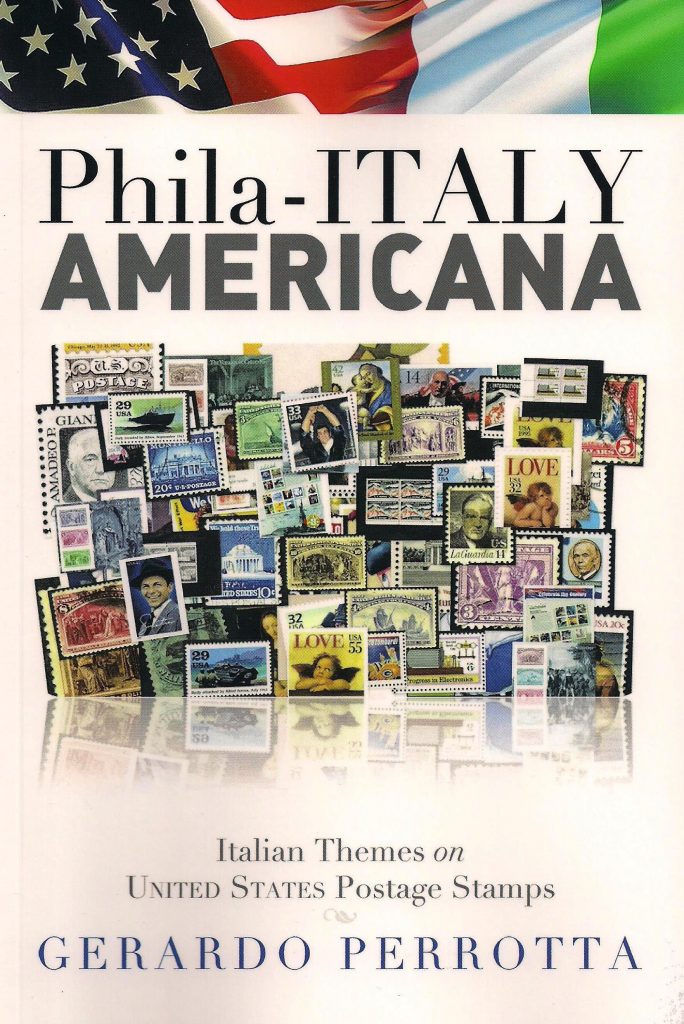
Having obtained a sizable collection, Gerardo decided to write a book detailing some of his stamps’ origins and history. Titled Phila-Italy Americana: Italian Themes on United States Postage Stamps, it was published in 2013. Soon, Gerardo hopes to write a second edition with two more chapters: one detailing stamps that commemorate Americans who went to Italy to advance their careers and increase their cultural awareness, and a second on stamps documenting Roman and Classical influence in America.

When Gerardo showed me his book cover and the many pages of stamps he has put together, I was shocked. Small, detailed pictures of Italian and Italian American idols, architecture, events, and ideas danced across the page. The range of subjects was wide: Giuseppe Garibaldi, Pinocchio, Raphael’s Two Cherubs, Amadeo Giannini, Frank Sinatra, Vince Lombardi, Fiorello La Guardia, Dante Alighieri, St. Francis of Assisi, Roy Campanella, Arturo Toscanini, Enrico Fermi, Frank Capra, Joe DiMaggio, Monticello, and the U.S. Capitol were just some of the people, paintings, and places that I saw. The Madonna, holding her son, graced one page, stamped on every Christmas edition. He even had a stamp from the World’s Columbian Exposition of 1892 in Chicago commemorating the 400th anniversary of Columbus’ exploration of America. He hopes that one of his grandchildren can get one for the 600th anniversary in 2092.

Celebrate the Century 1900s “Immigrants Arrive” stamp. All images provided by Gerardo Perrotta.

Out of all these stamps, all these memories, Gerardo has two that touch him the most, although it was a hard choice. First, the Celebrate the Century 1900s stamp called “Immigrants Arrive” means the most to him, as he sees his own story in this little stamp. It portrays a photograph of an Italian immigrant family in New York, with a father, mother, daughter, and son. The father holds all of his worldly possessions on his shoulder, while the mother presents their baby daughter, in Gerardo’s eyes, as a gift to America’s future. The son, wearing a cap with an inscription that reads “Amalfi,” looks forward to a sea of opportunities in the New World. Although Gerardo’s own father came to America first, the same sentiment holds true in his life story, as well as many other immigrants from Italy.

1974 Michelangelo stamp from Raphael’s School of Athens.

Gerardo’s second favorite stamp is one of Raphael’s School of Athens, where Michelangelo is depicted as a writer, instead of a sculptor. This is a little-known fact about Michelangelo; he wrote many beautiful poems, which were overshadowed by his work in art and architecture. Below his picture, the 1974 stamp reads, “Letters mingle souls.” Nothing is more true for Gerardo, whose stamps bridge the divides between generations, lands, stories, and even time.

Madeline Northup

“He doesn’t like my name… Of course, we couldn’t all come over on the Mayflower… But I got here as soon as I could, and I never wanted to go back, because to me it is a great privilege to be an American citizen.”

-Anton Cermak

Anton Cermak, the 44th mayor of Chicago, Illinois, who served from April 7th 1931 to March 6th 1933, was a Czech immigrant. Just a few years before he became mayor, the famous son of Italian immigrants came to live on Chicago’s South Side, hoping to expand his bootlegging business. That man was Alphonse “Al” Gabriel Capone.

We’ve all heard the stories of the famous gangster and his nefarious dealings. His life has served as an example for “successful” mafia bosses, and he theoretically linked the Italian American identity to crime. Conversely, the Czech Anton Cermak is linked to upholding law in the city that gang violence tried to tear apart.

People’s names are connected to their actions and are a vital part of their identity. Capone and Cermak proved this. So why do so many immigrants to the United States change their names?

Dr. Corey Hart and his father and grandfather, the son of Richard Hart, in Homer, Nebraska. All photos provided by Dr. Corey Hart.

Dr. Corey Hart still ponders this as he tells the tale of his famous great grandfather, Al Capone’s “secret” brother, Richard Hart (a.k.a. Vincenzo Capone). He has spent his life learning more about and embracing his Italian roots, a stark contrast to the desires of many Italian immigrants of previous generations. Yet, this is a time when uniqueness is mostly celebrated, not discriminated against, especially in the Italian American community.

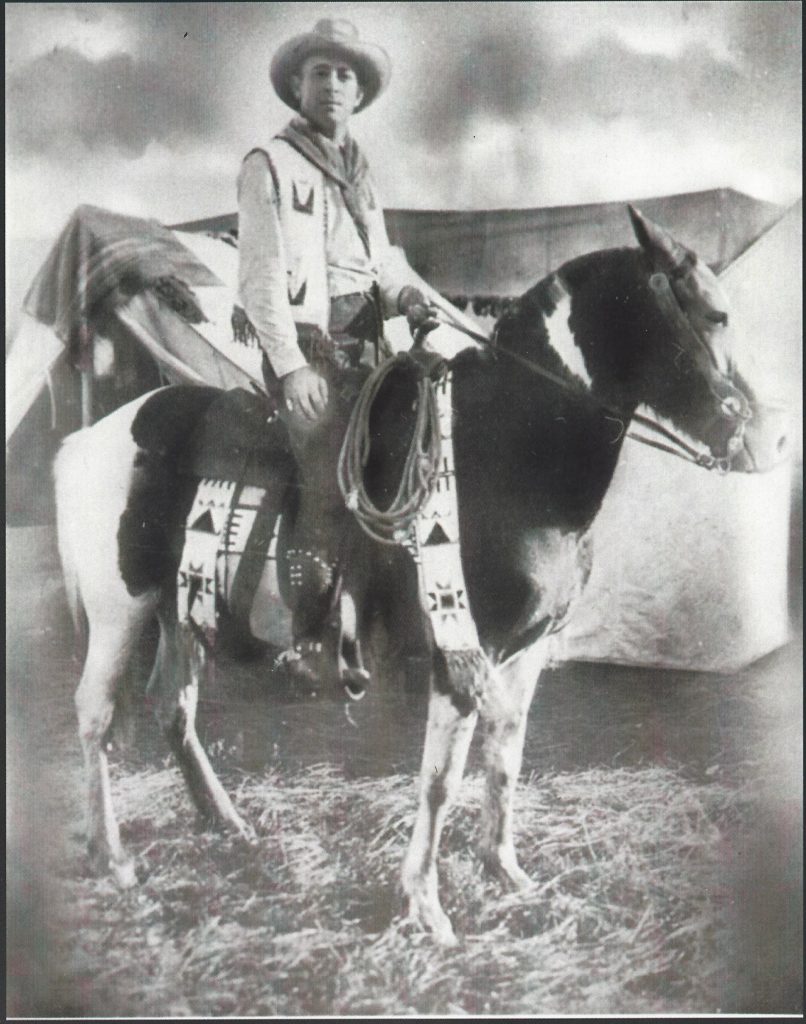
When Vincenzo Capone was young, he used to attend travelling Wild West shows and watch Western movies. He fell in love with the idea of the wide-open West, the Land of Opportunity. He could be anyone he wanted there, and he could become his own man.

Richard Hart demonstrating his roping skills.
Richard Hart posing for a picture with his gun.

Having been born to Italian immigrants Gabriel and Teresa Capone, Vincenzo was very much immersed in Italian culture at a young age. But, when he was sixteen, he decided to leave home and create a life for himself that he could take control of. Joining a travelling circus, he served as a roustabout for a little while, prior to his service in WWI, until he eventually settled down in Homer, Nebraska. During this time, Vincenzo changed his name to Richard Joseph Hart, after his favorite silent film actor, William S. Hart.

Richard Hart’s “souvenirs” from a still bust in North Dakota.
Richard Hart in his chaps, ready to “smoke up.”

Going forward, he adopted the lifestyle of a true “cowboy,” wearing traditional Western dress and often demonstrating his sharpshooting, roping, and horse riding skills. He served as a federal prohibition agent over a territory that spanned from Iowa to the state of Washington, upholding Prohibition-era laws and “busting stills.” In 1926, he even became a special agent of the Bureau of Indian Affairs and developed a relationship with the Native American population he worked with. They gave him the nickname “Two-Gun,” due to his affinity for frequently carrying two six shooters.

So, what was life like as an Italian American living in the Wild West during the early 1900s? Hart couldn’t say. He tended not to reveal his Italian origins to people he met, and even claimed that he was part Native American when asked about his olive skin tone. He had simply hidden his own ethnicity away.

Hart created a life for himself that he knew would make him happy and would fill his days with meaning. At the time, Italian Americans were heavily discriminated against and stereotyped, causing many people to seek solace in an American identity. Quite like a chameleon, they would “blend in” to survive. While this may have contributed to Richard Hart’s yearning to change his identity, it was also his love of adventure that supplied this shift.

History has proven that there has always been a group of people and, unfortunately, will most likely always be, that is unfavored by the larger population. So the question stands: when will we stop pressuring people to conform to the mainstream, to the archetypes we hold up as gods among men? Would Richard Hart have wanted to be a cowboy if we hadn’t held people like Buffalo Bill in such high regard? We’ll never know.

Madeline Northup

“We’re excited to start casting on our next Cincinnati, OH feature movie, THE WISE GUYS! Looking for lots of different extras, but especially anybody who is of Italian descent or who looks like they could be a NY mobster in the 1950s. All paid, please send photo, contact, and sizes to wiseguysextras@gmail.com.

-D. Lynn Myers Casting

We had just finished our unit on Mafia stereotypes in Italian American culture class when I got this notification on my phone from the Cincinnati Enquirer. It seemed incredibly ironic that, just as I had left a class trying to combat those stereotypes, I stepped back into a harsh reality where they still existed, hitting me straight in the face.

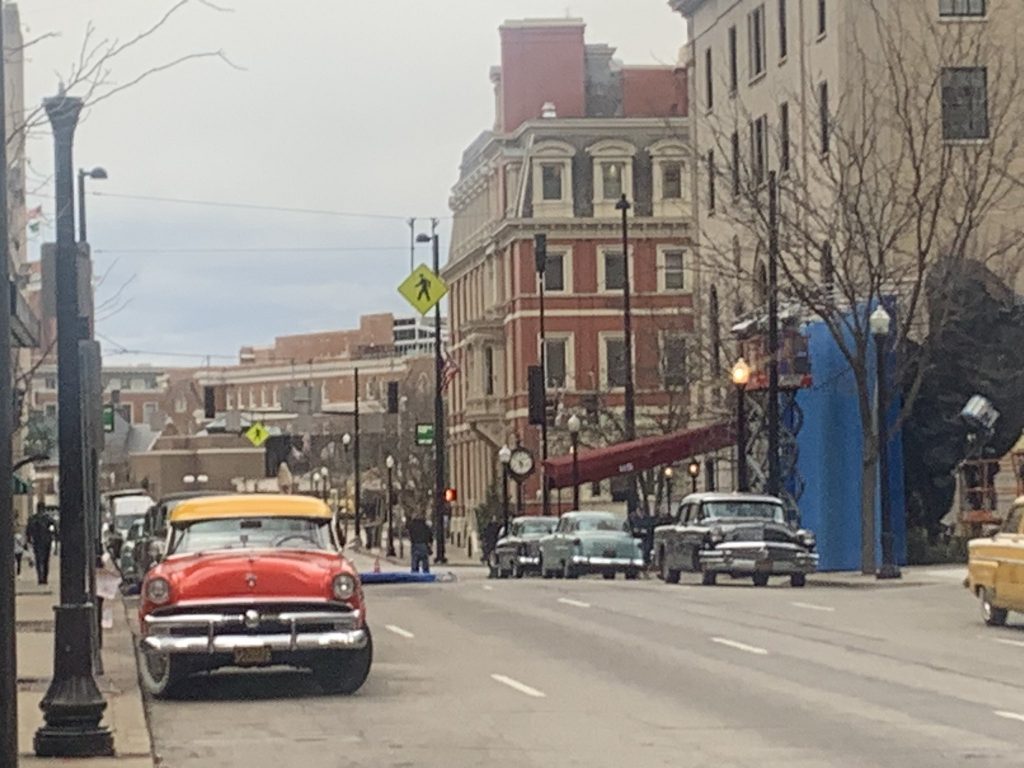
The movie, The Wise Guys, which began filming in Cincinnati this winter, is set to star Robert De Niro. A period piece following the story of Vito Genovese and Frank Costello, two Italian American Mafia dons, the film is set to rival other movies in its category. Robert De Niro is set to play both roles, while two separate actresses, Kathrine Narducci and Debra Messing, will play his wives.

Two roles. Two mobsters. Two Italian Americans. One Italian American actor.

Looking back on De Niro’s career, he has been primarily praised for his roles in Mafia films. According to Encyclopedia Britannica, he became famous for his “uncompromising portrayals of violent and abrasive characters.” And he has done well with this. He won an Oscar for best supporting actor in The Godfather, Part II, as well as for his role as Jake LaMotta in Raging Bull. He directed his first film, A Bronx Tale, a Mafia movie set in the 1960s, in 1993. He has even been cast in recent mob films such as The Irishman, being aged in reverse to appear younger.

Nearly every role De Niro has taken on has been a mobster, a criminal, or an overly emotional and unstable individual. Nearly all have had Italian last names. The Wise Guys is no exception. In fact, it is doubled, as he is playing not one, but two main characters in the mob film.

It is films like these that reinforce stereotypes. The Wise Guys called upon people of Italian descent to actively do this, to act as promoters for an untrue belief. We, as a society, need to separate these two groups of people. Italian Americans are not all mobsters. Not all mobsters are even Italian American.

Thus, as I sat there after class, reading the casting call in shock, two solutions came to mind. Either the film industry needs to stop exhausting the trope of Mafia films and move on, or they need to be more diverse in their interpretation of mob crime.

We are very happy to welcome our new collaborator, Madeline Northup! Madeline wrote this interesting piece about Dean Martin published on the Italian American Podcast, episode 246. The link to the episode is at the bottom, and you can also subscribe to the podcast. Enjoy!

Madeline Northup

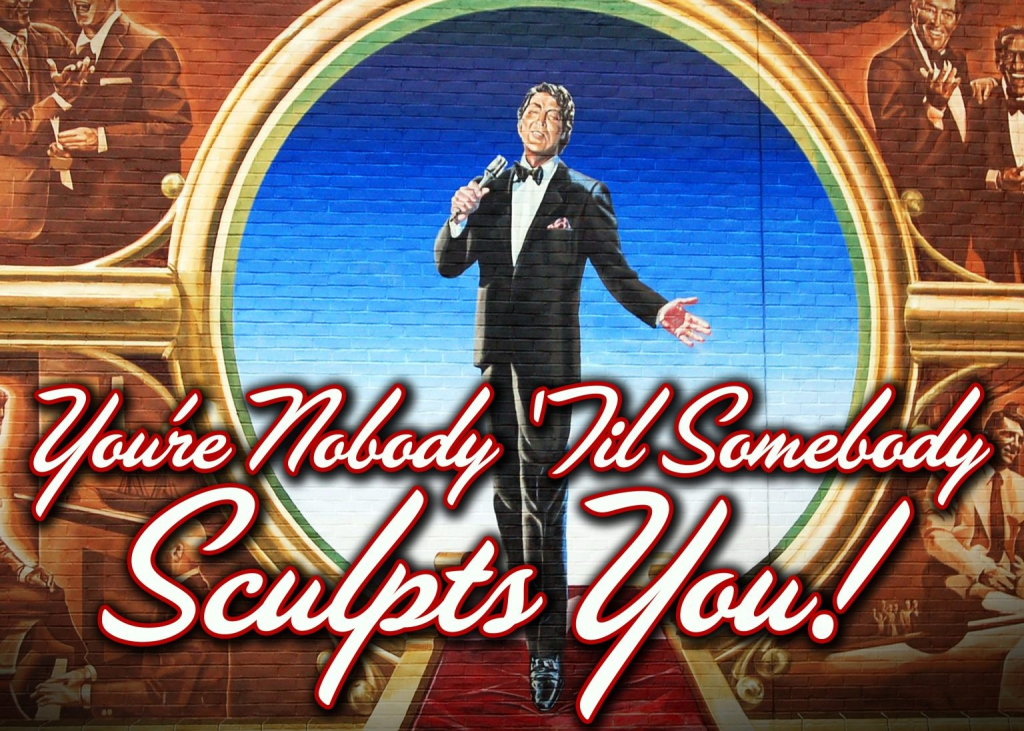
No Italian American household is complete without the melodious voice of Dean Martin wafting through each warm, brightly lit room. Even if one is not familiar with the “King of Cool’s” smooth tone, they are sure to be as the holiday season fast approaches and radio stations begin to play the classic, “A Marshmallow World.” Hailing for Steubenville, Ohio, a small mining and steel mill town located just thirty-three miles west of Pittsburgh, the young Dean Martin grew up in the town’s gambling halls and underground nightclubs before making his big break with musician Ernie McKay. Martin, born Dino Crocetti to an Abruzzian father and second generation Lombardian mother, never forgot his hometown, as he donated his time and money to its upkeep throughout his life. This podcast linked below, from the Italian American Podcast of We the Italians, explores the life and legacy of Dean Martin, and how Steubenville is honoring his memory today with plans to build a statue in the heart of the town. Donations are currently being accepted in the form of checks made payable to “Old Fort Steuben Inc.” with “Dean Martin Statue Fund” in the memo line, and can be sent to Historic Fort Steuben, 120 S. 3rd Street, Steubenville, Ohio 43952.

AUGUST 25 – SEPT 1 – SEPT 8, 2022
Cedar Lee Theater & Atlas Cinemas EastgateAward winning films from Italy with English subtitlesThe Cleveland Italian Film FestivalSponsored byItalian Tours & Travel by DianaCustomized tours to Italy, France, Ireland& other European destinations440.895.0011All Films Thursdays at 7:30 pm – $12.00All Tickets Sold in AdvanceEach year tickets sell out early.Many of you are familiar with our Wait Lists.So order early! TICKETS on sale now: Click Link:https://clevelanditalianfilm.eventbrite.com**********Special Film Gala Event“Pranzo Italiano”Award starred Chef Luca SemaSunday, AUG 21, 2022- 1:00 pm$115 pp includes:All wines with each course, gratuity & tax.Reservations have begun – 216. 456. 8117**********Here are the great Italian Award Winning Filmscoming this year!

“IL MOSTRO” COMEDY Thursday, AUG. 25, 7:30 pm, Cedar Lee Theater.
Be prepared to find yourself crying from laughing so hard at what many say is the funniest film Benigni has ever made and a great comedy on the order of Chaplin, Katon and Sellers.The highest-grossing film in Italy it was surpassed only by his film Life is Beautiful. In this film Benigni plays Loris, who makes a meager living transporting mannequins, and spending his waking hours avoiding creditors and eviction.He’s blissfully unaware that he is the man the police have mistakenly fixed on as “the monster” and though a series of accidents police become convinced he’s a crazed serial killer. Setting his sights on a beautiful woman makes him appear like the wanted criminal on the loose whose capture has frustrated the police. “Il Mostro” is hysterically funny and a rare opportunity to see one of the funniest of Benigni’s work. Winner: Golden Globes Italy Best Actor, Roberto Benigni Director: Roberto Benigni. Starring: Roberto BenigniMichel BlancNicoletta BraschiDominique LavanantJean-Claude BrialyFranco MescoliniIvano MarescottiLaurent SpielvogelMassimo GirottiVittorio Amandola
 
“BENEDETTA FOLLIA” COMEDY/ROMANCE Thursday, SEPT 1, 7:30 pm Atlas Cinemas Eastgate 
This wonderful award winning Comedy stars Carlo Verdone, one of Italy’s most beloved comedic actors who plays a man of impeccable integrity and certain stature he has to maintain who owns a religious store that has business dealings with the Vatican. Concerned about his reputation and what others think of him, one day he finds his orderly life and marriage upended by an unusual unexpected circumstance and finds himself single. Enter sunny, brazen, Luna who enters his life, changes his whole world showing him how to live life to the fullest. A truly delightful film showing how we can change and adapt according to life’s circumstances ending up in a better place. Golden Globes Italy – Nominated Best Comedy; Italy’s Golden Ciak Awards – Nominated Best Screenplay. Italian National Syndicate Film Journalists – Best Comedy, Best ActressDirector Carlo Verdone. Starring Carlo Verdone, Ilenia Pastorelli, Maria Pia Calzone, Lucrezia Lante Della Rovere, Paola Minaccioni, Massimo Cimaglia, Aurora Cimino, Elisa Di Eusanio. 

“ORDINARY HAPPINESS” COMEDY/FANTASY Thursday, SEPT. 8, 7:30 pm Atlas Cinemas Eastgate 
 Sprinkled with comedy, this delightful film shows how moments of ordinary happiness give meaning to our lives. After a Vespa accident, Paolo is allowed to return to Earth for just 92 minutes more, thanks to a calculation error made in a “Paradise Office.” He tries to spend these unexpected moments with his family he overlooked all the while finding new meaning in life, the preciousness of time and the importance of love and family. What can he do with it to fix his life and let his family know what they mean to him?Golden Ciak Awards Nominee Best Supporting Actor, Italian Nantional Syndicate of Film Journalists Nominee Best Actress DIRECTOR: Daniele Luchetti. Starring: Pif, Thony, Renato Carpentieri, Franz Cantalupo, Vincenzo Ferrera, Roberta Caronia, Angelica Alleruzzo, Francesco Giammanco, Salvatore La Mantia   

If you are in Cleveland this summer, you do not want to miss the Cleveland Italian Film Festival. Start planning in advance and reserve your tickets!

CLEVELAND ITALIAN FILM FESTIVAL 2022 
AUGUST 25 – SEPT 1 – SEPT 8, 2022
Cedar Lee Theater & Atlas Cinemas Eastgate
Award winning films from Italy with English subtitles
The Cleveland Italian Film Festival
Sponsored by Italian Tours & Travel by Diana Customized tours to Italy, France, Ireland& other European destinations 440.895.0011
All Films Thursdays at 7:30 pm – $12.00. All Tickets Sold in Advance. Each year tickets sell out early. Many of you are familiar with our Wait Lists. So order early! TICKETS on sale now:
Click Link:https://clevelanditalianfilm.eventbrite.com
**********Special Film Gala Event”Pranzo Italiano”Award starred Chef Luca Sema, Sunday, AUG 21, 2022- 1:00 pm $115 pp includes: All wines with each course, gratuity & tax. Reservations have begun – 216. 456. 8117


**********Here are the great Italian Award Winning Filmscoming this year!
“IL MOSTRO “COMEDY
Thursday, AUG. 25, 7:30 pm, Cedar Lee Theater

Be prepared to find yourself crying from laughing so hard at what many say is the funniest film Benigni has ever made and a great comedy on the order of Chaplin, Katon and Sellers.The highest-grossing film in Italy it was surpassed only by his film Life is Beautiful. In this film Benigni plays Loris, who makes a meager living transporting mannequins, and spending his waking hours avoiding creditors and eviction. He’s blissfully unaware that he is the man the police have mistakenly fixed on as “the monster” and though a series of accidents police become convinced he’s a crazed serial killer. Setting his sights on a beautiful woman makes him appear like the wanted criminal on the loose whose capture has frustrated the police. “Il Mostro” is hysterically funny and a rare opportunity to see one of the funniest of Benigni’s work. Winner: Golden Globes Italy Best Actor, Roberto Benigni Director: Roberto Benigni. Starring: Roberto BenigniMichel BlancNicoletta BraschiDominique LavanantJean-Claude BrialyFranco MescoliniIvano MarescottiLaurentSpielvogelMassimo GirottiVittorio Amandola
 
“BENEDETTA FOLLIA “COMEDY/ROMANCE Thursday, SEPT 1, 7:30 pm, Atlas Cinemas Eastgate

 This wonderful award winning Comedy stars Carlo Verdone, one of Italy’s most beloved comedic actors who plays a man of impeccable integrity and certain stature he has to maintain who owns a religious store that has business dealings with the Vatican. Concerned about his reputation and what others think of him, one day he finds his orderly life and marriage upended by an unusual unexpected circumstance and finds himself single. Enter sunny, brazen, Luna who enters his life, changes his whole world showing him how to live life to the fullest. A truly delightful film showing how we can change and adapt according to life’s circumstances ending up in a better place. 
Golden Globes Italy – Nominated Best Comedy; Italy’s Golden Ciak Awards – Nominated Best Screenplay. Italian National Syndicate Film Journalists – Best Comedy, Best Actress
Director Carlo Verdone. Starring Carlo Verdone, Ilenia Pastorelli, Maria Pia Calzone, Lucrezia Lante Della Rovere, Paola Minaccioni, Massimo Cimaglia, Aurora Cimino, Elisa Di Eusanio. 


“ORDINARY HAPPINESS “COMEDY/FANTASY Thursday, SEPT. 8, 7:30 pm, Atlas Cinemas Eastgate  

Sprinkled with comedy, this delightful film shows how moments of ordinary happiness give meaning to our lives. After a Vespa accident, Paolo is allowed to return to Earth for just 92 minutes more, thanks to a calculation error made in a “Paradise Office.” He tries to spend these unexpected moments with his family he overlooked all the while finding new meaning in life, the preciousness of time and the importance of love and family. What can he do with it to fix his life and let his family know what they mean to him?
Golden Ciak Awards Nominee Best Supporting Actor, Italian Nantional Syndicate of Film Journalists Nominee Best Actress 
DIRECTOR: Daniele Luchetti. Starring: Pif, Thony, Renato Carpentieri, Franz Cantalupo, Vincenzo Ferrera, Roberta Caronia, Angelica Alleruzzo, Francesco Giammanco, Salvatore La Mantia