Home

Our most recent interviews…

[yotuwp type=”videos” id=”CgqMwiLw8ms,-wpFSpNbDW0,74UFO1sBcD8,Pnbi6gOMfDU,84uLZ2pPebI,fkJIaeWklIk” ]

Our most recent interviews…
Upcoming Events

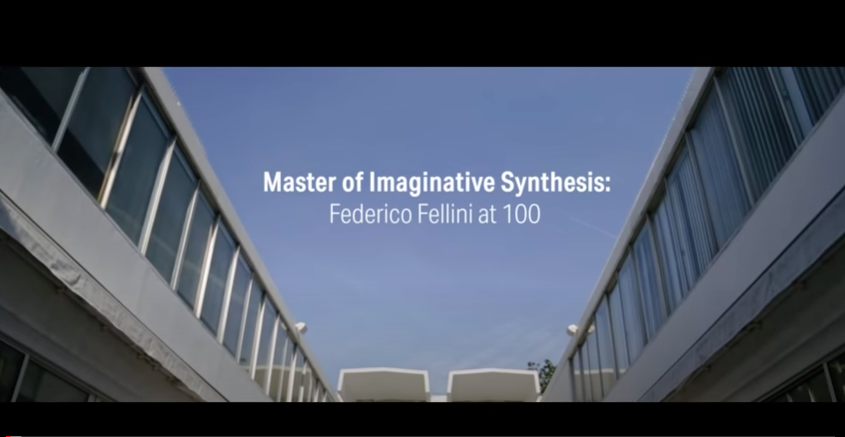
Federico Fellini (born in 2020) changed the world of cinema forever, and with his movie “La dolce vita” reshaped the image of Italy all over the world. We are happy to share a link to an online conversation moderated by Alessandro Ago, Director of Programming and Special Projects, USC School of Cinematic Arts. The participants are: Frank Burke, Professor Emeritus, Department of Film and Media – Queen’s University (Canada); Thomas Harrison, Professor, UCLA Department of Italian; and Federico Pacchioni, The Sebastian Paul and Marybelle Musco Chair in Italian, Chapman University.

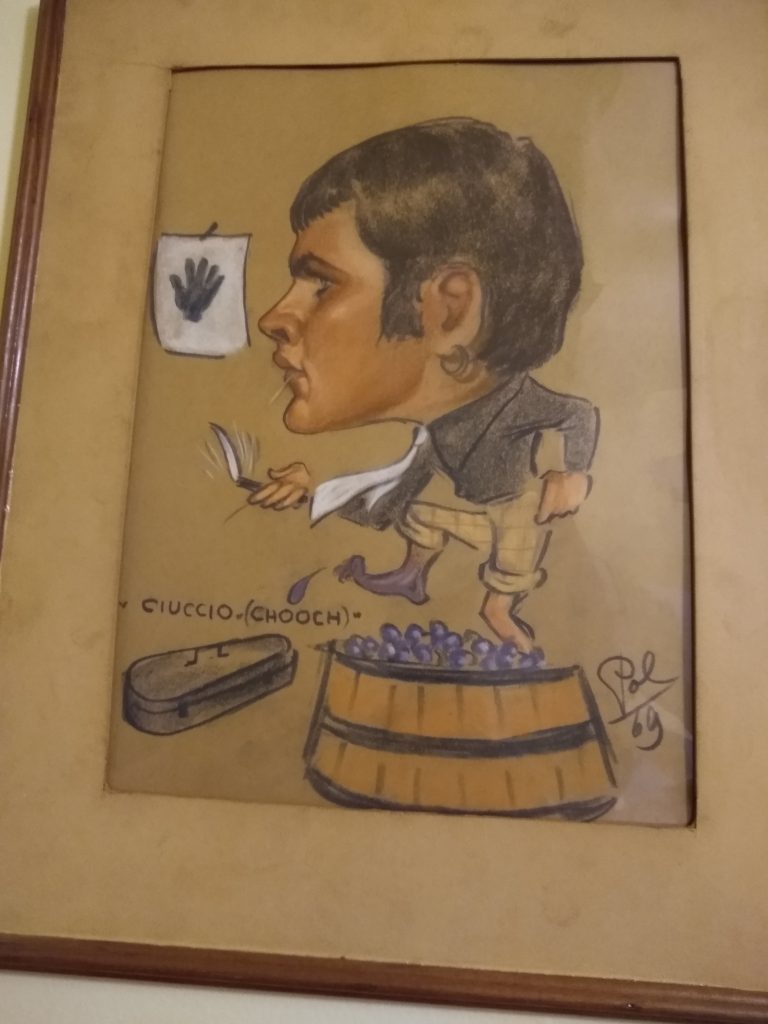
Caricature of Sante Matteo

An artist made this caricature of Dr. Sante Matteo when he was a college student in 1969. Please note the elements that stereotypically depict Italian Americans: the Black Hand, the pocket knife, the violin case (probably hiding a tommy gun), the black shirt (possible reference to Fascism). And of course he is making wine pressing grapes with his feet.

We are happy to introduce Angela Turchi, who is a student at the Università di Macerata in Italy. She is working on a research on the interest on the Italian language in the United States. She also prepared a brief survey, and we encourage everyone who studies Italian to participate. The link to the survey is at the end of this brief interview.


Could you please introduce yourself?

Hello everyone, my name is Angela Turchi, I’m 27 and I’m from Italy. I live in Senigallia a small town on the Adriatic coast. When I was 19 I decided to go abroad: for two years I lived in Manhattan, I was living with an American family, as an Au Pair. It was an experience that changed my life in many ways and from that moment I decided to study and learn everything about American Culture. Later on, during my University studies, I became interested in Italian-American culture and heritage.

In 2019 I started my studies in Macerata, one of the oldest University of Europe, established in 1290.

My three first years were about culture and translation and I graduated in the three-year undergraduate course called Language Mediation.

I then shifted for a more linguistic translation approach and deepen my knowledge in literature. During these last two years, I had the opportunity to study Italian-American writers and authors such as Pietro di Donato, Helen Barolini, John Fante, and Mario Puzo.

In the second year, we are asked to write a final thesis about an argument we are truly interested and that is connected with our academic career. I knew from the beginning that I wanted to further investigate the relationship between Italy and America. I then, with the precious help of professor Edith Cognigni, delve into new researches.


When did you start working on Italian American culture, and why (research, personal interest, etc.)?

As I was saying before, the last two years were very important for my studies. I was, since my time spent in the US, always interested in American culture, but then I became interested also in Italian-American culture. It has been and it still is, very interesting and surprising to see how Italian-American identify themselves. In my survey, I have read a very wide range of answers. I firmly believe diversity is the key. Italians have been seen as diverse and for this reason never really accepted by the American community but it is thanks to their stubbornness that now we have such a rich and unite Italian-American diaspora. Italian-Americans are not Italians, they are a new culture, a fusion of cultures and languages. They have created new values, a new way of living and they distinguish themselves from the others thanks to their Italian heritage.


– Can you tell us something about your research project?

My project has a precise timeline. It is divided into four chapters; each one concerns different but connected topics.

What I want to demonstrate with my project is the diffusion and interest of the Italian language in the States. In order to do so, I begin by writing about the very first Italian cycles of immigration. I begin from the 1800s until today. In the first chapter, I take into consideration motives, reasons and expectations: all three very different depending on the time. The first immigrants were looking for a better life, the second and third generation were more about the Americanization and then in the last generations there is a brand new discovery of personal aspect and heritage. This aspect is very significant because this new interest brings unity and emphasis on the Italian aspect. New generations are willing to explore and learn and I have the confirmation of that thanks to my Survey. All the respondents are eager to learn and improve their cultural knowledge.

Meanwhile, in the second chapter, I focus on the aspect of the language. I talk about language attrition, bilingualism, code-switching, contact between the two languages and the innovative concept of Italicità, a word coined by Pietro Bassetti. I finally take into consideration the main effects of the contact in-between the two languages and finally the Italian-American language that has unfolded throughout the generations.

The third part is more contemporary. I mainly analyze how new generations are learning Italian. I take into account different factors such as where (at home, at school), why (personal interest or because of relatives from Italy), and when (they learn Italian in middle school or university?). I then analyze the relationship Italian-Americans have with the Italian language: for someone a stranger for others a friend.

The last chapter (work in progress) is going to be the review and evaluation of my questionnaire. The questionnaire is anonymous and consists of 19 questions.


– Who can participate to your survey?

My survey is for everyone who studies Italian. It does not have to be someone who has relatives from Italy. This is because recent studies have shown that there is a higher number of Americans who are interested in Italian culture and language. I believe this is a crucial factor, maybe Americans are ready to give up to the Italian stereotypes (such as Mafia, bad commercials and the not-so-polite use of language).


– Do you feel that there is a renewed interest in Italy about Italian American culture?

Yes, I believe so. The stereotypes I was talking about earlier are old, still common, but old. Now Italy and Italians are seen as competitors. They represent a big part of the fashion industry (I may cite brands such as Versace, Dolce & Gabbana), social and entertainment industry (Chiara Ferragni as an example), food industry (famous restaurant spread all across America, for instance, Eataly), tourism and progress in general.

When I was living abroad and people would ask me where I was from and find out that I was from Italy they were excited to know about my language, my heritage and ask me more about the city I was from and Italy in general. Americans are now curious and want to travel and explore Italy. There is a veritable new interest in Italy, I saw that interest with my own eyes.

The change has taken time and effort but it finally arrived. We cannot be seen anymore as the poor and unfortunate people escaping from the homeland looking for opportunities but as investors, researchers, capitalists, travelers…


– Does your research take into consideration the recent migratory wave caused by the so-called “brain drain” (fuga dei cervelli)?

Yes, it does. In the first chapter, where I widely talk about the migratory flows, I also talk about the brain drain also known as human capital flight. Italy is the twelfth country for number of expatriation (more than 400 thousand) and most of them expatriate for academic reasons. The USA still remains the place where Italians seek opportunities.


Link to the survey:

 https://docs.google.com/forms/d/e/1FAIpQLScIDZ6qHszTnIeansFeTk92AIYjK01Win6fn5lm0A_c4FUaTw/viewform?usp=sf_link

We are happy to share this article written by Dr. Mary Kovach, Associate Professor at Miami University, Commerce Department, on Francesca Xavier Cabrini, also known as Mother Cabrini, the first American citizen proclaimed saint in 1946, and Patroness of Immigrants since 1950. The article has been published in the AURCO Journal, Volume, 26, Spring 2020, pp. 84-90.

Mother Cabrini Poster Presentation FINAL

Hidden Figure Mother Cabrini

We include the link to an article written by Dr. Sante Matteo, Professor Emeritus, Miami University.

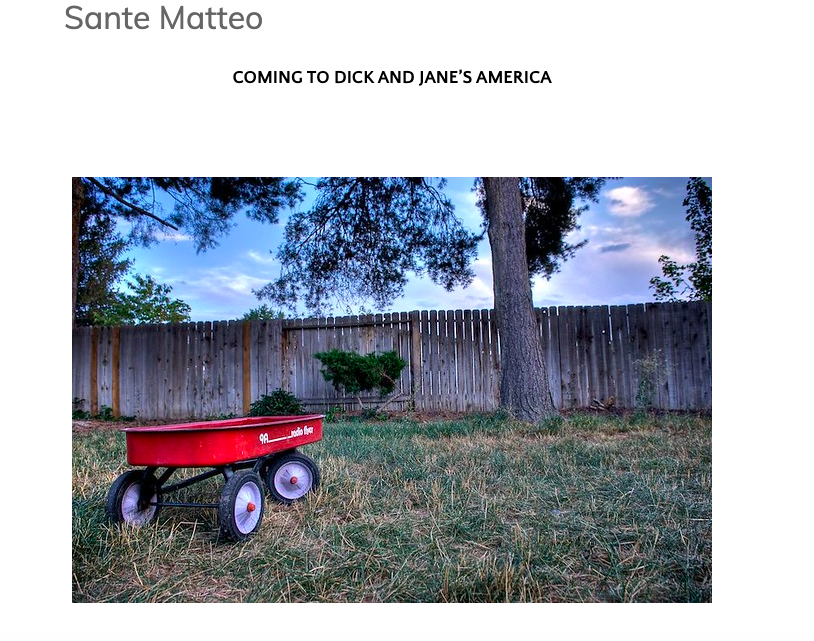
“Coming to Dick and Jane’s America” is an autobiographical account of Matteo’s childhood in the Italian town of Petrella Tifernina (Molise) and his migration to the United States of America. The article has been published on the online review “Ovunque siamo. New Italian-American Writing”. Many thanks to Sante Matteo for sharing the link.

https://ovunquesiamoweb.com/archive/vol-3-issue-4/sante-matteo/

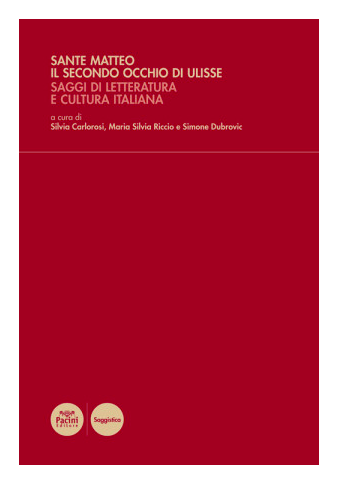
We are proud to present the latest book written by Dr. Sante Matteo, Professor Emeritus at Miami University. The book, written in Italian, is a collection of essays about many Italian authors: Dante, Niccolò Machiavelli, Marco Polo, Ugo Foscolo, Alessandro Manzoni, James Joyce, and others.

  https://www.pacinieditore.it/prodotto/sante-matteo-secondo-occhio-ulisse/


We of Italian Americans in Ohio praise the initiative of the organization “We the Italians” that has started a fundraising campaign to help the Spallanzani Hospital, the most important Italian hospital for contagious diseases, to fight coronavirus. 

Please donate here https://www.gofundme.com/f/we-the-italians-against-coronavirus

In the video on this page, the General Director of Spallanzani Hospital, Marta Branca, thanks We the Italians and the Italian Americans who will donate, explains the situation in Italy and what the Spallanzani Hospital needs most and she grants that funds raised will go directly to the hospital, which will use them for the most urgent needs related to the coronavirus crisis. They cure people from all over Italy. Here you can find their history https://www.inmi.it/istituzione/storia_dell_istituto

Let’s show that the Italian American community is responding to the request for help. No amount is too small, and none is too large. Please help the Italy that you love, that you want to visit again, where you have your heritage.

Please: donate, share the video and the link, post it on your sites and social media accounts. If you are an association, please tell your members to participate, raise funds and donate them. If you know a famous Italian American, please ask him or her to shoot a video to ask to donate. If you are in contact with a media, a radio, a tv, a website, please share this with them, I am available to explain what’s happening here and ask for a donation. Let’s work together, let’s be partners, let’s unite Italy and the Italian American community. I’m open to ideas to raise as much help as we can, together.

We the Italians has also started a daily videobroadcast from Italy on lockdown, to better explain what’s happening here in Italy. 

Here are the first eight videos published on our YouTube channel, here